
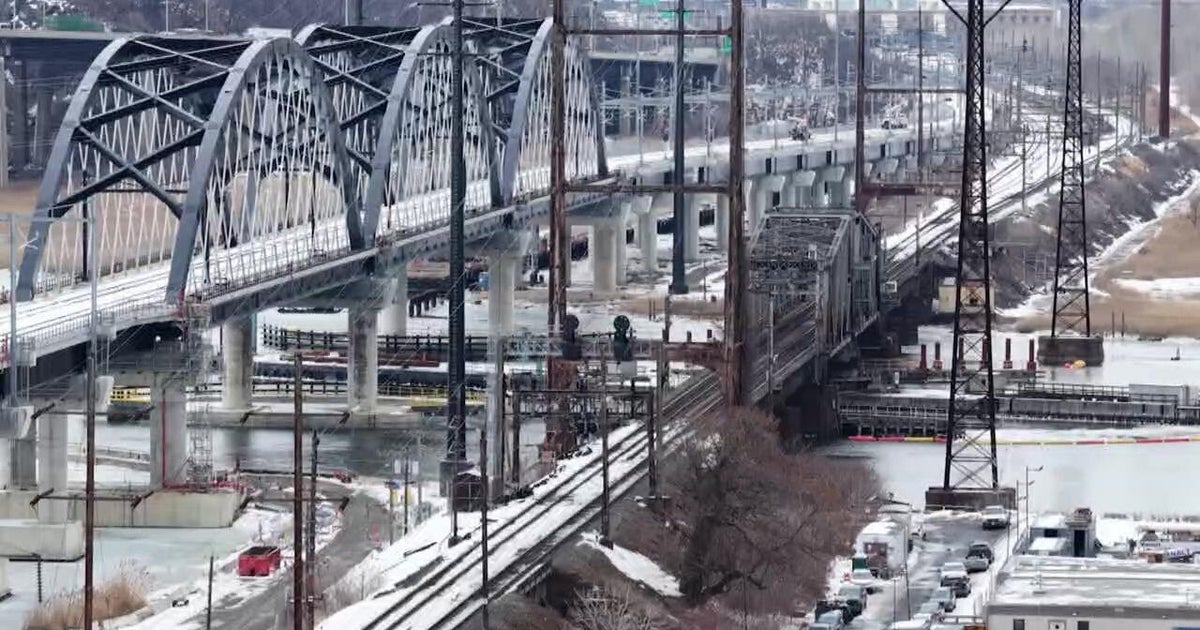
Hundreds of thousands of NJ Transit and Amtrak riders will have to deal with schedule changes, along with slower and more crowded trains, for the next few weeks.
Tuesday marks the first work day since Amtrak shifted rail traffic from the 115-year-old bridge in the Northeast Corridor to a track that crosses the new Portal North Bridge over the Hackensack River.
Train capacity is cut by more than half as NJ Transit operates with significantly fewer trains due to the project.
Rail traffic between Newark and Seacacus is being funneled into only one track, which is meant to withstand trains in both directions.
“We’re gonna basically go from 48 trains an hour to 18 trains an hour because of the work,” said NJ Transit CEO Kris Kolluri.
On Tuesday morning, Kolluri said today might be a little challenging because riders are figuring out their schedules and how to get to work in the most effective way.
“It’ll take a couple of days, I think, for people to get used to their routine, and I think we’ll be fine,” he said. “The most important thing I want people to remember is we’re not doing this for fun. We’re doing this because there’s a brand new bridge.”
What NJ Transit, Amtrak lines are affected?
During weekdays, there is no Midtown Direct service into Penn Station from the Gladstone Branch, the Morristown and the Montclair-Boonton lines. Those trains will be diverted to Hoboken.
NJ Transit is cross-honoring with PATH and the New York Waterway Ferry with enhanced services to and from Midtown during peak hours. Rail tickets and passes will also be honored on the NJ Transit bus service.
“One of the reasons why that is so important is we wanted to make sure that those folks who are trying to get to work have multiple options, and we wanted a cross-honor it so they’re not paying for it again. And we’re adding a couple of extra buses on the line in Hoboken so it can take them right to Midtown Manhattan,” Kolluri said.
If you must travel, officials advise commuting before 7 a.m. or after 9 a.m. and before 4 p.m. or after 7 p.m. on weekdays.
The impacts are expected to last until March 15, but a second project is scheduled for the fall.
Commuters feel the effects Monday
Although it was a federal holiday, riders were still feeling the effects of the transfer on Monday.
“I definitely have to be better about planning out my route,” said rider Katie Schalow. “I definitely got up about 45 minutes earlier to make sure I checked the times today.”
Another woman said she waited an hour for her train.
“I would try to avoid the trains for the next four weeks, to be honest, and just not commuting into the city if I don’t have to at all,” said rider Anastasia Malysheva.
Officials say the wait will be worth it because the old bridge is notorious for delays.