
History has a way of silently hiding in the corners of a room before being uncovered. At the Merchant’s House Museum in Manhattan, it was hiding behind a bottom drawer.
Surprisingly, a fully intact “Underground Railroad” activity site has been uncovered at the 1832 Merchant’s House Museum.
It stands as Manhattan’s lone 19th-century home with its facade and floor plan entirely intact. This discovery marks the house as the earliest known site of abolitionist activity in New York City.
“Many New Yorkers forget that we were a part of the abolitionist movement, part of the Civil Rights movement. This hidden passageway is physical evidence of New York City’s connection to what happened in the South during the Civil War, and what’s still happening today. … It has to be protected,” stated Council Member Chris Marte.
Manhattan’s oldest safe house
Despite its name, this was not a literal railroad but a massive act of organized defiance. The underground Railroad was a clandestine, loose-knit network of activists, safe houses, and secret routes used by enslaved African Americans to escape to free states.
For nearly a century, visitors at 29 East Fourth Street marveled at the heavy mahogany furniture and the preserved lifestyle of a 19th-century merchant family.
They walked past a built-in chest of drawers on the second floor, never suspecting that the wood paneling concealed a gateway to freedom.
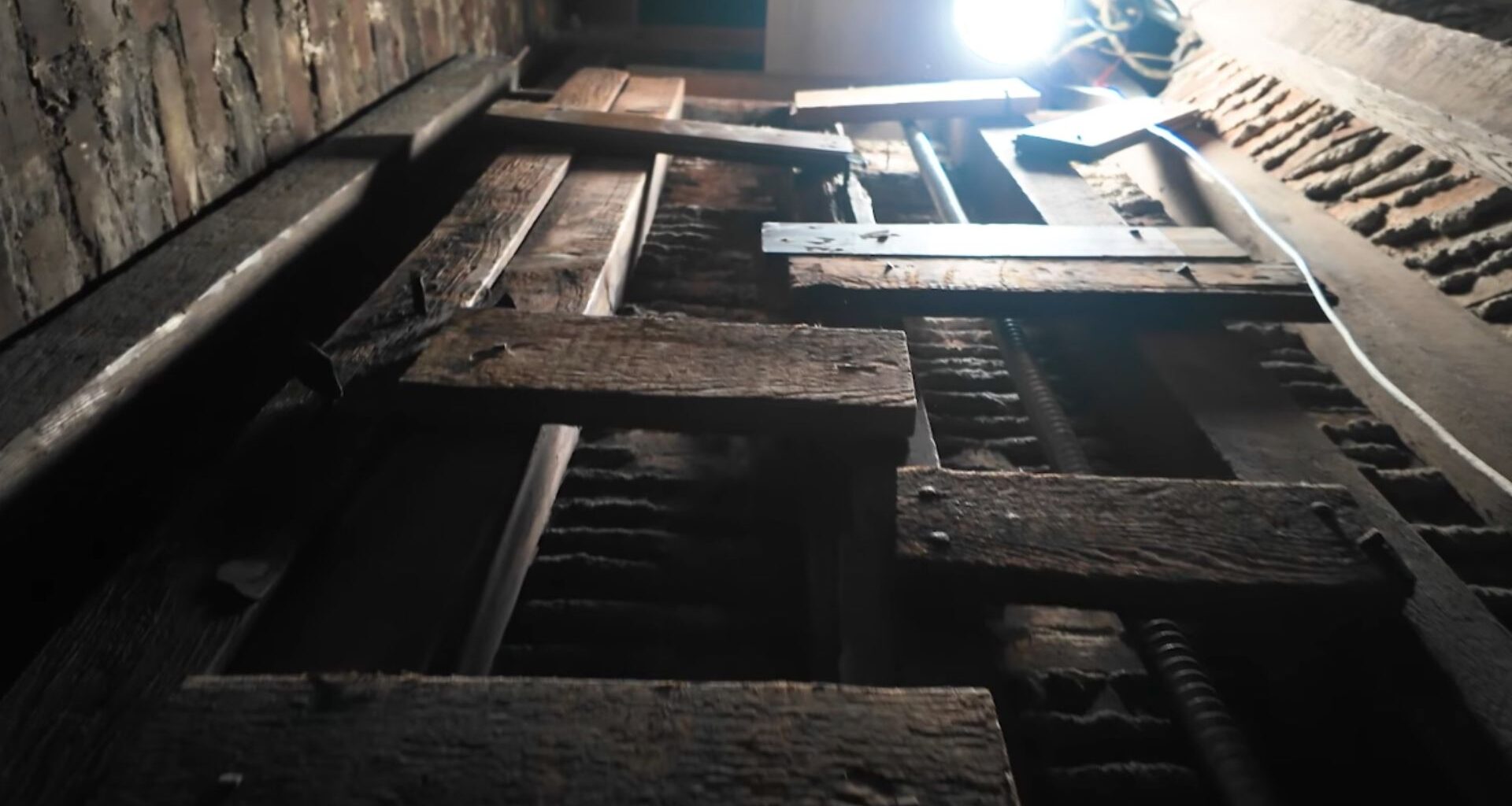
Recently, researchers pulled back that drawer to reveal a two-foot-square opening — a vertical shaft dropping 15 feet into the darkness of the ground floor.
While the museum is famous for the Tredwell family, who lived there for 100 years, the discovery points back to the man who built it: Joseph Brewster.
Brewster was a hatter and a staunch abolitionist. In 1832, New York was a city divided.
Though slavery had been abolished in the state in 1827, the city’s economy was a titan fed by Southern cotton.
To be an abolitionist in 1830s Manhattan was to be a target. Mobs roamed the streets. Safe houses had to be invisible.
It was within this climate of intense danger that Brewster engineered the Merchant’s House with its secret passageway.
The shaft exists as an architectural phantom, devoid of any domestic purpose — offering neither ventilation, storage, nor utility. It is what preservation attorney Michael Hiller calls a “generational find.“
The narrow, 15-foot drop reminds one of the literal tight spots freedom seekers endured to escape slave hunters and local marshals.
Most destroyed
The Merchant’s House told a story of wealth and Irish domestic service. Now, it tells a story of resistance.
Most Underground Railroad sites were destroyed by urban development. This site remains fully intact.
Architectural historian Patrick Ciccone stated: “Given how very, very few physical traces of the Underground Railroad survive anywhere in the U.S., the existence and physical integrity of this space give the 1832 landmark Merchant’s House additional magnitudes of incalculable historic significance.”
Until now, the only known intact Underground Railroad refuge in Manhattan was the Hopper-Gibbons House in Chelsea.
However, that site dates back to 1840 — nearly a decade after the Merchant’s House — and remains closed to the public, making this new discovery the city’s oldest and most accessible link to the era.