
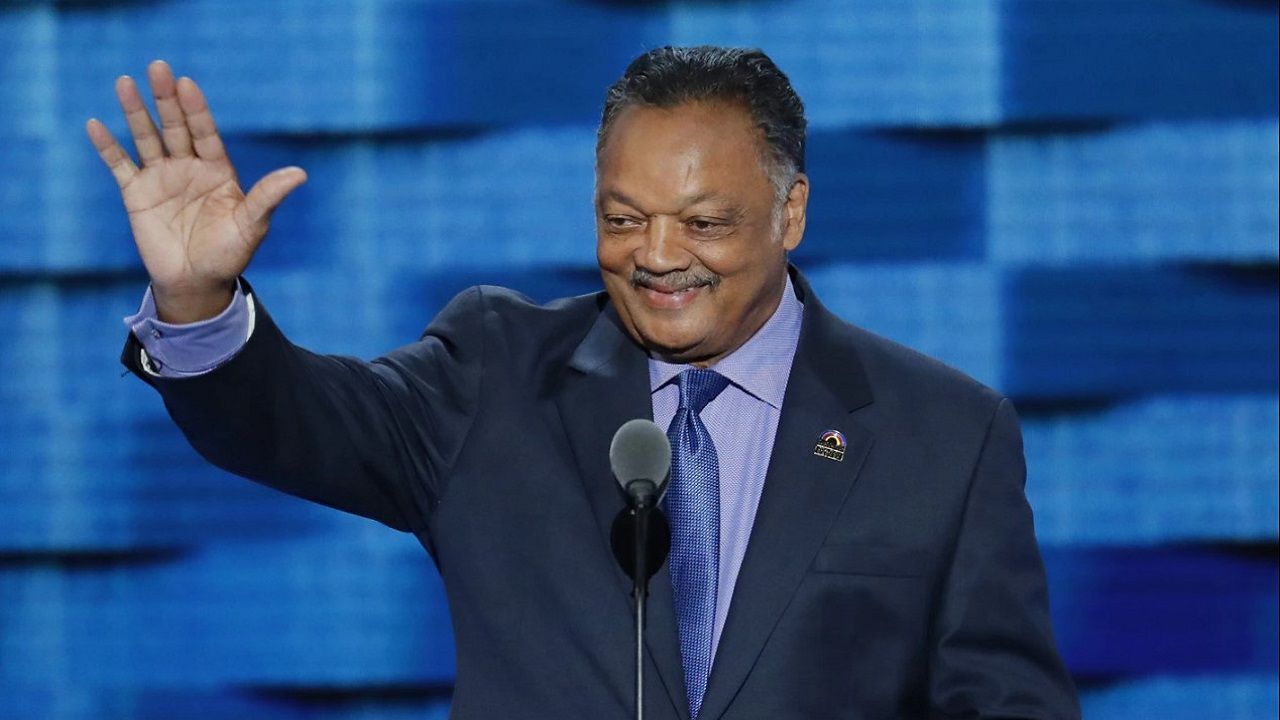
The Rev. Jesse Jackson was a national civil rights leader who also influenced the social justice movement in New York.
The Rev. Al Sharpton, a protégé of Jackson, spoke to reporters Tuesday about Jackson’s legacy of activism in the city.
What You Need To Know
The Rev. Jesse Jackson died Tuesday at 84
Jackson was a mentor to the Rev. Al Sharpton
Jackson’s coalition from his presidential campaigns is credited with electing David Dinkins mayor in 1989
“He literally changed American politics, New York politics and kept the civil rights movement going,” Sharpton said.
The organizing from Jackson’s two presidential campaigns in the 1980s is credited with building his Rainbow Coalition that toppled Mayor Ed Koch and elected David Dinkins as the first Black mayor of New York.
“He won the city of New York, which made us believe in ‘89 we could win — and we did, by electing David Dinkins,” Sharpton said.
Jackson also had his clashes and controversies. During his 1984 presidential campaign, he apologized for using a slur against Jews in New York.
Jackson and Ed Koch also frequently and publicly fought, though they later reconciled.
After his presidential campaigns, Jackson continued his activism, like launching his Wall Street Project to open the corporate world to more minority entrepreneurs and professionals.
“His legacy should be about fairness. It should be about justice. It should be about equal opportunity,” said Keith Wright, a former state lawmaker from Harlem. “If you could have Jesse Jackson take up your issue, no more needs to be said. He already had a real degree of credibility.”
Wright recalled Jackson’s presence at protests after NYPD officers fatally killed Amadou Diallo in the Bronx.
“Jesse Jackson was deeply involved in that,” Wright said.