
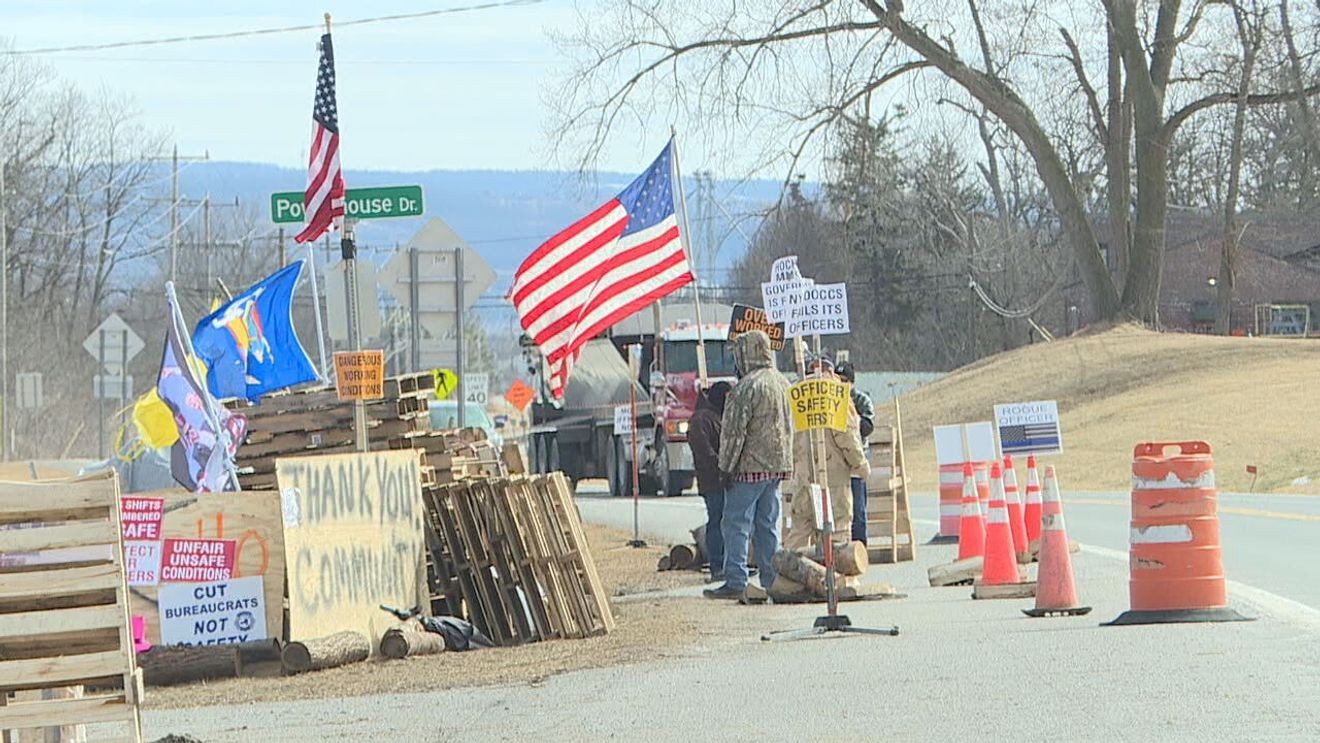
Rochester, N.Y. (WHAM) — One year ago Tuesday, thousands of prison workers across New York State went on strike demanding improved work environments.
“What we’ve been screaming for is safer working conditions,” said Chris Summers, president of the New York State Correctional Officers & Police Benevolent Association.
Thousands of employees were fired and even more retired, resigned or quit.
BACKGROUND: NYS corrections workers seeking reinstatement after firings during statewide strike | New York to lower hiring age for prison guards to 18 | New York prisons to release some inmates early due to staffing shortage following strikes
“I received many, many phone calls, hundreds of phone calls from wives, even husbands, little kids crying about, when their people were inside, they couldn’t come out, and they couldn’t see (them),” Summers said. “Or the people that were standing on the lines, they were calling saying, we just want safer conditions.”
Summers said by the end of the 22-day unsanctioned strike, the union was down 4,800 correctional officers.
“We’re down 4,800 officers now, still,” he said.
“(DOCCS is) recruiting, but we’re nowhere near where we need to be,” Summers continued.
The strike ended after an agreement was reached with the state that addressed some of the workers’ concerns, but Summers believes even more needs to be done, including ending dangerous, long shifts.
MORE: Cease-and-desist order served to more than two dozen striking correctional workers | Corrections officer speaks out following 77-hour work week during lockdown
“You still have the 16 hours, the 20 hours, it depends on what could happen inside the facility or trip,” Summers said. “The other problem that you have is since the strike, there are no vacations. They don’t have vacations. They’re taking those away. There’s no personal leave. If you call in sick, you have to have a doctor’s note. If you don’t, they take a day’s pay from you.”
Just days after the strike began, thousands of National Guard members were deployed across the state to help keep order inside the prisons. Many remain on the job today.
“It’s voluntary now, and I believe it’s roughly 3000,” Summers said.
MORE: Hochul declares disaster emergency, activates National Guard amid illegal prison strike
“Not every facility is using them properly, and if they would use them properly, that would relieve staff from getting the mandates,” Summers continued.
The proposed 2027 executive budget includes spending $535 million to extend the deployment of the National Guard inside state prisons to provide operating support while the system stabilizes. This is in addition to the $700 million the state is projected to spend through this year.