
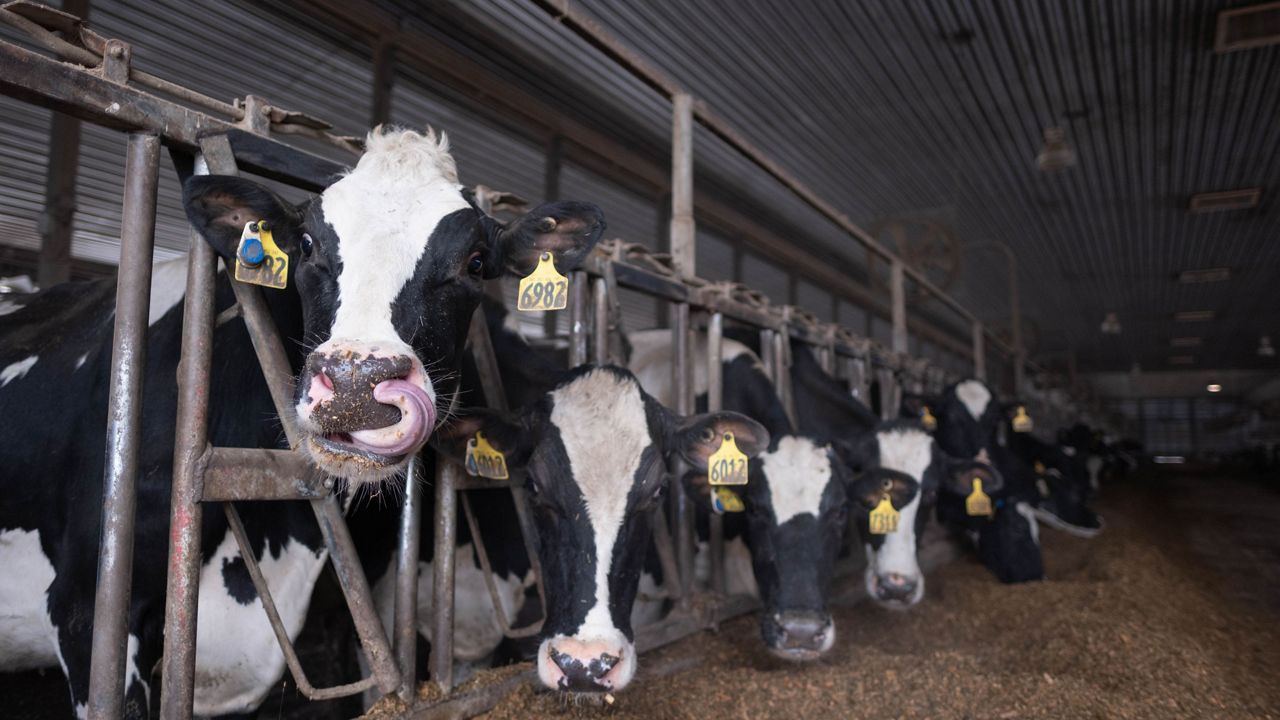
Cornell University’s PRO-Dairy program hasn’t seen a change to its state funding since 2014. Now the state is proposing a $125,000 reduction despite the demand for increased milk production for processing facilities.
The PRO-Dairy program is a state-funded program through Cornell University that aims to increase the competitiveness and sustainability of New York dairy farms, conducting research into herd health, business practices, nutrient management and more.
PRO-Dairy Director Tom Overton said the program’s request to the state is to not only maintain funding from last year but increase funding to cover rising expenses. The governor’s budget, however, now proposes cutting $125,000 from what was received last year.
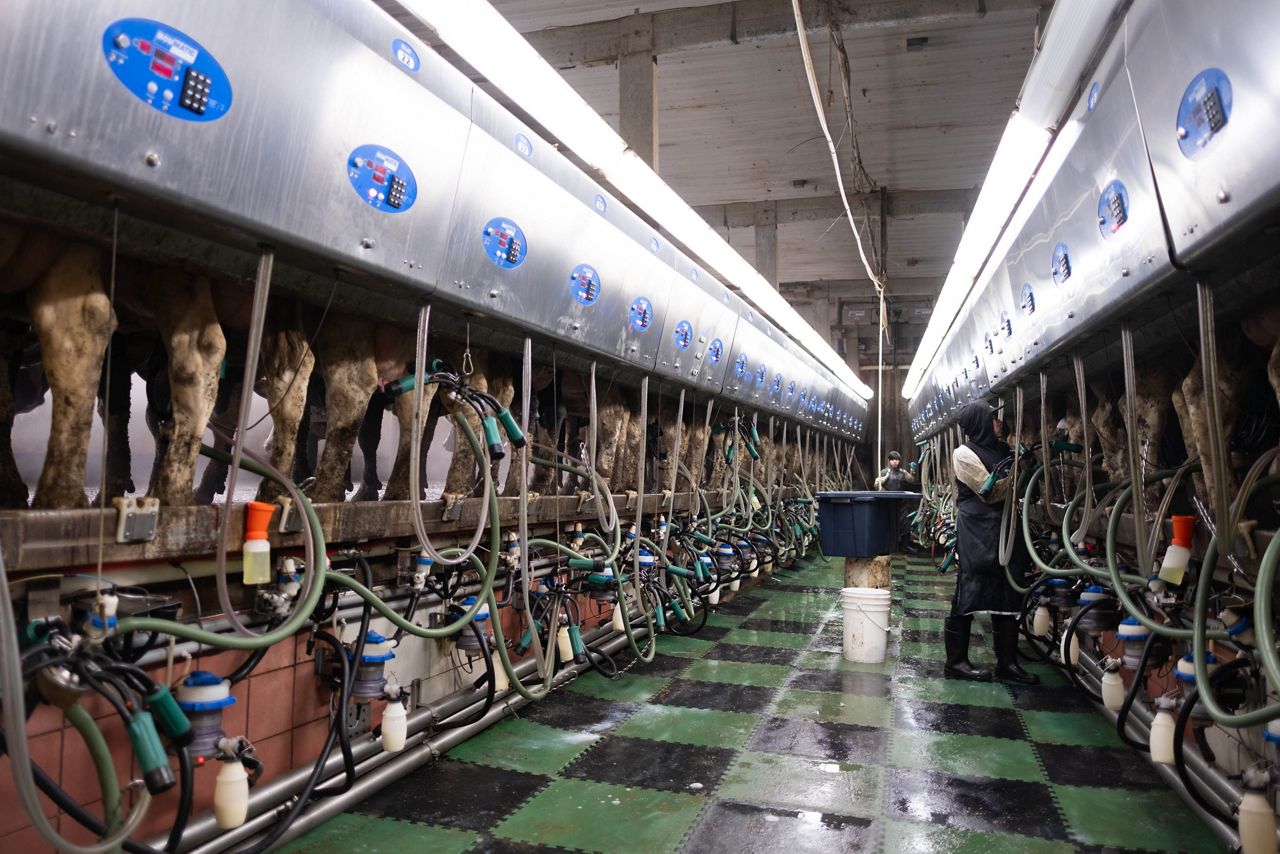
The current milk parlor at Beck Farms which is in the process of being replaced by a rotary milk parlor. (Emily Kenny/Spectrum News 1)
“Our program costs obviously increase every year, so we’ve identified expanded needs for farm business management, expanded needs for dairy welfare, because processors are increasingly interested in ensuring that our farms are taking care of our animals the best they can and the highest standards by which milk is produced,” Overton said.
Northeast Dairy Producers Association, a lobby group for dairy farmers advocating for these budget increases, testified during a public legislative hearing that the demand on the program has grown in the last 10 years, so the funding should as well. The final budget for fiscal year 2025-2026 included $1.4 million for PRO-Dairy, but NEDPA is asking Gov. Kathy Hochul to reverse the planned cut and add $1 million.
“During that same period, the demands on the program have grown significantly as farms face increased economic pressure, evolving environmental expectations, workforce challenges and rapid changes in technology,” said Allyson Jones-Brimmer, NEDPA’s executive director, during a legislative hearing in January.
The New York Department of Agriculture and Markets declined to comment on the topic, but the Commissioner of Agriculture Richard Ball highlighted other dairy focused funding from Hochul in testimony during the same legislative hearing. Ball highlighted another round of funding under the Dairy Modernization program and the $30 million in tariff relief.
Last year, Chobani announced the construction of a new plant in Rome, along with Cayuga Milk Ingredients in Auburn and Fairlife in Webster, which means the need for milk production will expand.
Overton said the investments by large processors such as Chobani show their confidence in New York’s dairy industry.
“They chose to locate here in New York, and I think they did that in part because of confidence in the dairy industry, and confidence in universities like Cornell and programs like PRO-Dairy,” Overton said. “We’ve got really good ability to support their needs.”
Tyler Beck, a co-owner of Beck Farms in Tompkins County, said continued funding of research is critical to keep up with the new demand for dairy processing facilities.
“If you put in alignment with what’s coming down the pipeline and how much [agriculture] is expanding in the state, they need to truly expand, not only stay where they are but expand with the rest of the state, the needs and the capacity because that’s the direction everything is moving,” Beck said.
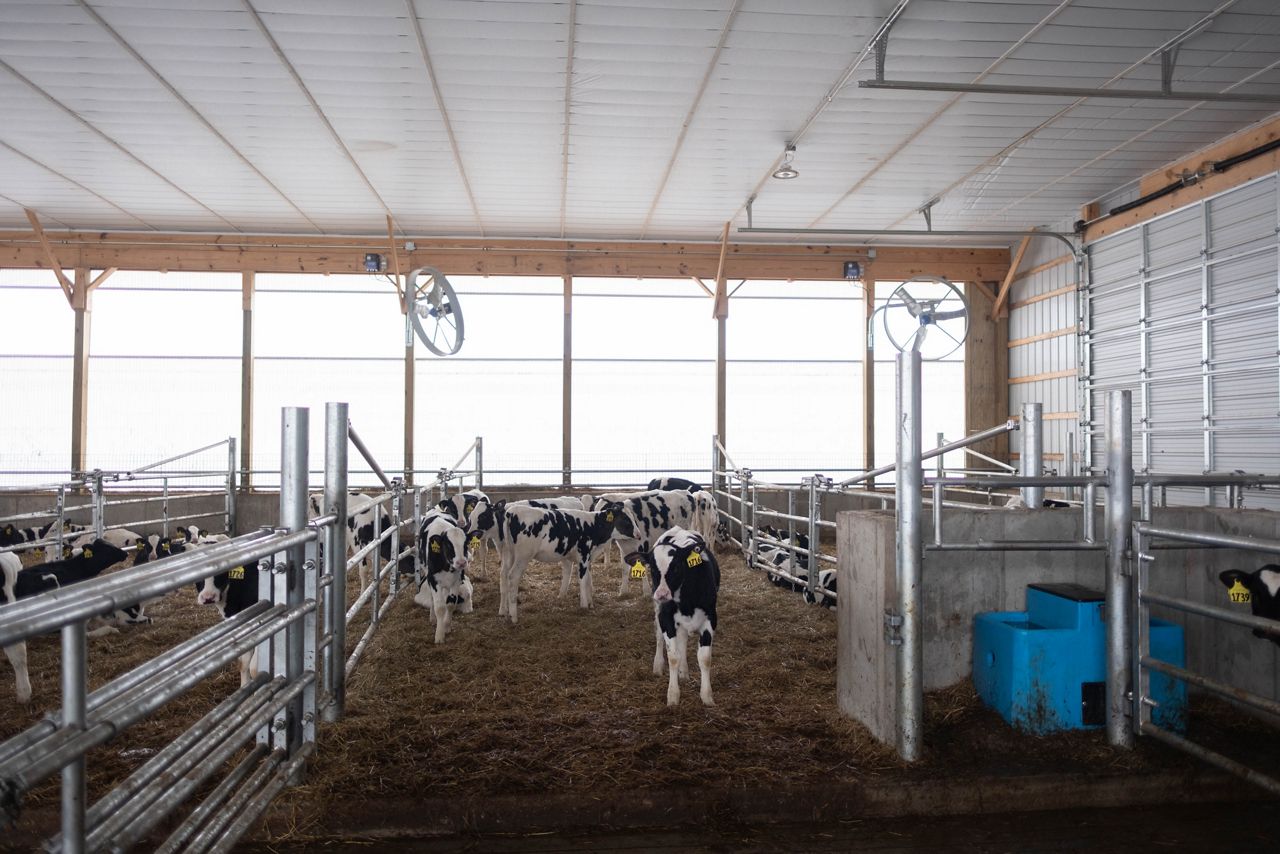
A calf barn that was recently built at Beck Farms with the guidance of PRO-Dairy specialists. (Emily Kenny/Spectrum News 1)
Beck Farms has utilized the PRO-DAIRY program in a couple of different ways, including peer groups where farmers can discuss issues facing the industry. Farm owners also consult specialists from the program about how to construct new facilities such as a calf barn and a rotary milk parlor. They were able to contact PRO-DAIRY officials about sizing specifications for the barn to determine how big the stalls need to be for the calves to have enough room as they grow.
“They sized exactly what we should be building in our blueprints for square footage, per calf, per age and as they grow, how you should design that, because this is a million-dollar barn that you’re building and you’ve got to get it right the first time,” Beck said.
Any reduction in funding for the program would be harmful to the industry, he added.
“If you’re making any cuts, you’re going the wrong way, and if you’re not growing with the state of dairy, then you’re also going the wrong way, so it needs to be twofold,” Beck said.