
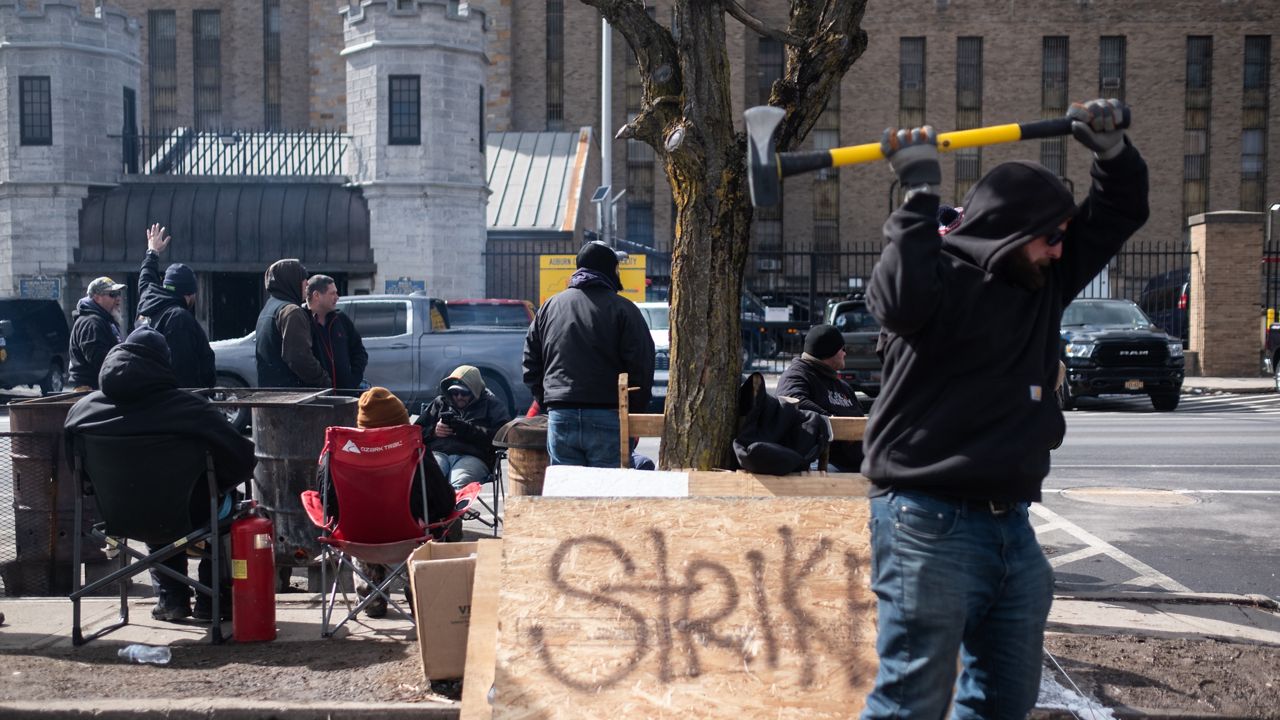
ROCHESTER, N.Y. — One year after the wildcat strike shook the New York state prison system, the union representing those striking correction officers says the issues that triggered the strike remain unresolved.
What You Need To Know
One year after the wildcat strike, New York state correction officers say it’s still not safe in the prisons
The union is in arbitration right now negotiating some 3,500 grievances filed by the COs
DOCCS says they are well on the way to making change
Chris Summers, the president of NYS Correctional Officers and Public Benevolent Association, or NYSCOPBA, says he and the union remain in the fight for change.
“We’re still working to get everybody back. As many as possible. We haven’t forgot about them. I know that they feel like we didn’t have their back, but we do have their back and we keep pushing for a safer working environment,” said Summers.
Here’s a breakdown of the numbers:
NYSCOPBA says there are about 11,500 correction officers currently in New York state prisons
They are down about 4,800 correction officers
The union is in arbitration right now negotiating some 3,500 grievances filed by COs
When the correction officers joined the strike one year ago, they said there were staffing shortages, dangerous working conditions, excessive hours including 24 shifts, and they demanded a repeal of the HALT Act, saying it made conditions less safe because of the limited use of solitary confinement.
A year later, Summers says not much has changed.
“No, we’re definitely not better off. There’s still no work-life balance. They’re doing 12-hour shifts, on top of 16 with that, no vacation times. No personal time. And if they call in sick, they don’t have a doctor’s note. They have to get docked a day’s pay,” said Summers.
“We are well on our way to making sure that we’re restoring services. We are making sure our prisons are safe and bringing our staffing levels to back to where they need to be to provide our staff with the work-life balance. We’re not at the end, but we’re off to a very strong start,” said DOCCS Commissioner Daniel Martuscello.
Summers says it’s his hope that legislators will sit down and have an open, honest conversation about how to make the prisons safer for everyone.
He believes the decision makers should visit the prisons and talk to the COs and see the actual situation for themselves.