
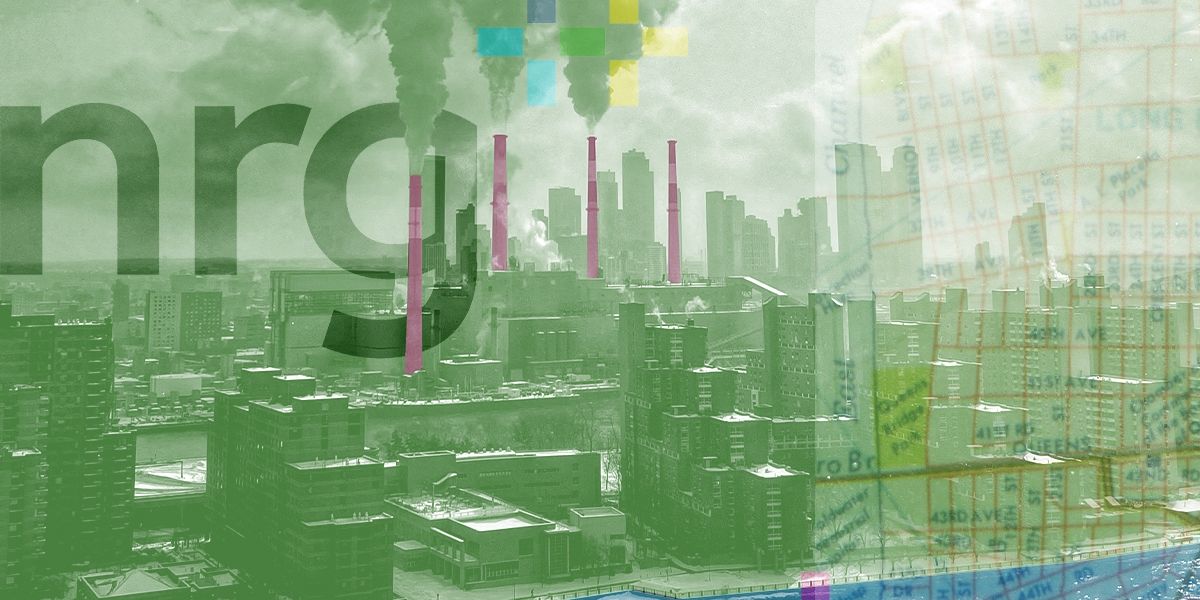
New York City’s largest fossil fuel-fired power plant has changed hands. The Ravenswood Generating Station, which provides more than 20% of the city’s generation capacity, was sold by its former parent company LS Power to NRG, an energy company headquartered in Texas that owns power plants throughout the country.
It’s not yet clear what this means for “Renewable Ravenswood,” the former owner’s widely-publicized plans to convert the site into a clean energy hub. Prior to the sale, those plans were hanging by a thread. NRG did not respond to detailed questions about whether it will abandon or advance that vision.
“Ravenswood has been an important part of powering New York City for decades, and we recognize how much the facility matters to the surrounding community and the region,” a spokesperson for the company told me in an email. “We’ve begun engaging with community stakeholders and look forward to continuing those conversations in the months ahead. Our leadership team is carefully reviewing all relevant information and is taking a thoughtful, measured approach to any future decisions.”
Ravenswood is made up of four generating units: a natural gas combined cycle plant built in 2004, and three steam generators built in the 1960s that run mostly on natural gas, though sometimes also on oil. The plant is responsible for a sizable chunk of the city’s climate footprint. In 2023, the most recent year for which data is available, the plant emitted nearly 1.3 million metric tons of CO2, or about 8% of the city’s emissions from electricity production.
The Renewable Ravenswood concept was largely celebrated by the surrounding community, which includes two of the largest public housing projects in the country and suffers from disproportionately high rates of chronic respiratory diseases like asthma. The plan, which a local subsidiary of LS Power called Rise Light and Power proposed in 2022, entailed replacing the plant’s three 1960s steam generators with a combination of offshore wind, batteries, and renewable energy delivered from upstate New York via new power lines.
By last year, however, the plan was increasingly looking like a distant dream. Its centerpiece was a proposed offshore wind farm called Attentive Energy, but the project has been on ice since 2024, with little chance of moving forward under the Trump administration. This past November, New York regulators rejected a proposed transmission line that would have connected Ravenswood to a hypothetical future offshore wind development, primarily because there was no longer any such development in progress. Earlier this week, state energy regulators delivered yet another blow to potential offshore wind development when they decided not to solicit offers from for new projects to enter the state’s energy market.
Battery development has also had a rocky few years in New York State, which has affected Ravenswood’s transition. Rise Light and Power initially proposed building a 316-megawatt battery project on the site in 2019, but it has yet to break ground. The former CEO, Clint Plummer, previously told me that the company was waiting on New York State regulators to open up their anticipated battery solicitation, which would enable the project to bid into the New York energy market, before building the project. That solicitation opened last July, but it’s unclear whether the company submitted a bid. NRG did not respond to a question about this.
NRG first announced its plans to buy a fleet of natural gas plants — 18 in total — from LS Power in May 2025. Ravenswood was not mentioned in the press release or investor materials, however. “We’re acquiring these assets at a significant discount to new build cost, at an attractive valuation, and at the strategically opportune time to be adding high-quality, difficult-to-replicate resources into our portfolio as the sector enters into a period of sustained demand growth,” NRG’s CEO Lawrence Coben told investors at the time.
The purchase was subject to regulatory approval and officially closed a few weeks ago, on January 30. Documents filed with the Securities and Exchange Commission confirm that Ravenswood was part of the deal. Documents filed with the New York Public Service Commission describe the terms in more detail, but they do not mention the proposed transition of the site to a clean energy hub.
Local officials, community groups, and tenant associations were deeply involved in fleshing out the Renewable Ravenswood vision. The Queens Borough President worked with the former owner on a multiyear report called “Reimagine Ravenswood,” released last summer, based on extensive engagement with the community, including public workshops, focus groups, interviews with local leaders, and a community survey. The report is evidence of high hopes the community has for the site’s transition, describing the potential to create jobs, expand public space, and generally increase investment in the neighborhood.
I reached out to many of the local elected officials and community groups that have publicly supported Renewable Ravenswood to ask if they were aware of the sale and whether NRG had made any commitments in regard to the transition plan. Just one responded. State Senator Kristen Gonzalez’s office told me they were aware of the sale, but declined to comment further.