
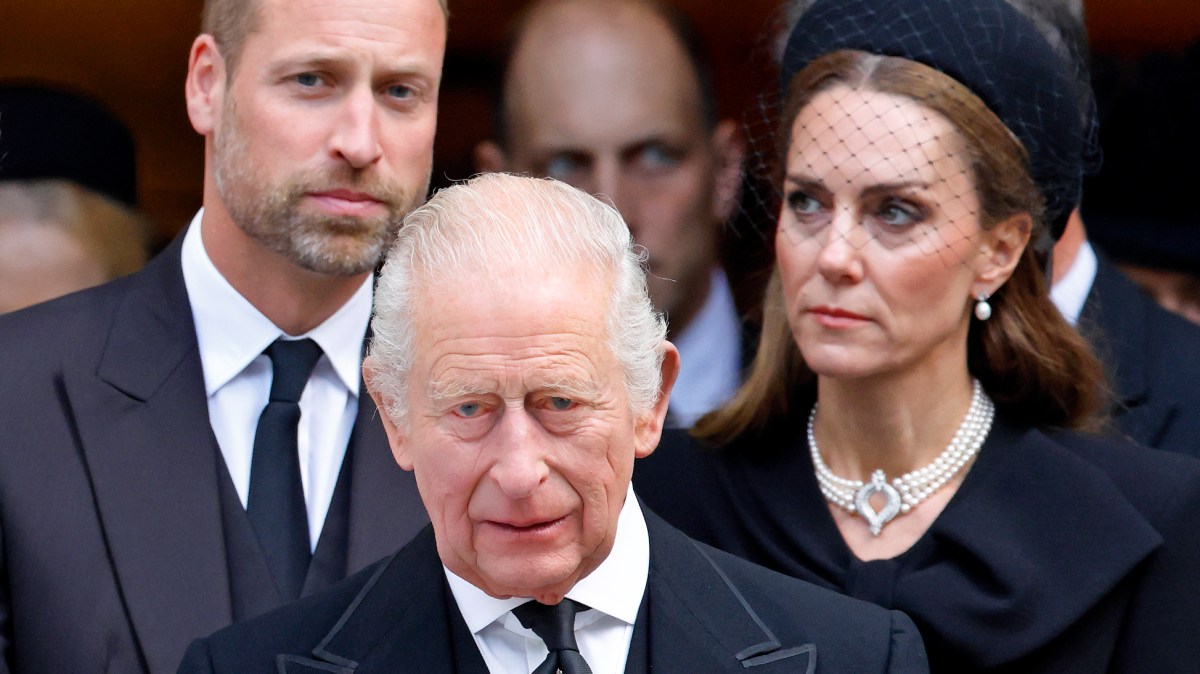
‘Everything looks terrible now because he’s lied through his teeth.” This is the stark assessment of the crisis facing the monarchy from a friend of the royal family after Andrew Mountbatten-Windsor was arrested on Thursday on suspicion of misconduct in public office.
Andrew’s fall from grace as a result of his decade as UK trade envoy and his friendship with Jeffrey Epstein, the late convicted paedophile, has yet to reach its nadir.
But the events and images of last week, with him photographed wide-eyed and slumped in the back of a car after his 11-hour interrogation at a police investigation centre in Norfolk, is a royal earthquake so huge that the aftershocks will be felt for years.
The King, still fighting cancer after more than two years of treatment, faces more dark days. As a friend of the family said of Charles, 77, the longest-serving heir-apparent when he succeeded Elizabeth in 2022: “This is his moment in the twilight sun and it’s an awful situation.”
Like the abdication crisis of 1936, the monarchy is again wobbling as a tale of two royal brothers unfolds.
But while the worst of Edward VIII’s conundrum, over whether to choose the throne or Wallis Simpson, lasted for little over a month, the crisis facing Charles III has no end in sight.
The King’s statement, issued four hours after Andrew’s 8am arrest at Wood Farm, Sandringham, on his 66th birthday, was his coldest yet. No mention of a “brother”, just “deepest concern” for “the news about Andrew Mountbatten-Windsor”. The killer line — “Let me state clearly: the law must take its course” — will have left Andrew, despite his denials of all wrongdoing, in no doubt that he has been royally hung out to dry.
There is relief in some royal circles that “the Andrew problem” has been effectively taken out of the Palace’s hands by the police. But with an investigation under way that could result in the first criminal trial of a senior royal for a serious offence in modern history, it has lost what it so highly prizes: control.
It is a dangerous moment for the monarchy, because as one who knows the King and his court well says: “The story will run for months on end, maybe years, and the royals have no idea what will play out with further documents or evidence [requested] from Andrew’s personal protection officers and royal officials.”
Charles stripped his brother of all his titles last year, evicting him from Royal Lodge, Windsor, to Norfolk, after further revelations about Andrew’s friendship with Epstein cast doubt on his long-held version of events. Those steps, however radical, were reactive, and some, including the Prince of Wales who may yet inherit this crisis, felt they were too slow. Would that action have been taken if Andrew had not been exposed by an early Epstein files leak?
As one former aide says: “The real problem for the Palace is they can’t get ahead of it.”
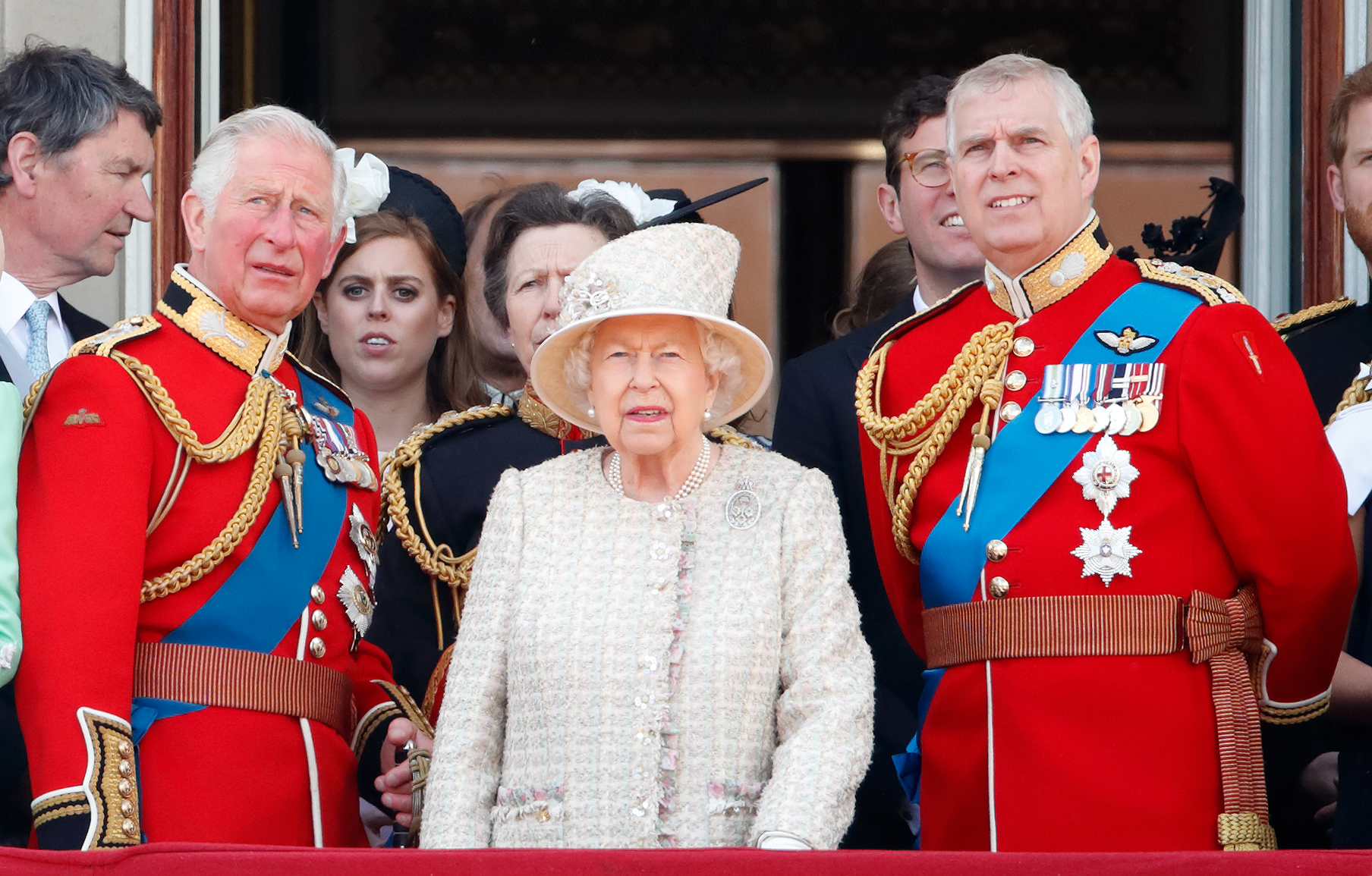
Queen Elizabeth with Charles and Andrew
MAX MUMBY/INDIGO/GETTY IMAGES
But get ahead of it they must, says a close friend of William. “The time of grace has passed for the royal family,” the friend says. “There are a hell of a lot of questions that have been spawned. As distasteful as some of those questions are, they should be being war-gamed so they’re not playing catch up. They need to be proactive about getting the dirty washing out and making sure they’re the ones who get it out, not others. Really bold moves are what is needed now.”
As the police pore over Andrew’s time as trade envoy from 2001 to 2011, and whether he might have shared highly confidential and sensitive information with associates including Epstein, the Palace faces difficult questions about who else knew what and when.
How was Andrew able to cruise through royal life with so few checks until his disastrous Newsnight interview with Emily Maitlis in 2019, when the Queen finally forced him to step back from public life?
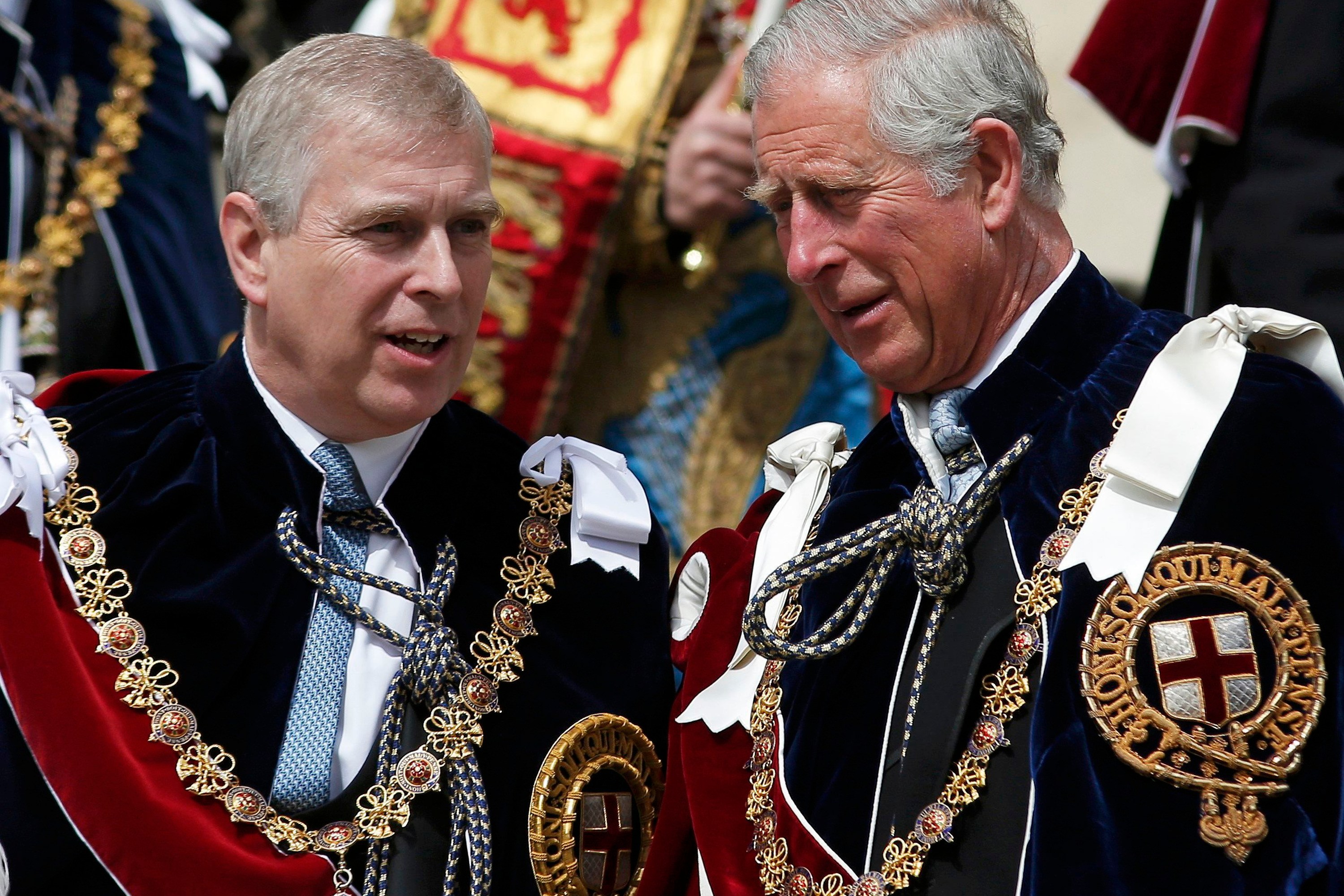
Andrew and Charles
PETER NICHOLLS/PA
A former courtier says: “Andrew was an idiot with bad judgment. When we travelled overseas and met staff at embassies and high commissions [where he’d been], you’d be left with the impression he was a pain in the arse, pompous and unpleasant wherever he went, a clumsy buffoon.
“But the feeling was the late Queen was beyond reproach, so at the Palace no one ever took Andrew to task because of her opinion of him. You just left it alone because she was so fond of him. So the question may end up being: what’s a cover-up and what was just left alone because of the Queen? Questions were never asked. Things were never probed.”
Another former Palace aide says: “There was unease, especially about some of the company he kept. He had a very effective team working for him who protected him and made life very difficult for anyone who asked questions.”
One person on that team was Amanda Thirsk, Andrew’s private secretary until his private office at Buckingham Palace was disbanded in 2019.
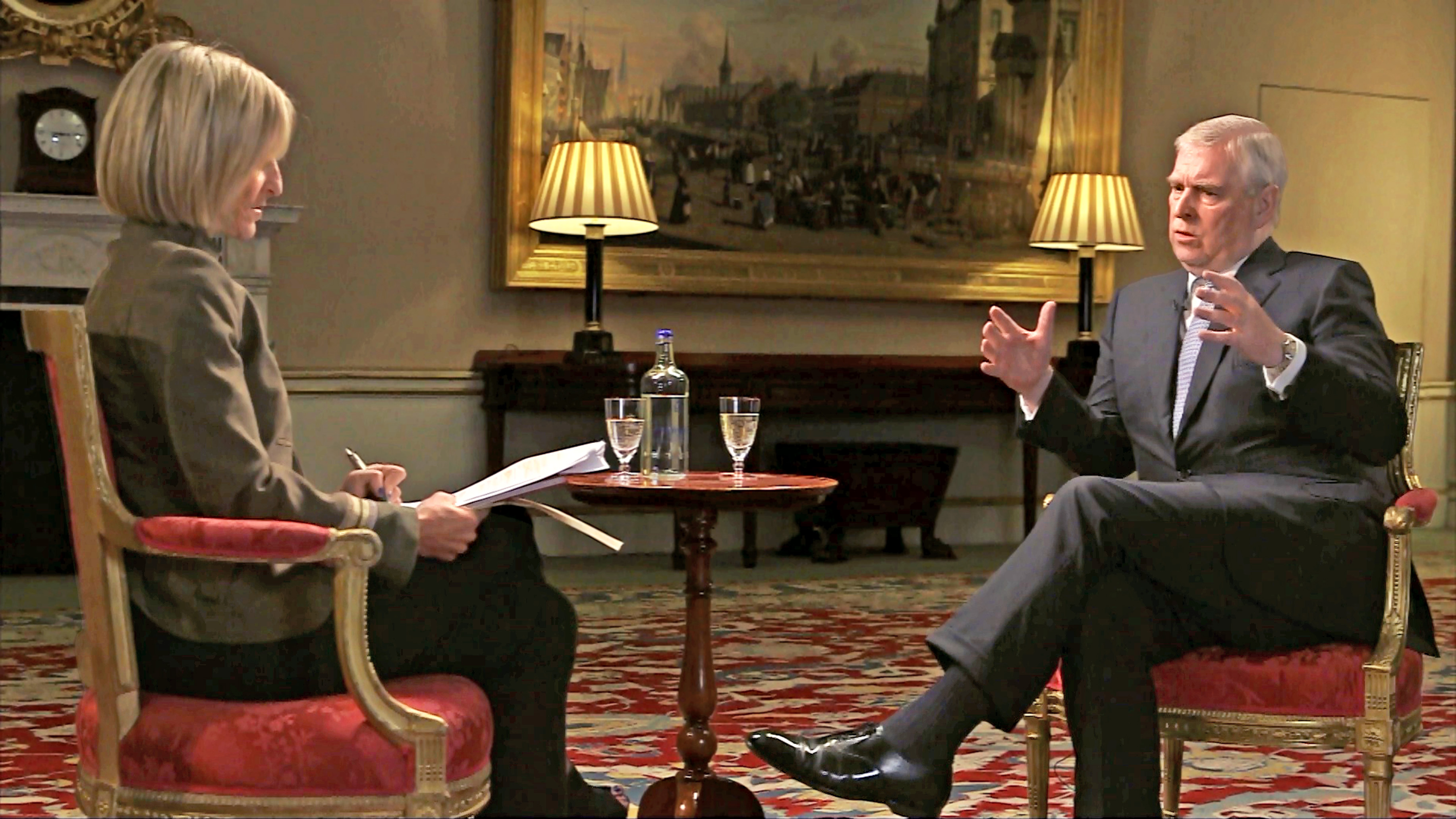
After Andrew’s Newsnight interview with Emily Maitlis, Queen Elizabeth finally forced him to step back from public life
BBC
“Amanda was a good guard dog, but she was just doing what she was told,” says the former aide, who also closely observed the relationship between the late monarch and her supposedly favourite child. “It was very hard for a mother to be objective about her son. The Queen’s reputation is going to take a bit of a battering over all this and the only person oblivious to it was lying in the back of a car on the Norfolk roads this week.”
Another question hanging over the monarchy is Andrew’s out of court settlement with Virginia Giuffre in February 2022, said to be about £12 million and thought to have been paid with funds from the Queen and the late Prince Philip’s estate.
Those close to the King recently confirmed he did not contribute to the settlement, in which Andrew admitted no liability. Giuffre died by suicide last year. Andrew has always denied her allegations that Epstein and Ghislaine Maxwell trafficked her to him, as well as her claims that he sexually abused her three times when she was 17. His arrest does not relate to her allegations.
The settlement briefly kept a lid on the matter during Elizabeth’s Platinum Jubilee celebrations, but how will history judge the decision by a monarch to protect her son in such a way?

People close to the royal family believed that Andrew was the Queen’s favourite son and that she shielded him
CHRIS JACKSON/GETTY IMAGES
A source who was close to the Queen says: “Andrew had his own legal advice, which the Palace was made aware of. There was a feeling of ‘your idiotic Newsnight interview has knocked a domino over that is causing chaos for you and this [the settlement] might be one way to stop it. You cannot be chased by lawyers everywhere you go, you can’t be barricaded in Balmoral hiding behind your mother’s tartan.’ It was presented as the best of some terrible options.”
Those close to the royal family have described the dutiful Elizabeth’s dereliction of duty in curbing Andrew as leaving an “unexploded bomb” for Charles to defuse.
No one in royal circles believes the late Queen knew anything even close to the full extent of what is now alleged but equally no one disputes that she turned a blind eye.
A royal source says: “It wouldn’t surprise me if the Queen just said she didn’t want to hear disobliging things about Andrew and used her red boxes as a shield. But her popularity will protect the monarchy to some extent and Charles will get a lot of public sympathy, which will bolster the monarchy’s position.”
Those close to the family also believe that “Charles and William’s genuine horror of the situation” enables the public to “make a distinction” between Andrew and the rest of the pack.
“There is ethical insulation from Andrew with his brother and nephew, and that’s a thick layer of insulation,” says a friend of the royals. “But it heaps huge pressure on the institution to understand that, in the future, a different sort of monarchy is needed and meaningful change under the next reign.”
So how can the royal family move through the quagmire? In his statement on Thursday, Charles indicated he would not provide a running commentary: “As this process continues, it would not be right for me to comment further on this matter. Meanwhile, my family and I will continue in our duty and service to you all.”

The King attends the opening show of London Fashion Week 2026 on Friday
RICHARD POHLE VIA REUTERS
Within hours of Andrew’s arrest, the King opened London Fashion Week to cheers and a single heckler; Queen Camilla listened to an orchestra at Sinfonia Smith Square in London, and the Princess Royal, the ultimate antidote to Andrew, visited HM Prison Leeds in her role as patron of the Butler Trust, a charity that strives to improve the penal system.
Charles, Camilla and Anne knew they would probably face hecklers at their engagements, and all three did. Courtiers had gauged whether they wanted to go ahead with their commitments. “It was the shortest conversation I can recall,” says an aide. “To pull out because he might face a shout from the crowd simply isn’t in the King’s nature, still less in the Princess Royal’s.” A source close to the Queen adds: “She will be recalibrating the mood of the nation with every cheer and every jeer.”
The principals will keep the show on the road. The Princess of Wales, supporting England in her role as patron of the Rugby Football Union, laughed and chatted at Twickenham on Saturday and the royals will be out on manoeuvres this week.

The Princess of Wales at Twickenham
MIKE HEWITT/GETTY IMAGES
Beyond the inevitable hecklers, there are other hazards ahead.
The King will undertake as state visit to America in the spring, and William is expected in the US in July to mark the 250th anniversary of independence. Members of US Congress, and several of Epstein’s victims who live in America, continue to repeat their calls for Andrew to testify.

Pam Bondi, the US attorney-general, answers the questions of the House judiciary committee, in front of screens showing Andrew crouching over an unidentified woman
WIN MCNAMEE/GETTY IMAGES
Aides acknowledge the trips will require extra “due diligence”. A royal source says: “The trip to the US is a real problem — they will have to risk-assess every step of the way to think about what might go wrong.
“They can’t cancel it, that would look terrible. But all it takes is for Trump to start riffing about Andrew, or an opportunity-seeking congressman or woman, and it all becomes highly embarrassing and overshadowing of what the mission is.”
As he tries to have a restful weekend at Highgrove, his Gloucestershire home, after the toughest week of his reign, can the King prevent the Carolean era being permanently cast in the shadow of his disgraced brother?
That is not how he rolls, says a close friend: “He never thinks about self-preservation, he doesn’t think about the monarchy through the lens of ‘me, my reign and my legacy as King Charles’. He’s thinking about what the right thing is to do for the institution and about carrying on with the job, as the nation doesn’t expect you to press pause because your brother has been arrested.”
Which isn’t to say that Charles is not constantly checking the temperature on the biggest royal scandal in modern times.
A friend of the King says: “He has thought deeply and felt powerfully about this issue in his in-tray since reign change, and has tried to take swift action. Hopefully when the waters settle, people will see that in the circumstances, the King demonstrated leadership, did his duty and continued with his service.”