
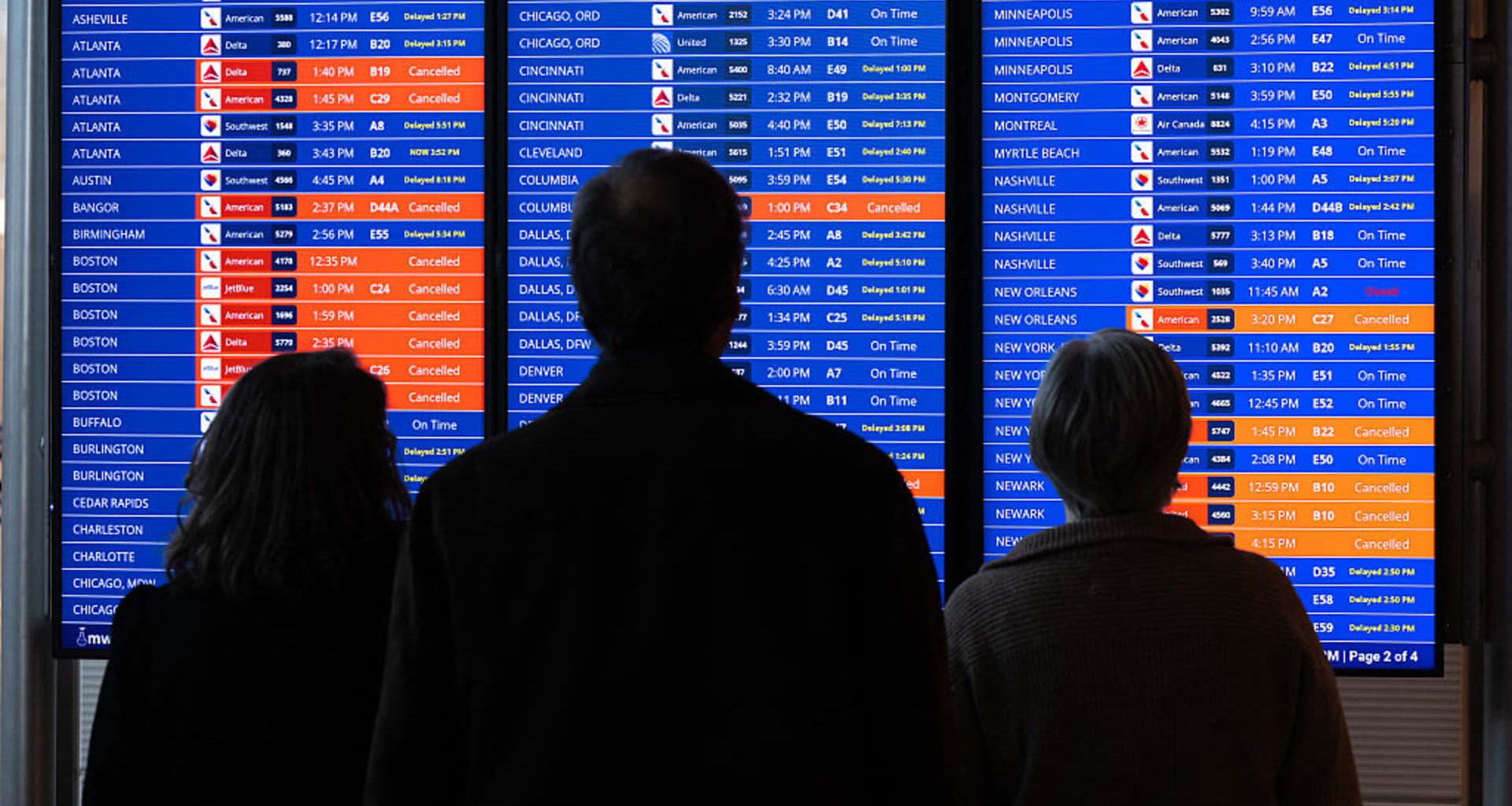
Travelers look at a flight status board as flights are delayed and cancelled following a significant winter storm at Ronald Reagan Washington National Airport in Arlington, Virginia, January 26, 2026.
Saul Loeb | Afp | Getty Images
Airlines canceled more than 5,000 flights through Monday and waived cancellation and change fees for airports spanning Virginia to Maine ahead of another massive winter storm on the East Coast, set to once again put carriers to the test at the tail-end of winter break.
The National Weather Service issued a blizzard warning for much of New Jersey, the New York City area, and parts of Maryland, Connecticut, Rhode Island and Massachusetts. The storm could dump more than 2 feet of snow in some areas as well as bring wind gusts of more than 40 miles per hour. The NWS warned that travel will be trecherous with low visibility.
About two-thirds of the flights to New York’s John F. Kennedy International Airport and LaGuardia Airport were canceled on Sunday as were around 40% of the departures, according to FlightAware. Disruptions are set to worsen on Monday with snow continuining to fall. More than 70% of Monday departures were canceled at Boston Logan International Airport.
Airlines routinely cancel flights ahead of major storms to avoid having aircraft and crews out of place and to make it easier to restart operations after the storm passes.
Delta Air Lines, American Airlines, JetBlue Airways, United Airlines and Spirit Airlines waived fees and fare differences for passengers if they can travel as late as Feb. 26. Southwest Airlines said customers are eligible for a change without paying a difference in fare if they can rebook to fly or fly standby within two weeks.
Winter Storm Fern in January, followed by bitter cold, caused mass travel disruptions across a large swath of the U.S.
Read more CNBC airline news
American Airlines had struggled to recover, drawing harsh criticism from flight crews, some of whom were stranded and had to sleep at airports, heightening tension between frontline employees and the company’s CEO, Robert Isom.
The storm cost American between $150 million and $200 million in revenue, the carrier said last month on an earnings call.