
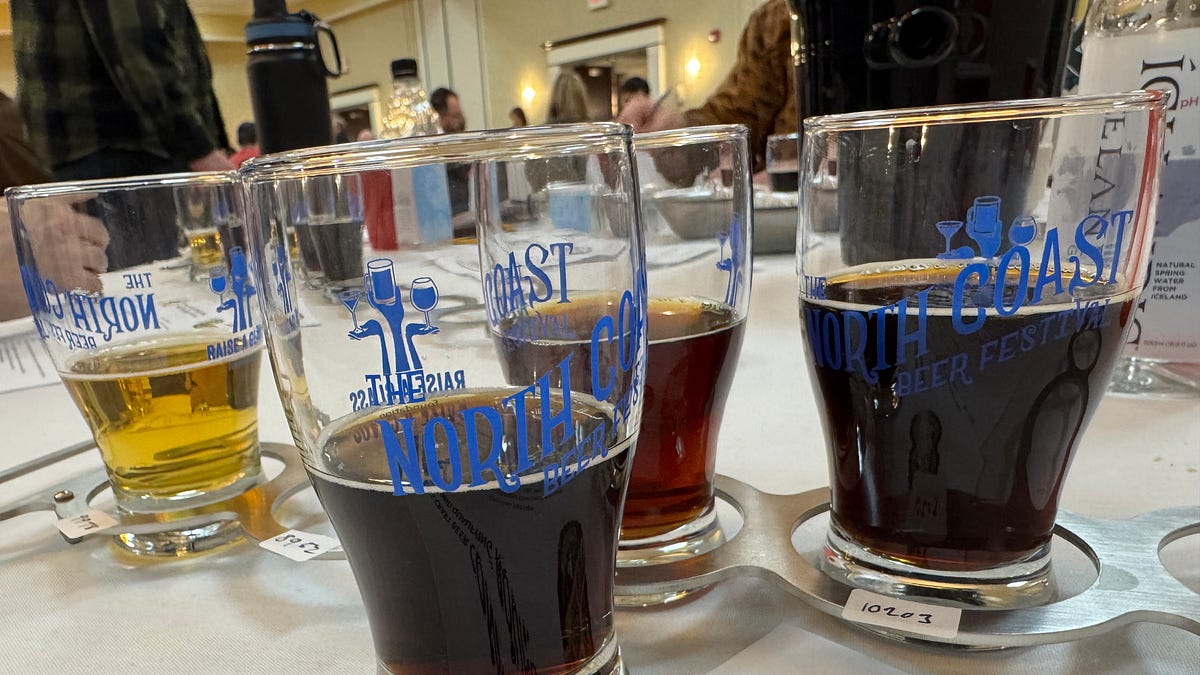
If you had told me 10 years ago that I’d still be blocking off the first weekend in March to sit in a conference space in Henrietta and methodically taste dozens upon dozens of beers — parsing ester profiles, debating hop expression, arguing gently about balance — I would’ve said, “I mean, that sounds about right.” What I wouldn’t have predicted is just how big the New York State Craft Beer Competition would become, or what it would mean to be the only person to judge all 10 of them.
That part still catches me off guard.
The NYS Craft Beer Competition, organized by the New York State Brewers Association and the Raise the Glass Foundation, has grown into the largest state-level craft beer competition in the country. More than a thousand beers. Hundreds of breweries. Dozens of categories. It’s not just a logistical feat (seriously, the volunteers from Raise the Glass are so friendly and amazing); it’s a statement. It says that New York beer is deep, competitive and serious about quality. It says that this state — sprawling, opinionated, regionally diverse — has built something durable in craft beer.
Durability is an important topic to discuss when the prevailing narrative over the past two years has been about the tenuous future of the industry, one where closings are outpacing openings by a pretty good margin and sales have slowed for all but just a select handful of breweries.* (Note: Scroll to the bottom of this article for some thoughts on durability and resilience.)
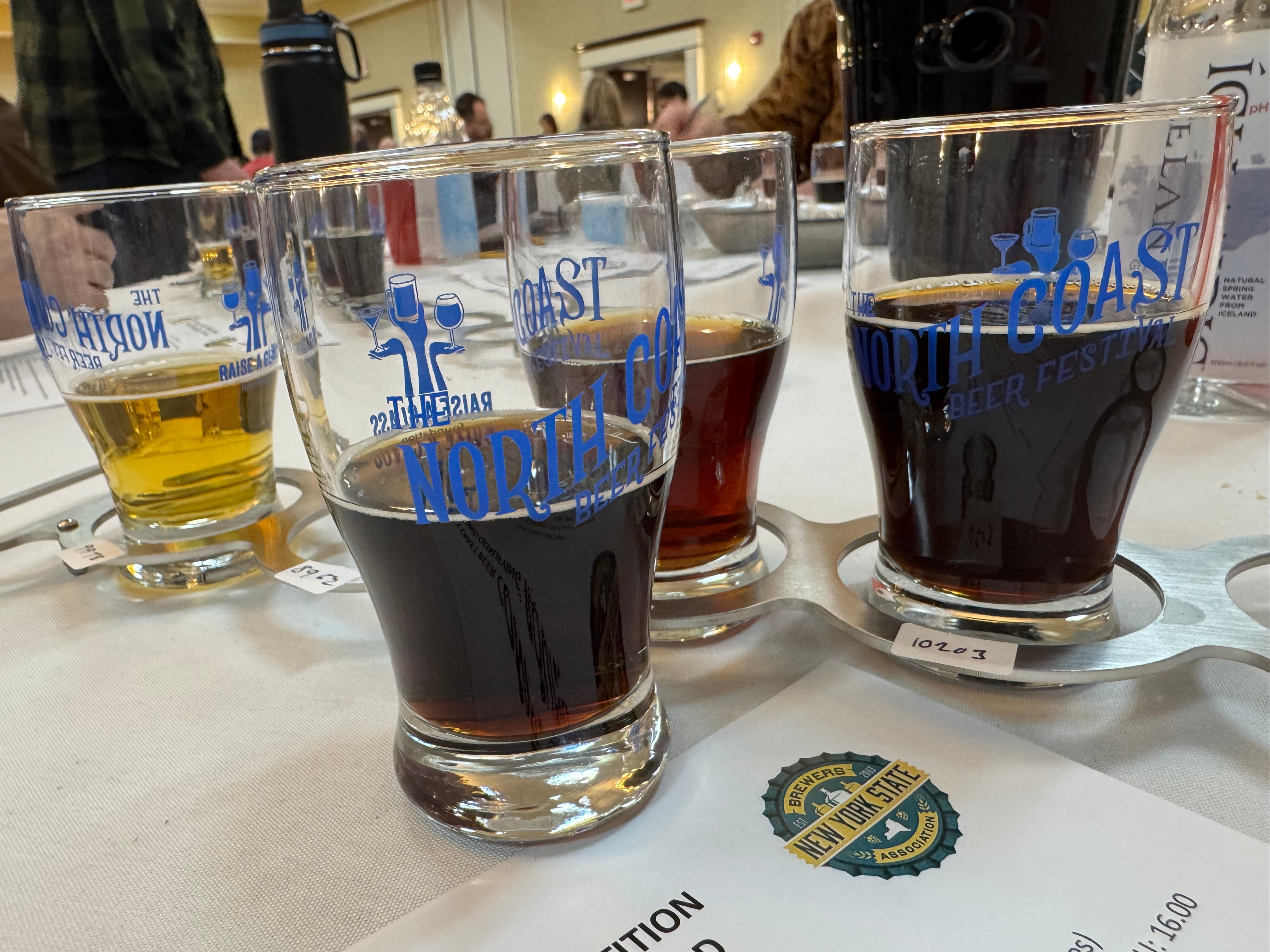
When you judge blind, the hype disappears. There are no labels, no taproom vibes, no social media buzz. It’s just the sample glass in front of you. That’s what makes this competition matter. It levels everything. A tiny farm brewery from a rural county has the same shot as a Brooklyn powerhouse. (But let’s be real, Brooklyn-based Grimm continues to be the behemoth in the room as it has now been named NYS brewery of the year four times in the past five years). Reputation doesn’t pour into the glass. Only the beer does.
And over 10 years, I’ve watched the baseline rise.
Early on, you’d encounter a handful of truly standout examples in a category (or at least hope you did) and feel pretty clear about your medal tier. Now? Entire flights are razor tight. The difference between gold and silver can come down to the slightest imbalance — a touch too much sweetness, a whisper of oxidation, a hop note that fades a little faster than you want. That kind of hair-splitting is a good problem. It means the average quality is high. It means brewers have dialed in their processes. It means New York beer isn’t playing catch-up anymore.
Being invited back year after year has always felt like a vote of confidence. Being the only judge to sit on every single competition panel since the beginning feels like something else entirely. I don’t wear that as a badge so much as I carry it as a responsibility. A decade of judging means I’ve had a front-row seat to the evolution of this state’s beer scene. I’ve tasted the rise of hazy IPA from insurgent style to established category. I’ve watched lagers go from afterthought to obsession. In 2025, hazy IPAs (104 entries) and light lager (traditional) (91 beers) were the two most-entered categories. I’ve seen barrel-aged programs mature from blunt-force bourbon bombs to layered, integrated works of patience and restraint. (And I am really appreciating how we’re moving further and further away from the type of dessert-adjacent sugary stouts that hurt your teeth with every sip.)
It’s an enormous honor to be trusted with that perspective. Brewers send their best to this competition. They aren’t tossing in leftovers. They’re putting real work, real pride, and real money into those entries. Plus, I know how much brewers value the feedback and constructive criticism. Judging them requires focus, discipline, fairness, and respect. Every score sheet matters. Every comment should help.
And then there’s the part that keeps me coming back: the people.
The competition weekend has become something like a reunion of the best beer minds in the region. Brewers, educators, retailers, writers, consultants — people who can identify a fermentation flaw in a single sip and then pivot to a passionate defense of traditional German lagering techniques without missing a beat. It’s nerdy. It’s intense. It’s deeply collaborative. The debates are sharp but collegial. The shared goal is clarity: what is the best example of this style in New York right now?
In a moment when the broader craft beer industry is facing tighter margins, slower growth, and real economic pressure, this competition feels even more important. It’s a snapshot of resilience. You don’t get more than a thousand entries if brewers are mailing it in. You get that kind of participation when people still believe in the work. When they still care about being measured against their peers. When they still want to win, not just for the medal, but for what it signals about their craft.
What does the competition say about the state of the industry? It says we’ve moved from expansion to refinement. The wild boom years are behind us. In their place is something steadier and, in many ways, stronger. Brewers are clearer about their identities. Instead of chasing every trend, more are leaning into what they do best. You can taste house character now. You can sense intention.
As I head into this tenth competition in Henrietta, I’m watching for a few things.
First, the continued rise of lagers. Not as nostalgia pieces, but as precision statements. Clean, expressive, technically sound lagers tell you everything about a brewery’s discipline. There’s nowhere to hide. When they’re great, they’re quietly transcendent.
Second, the evolution of hazy IPA. The style isn’t going anywhere, but the best versions have grown up. I’m looking for balance — hop intensity without cloying sweetness, softness without muddiness, clarity of aroma rather than a blur of fruit salad.
Third, barrel-aged beers that show restraint. Integration over aggression. Oak as structure, not spotlight. The breweries that have invested in patience and blending are producing beers that feel less like stunts and more like compositions.
And finally, I’m looking for identity. The beers that make you say, even blind, “This feels like it came from a brewery that knows exactly who it is.” (It’s wild when I think — key word being “think” — I can tell what brewery made a beer. You spend enough time around the industry and you can recognize the hallmarks of certain breweries.) That’s the most exciting shift of the last decade. New York beer no longer feels like it’s trying to prove it belongs. It belongs. Now it’s defining itself.
Ten straight competitions is a strange milestone. It makes me reflective in a way I didn’t expect. I think about the early panels, the cramped score sheets, the categories that didn’t even exist. I think about the breweries that have grown up alongside this event. I think about how many conversations have unfolded over tasting tables — some technical, some philosophical, some just plain funny.
Mostly, I think about how lucky I am.
It is a huge honor to judge this competition, full stop. To do it for the tenth straight year, and to be the only person who has been at every single one, is something I don’t take lightly. It means trust. It means continuity. It means being part of the foundation of something that now stands as a statewide institution.
So as the competition approaches this weekend and we gather again in Henrietta, I’m not just excited to taste great beer. I’m excited to reconnect with the people who make this scene what it is. To learn something new. To argue thoughtfully. To celebrate excellence. To witness, once again, just how far New York craft beer has come — and to get a hint of where it’s headed next.
Pass the first flight. Let’s get to work.
*Here’s that note on durability promised above:
Durability is an important topic to discuss when the prevailing narrative over the past two years has been about the tenuous future of the industry, one where closings are outpacing openings and sales have slowed for all but a select handful of breweries. (Yes, I am repeating this turn of phrase, because I think it’s poetic and indicative of the current market.) Yet, despite these headwinds, the New York craft beer scene has shown remarkable resilience. Established breweries have leaned on diversified revenue streams, from canning and distribution to taproom experiences, helping them weather fluctuations in on-premise sales. Meanwhile, younger breweries continue to innovate, experimenting with styles, local ingredients, and seasonal releases that keep consumer interest high.
Community support also plays a crucial role. Many small breweries have cultivated loyal followings that extend beyond simple product consumption. Crowdfunding campaigns, membership clubs, and local partnerships allow breweries to maintain cash flow and visibility even when broader market conditions are challenging. Regional organizations, beer trails, and festivals further amplify this support (though those are obviously harder than ever to maintain success), reinforcing the idea that craft beer is as much about culture as it is about consumption.
The state’s regulatory environment, while occasionally challenging, has provided openings for growth through farm brewery licenses, expanded distribution allowances, and support for direct-to-consumer sales. These measures give breweries room to pivot when larger economic pressures arise.
In short, while the New York craft beer market has certainly faced contraction and uncertainty, its durability comes from a combination of entrepreneurial adaptability, deeply rooted community engagement, and an evolving regulatory framework. These factors suggest that even in a difficult climate, the state’s craft beer culture is unlikely to vanish—it is simply changing shape, and those who innovate and connect with their communities will continue to thrive.