
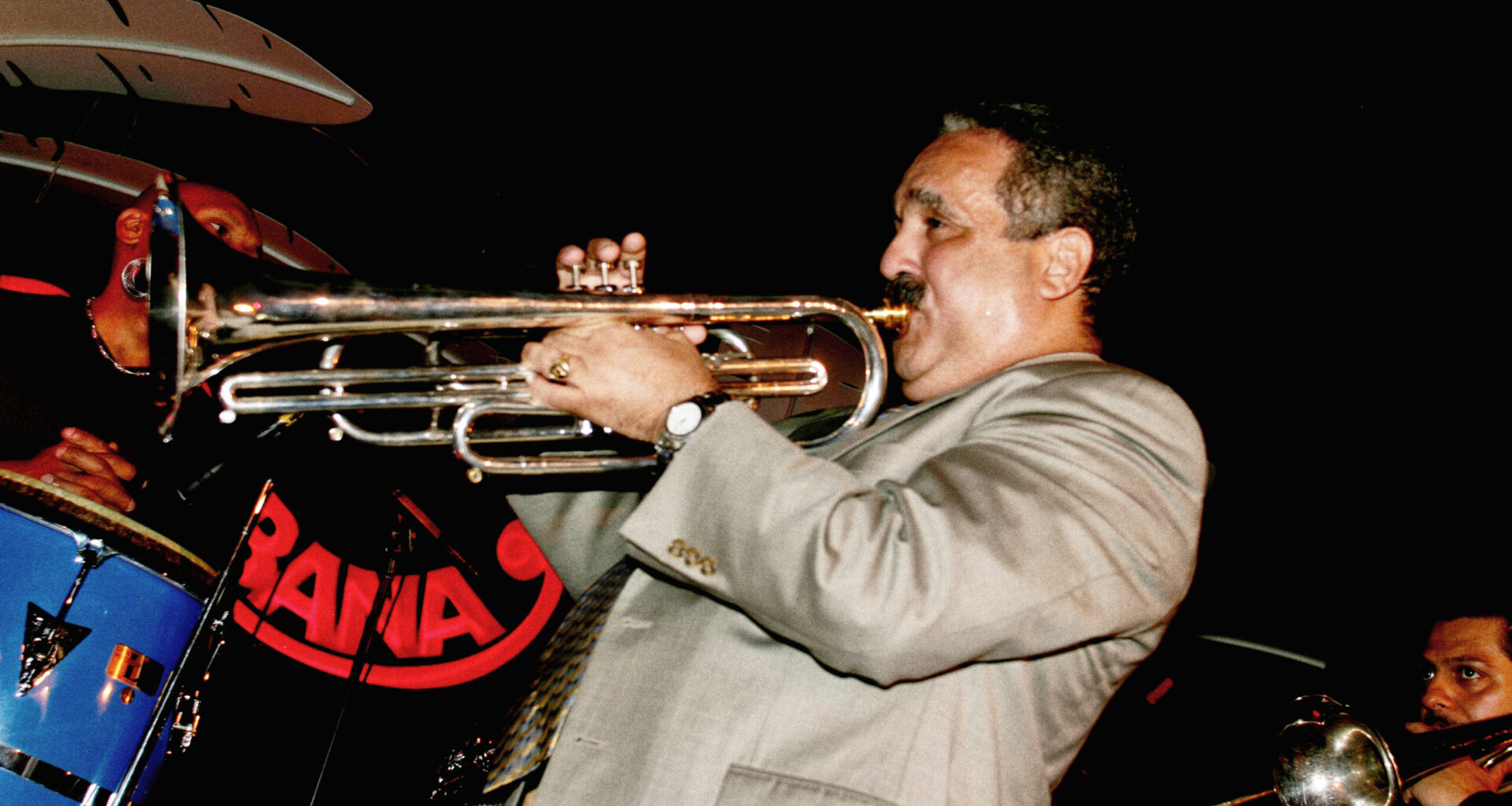
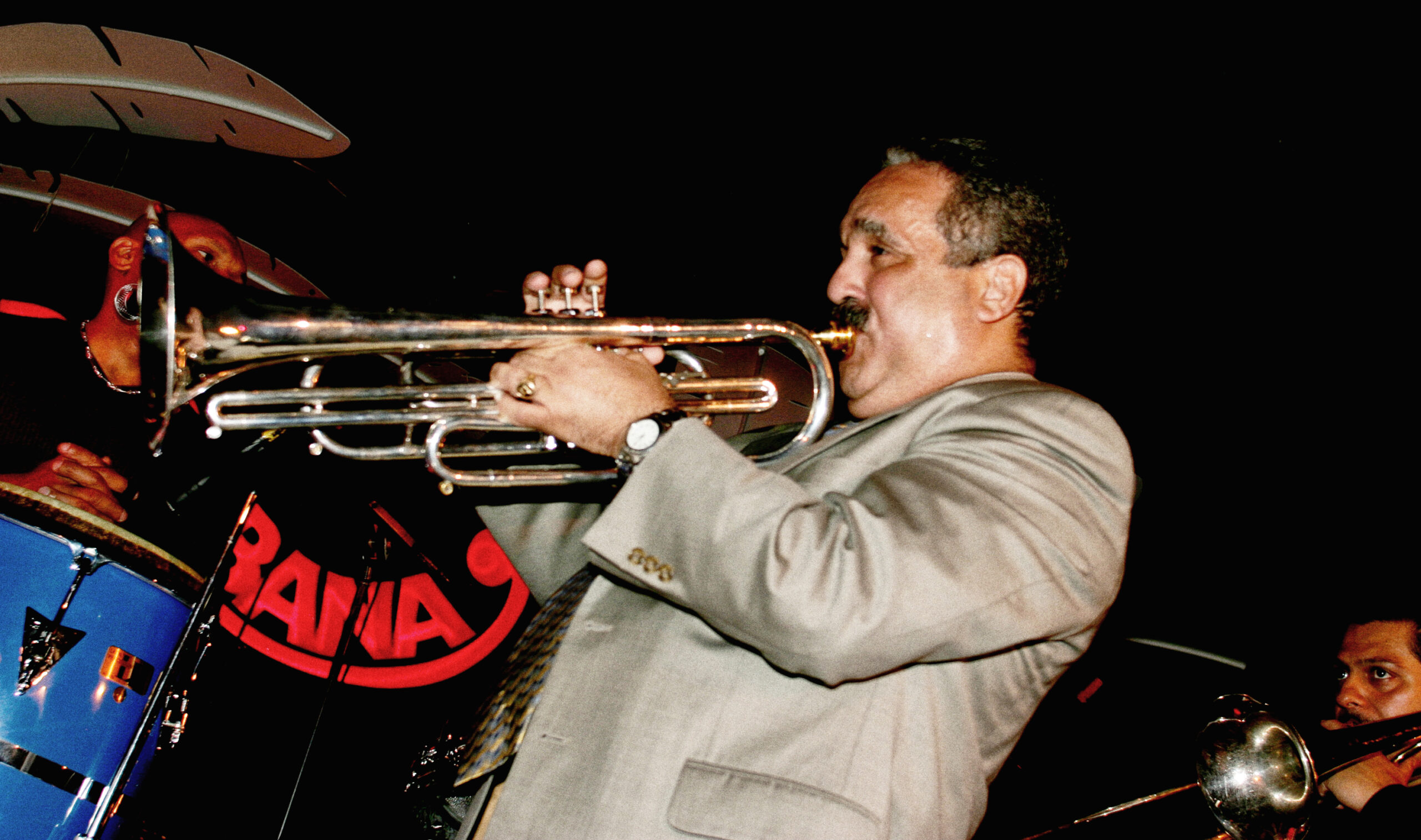
(Courtesy of Bill Tompkins/Getty Images ) Salsa singer Willie Colon performing at the Copacabana club during the Verizon Music Festival on May 1st 2004 in New York City.
On February 21, the world of Latin music lost one of its most important architects. Willie Colón passed away, leaving behind more than songs, he left a way of understanding Salsa: as storytelling, as barrio testimony, as identity, and as social conscience.
For many, he was a legend. For others, a cultural force.
For me, and for an entire generation, he created the record that changed everything.
Caracas, 1978: When It All Began for Me
It was 1978 when my world first opened to the sounds and sights that would shape my tastes forever. Late-’70s Caracas buzzed with energy and possibility, at least to an 8-year-old boy. I remember the warm streets alive with chatter, the scent of mango trees, the roar of my friends playing futbolito and baseball with pelotica de goma in any empty space available in the middle of the urban sprawl. I remember watching “El Matador” Mario Kempes win Argentina its first World Cup on a black-and-white television that seemed to shout with joy as paper confetti filled the screen. Record stores overflowed with vinyl, their covers bursting with color and promise, and the music spilling from them felt like a secret language I was only beginning to understand. Every note, every rhythm, every story whispered that the world was bigger, louder, and more exciting than I had ever imagined.
Caracas had incredible record stores. My brother Bernardo, a teenager at the time, would come home with LPs tucked under his arm from a shop called Maracaibo Imports. One day, he walked in with an album cover showing babies of every color.
It was Siembra, by Willie Colón and Rubén Blades.
That album became my bible.
Through it, I didn’t just fall in love with Salsa. I fell in love with prose, with storytelling, with poetry. Siembra would go on to become the best-selling salsa album in history, but to me, it was something even bigger. It proved that popular music could think, could question, could narrate the lives of ordinary people with dignity.
Why New York Became the Cradle of Salsa
Many have asked: why New York?
Why not Caracas, San Juan, Santo Domingo, or Panama City? Caribbean cities had just as many, if not more, Latinos. Yet it was New York that became the epicenter of the sound that would define Salsa.
The answer lies not just in culture, but in infrastructure. In much of the Caribbean, musicians survived playing in private parties and family gatherings. Innovation was risky. You played what kept you working. Public clubs were limited. New York was different. Clubs were public battlegrounds. Orchestras had to compete. Creativity wasn’t optional, it was survival. Add to that the cultural, political, and economic pressures facing Latinos in the city, and you had the perfect conditions for a new musical language to be born.
When Cuba was isolated politically, New York was uniquely positioned to carry the torch. And in that city, amid steel, concrete, and immigrant struggle, Willie Colón emerged.
The Sound of the South Bronx
Colón debuted as a teenager with El Malo, already projecting a distinct voice. His aggressive trombone sound, his raw barrio imagery, and his unapologetic aesthetic set him apart. Critics labeled him “malandro.” Some saw danger in his album covers. But what they missed was this: Willie wasn’t glorifying violence, he was documenting the environment.
Songs like “Calle Luna, Calle Sol” painted a portrait of survival in the barrio: “Watch your pockets. Measure your words.” It wasn’t fantasy. It was reality.
And then came “El Día de Mi Suerte,” a song of hope in the face of relentless hardship: “Soon the day of my luck will come… I know before I die, my luck will change.” It became a hymn for anyone who has ever waited for their break.
Willie’s career can be seen in three major phases:
1️⃣ The Barrio Rebel (1967–1971)
Colón debuted as a teenager with El Malo. He was barely out of high school, yet he carried the confidence of someone who understood the pulse of the South Bronx. His signature? Two aggressive trombones instead of the smoother trumpet-led orchestras of the time. The result was heavier, darker, more urban, it sounded like concrete and fire escapes.
Working closely with Héctor Lavoe, Colón built a catalogue that gave voice to New York’s Latino neighborhoods. Album covers portrayed courtroom scenes, gas station robberies, and street theatrics, imagery that sparked controversy. Critics accused him of glorifying delinquency. But Willie wasn’t inventing a myth, he was documenting reality. Songs like “Calle Luna, Calle Sol” didn’t celebrate danger; they warned about it. The barrio was not romanticized. It was observed.
He proved salsa didn’t have to imitate Cuba, it could speak from New York.
2️⃣ The Experimenter and Cultural Bridge (1971–1973)
In the early ’70s, Willie refused to repeat himself. With Asalto Navideño, he blended Puerto Rican Christmas folklore, aguinaldos, bomba, plena, with modern salsa arrangements. Featuring cuatro virtuoso Yomo Toro, the album became a massive success. Why was this important? Because it bridged generations.
Older Puerto Ricans in New York, who felt disconnected from their island traditions, suddenly heard their cultural roots inside the new urban salsa format. Younger Nuyoricans heard tradition through a contemporary lens. This was strategic cultural fusion. At the same time, albums like El Juicio and Lo Mato refined his aggressive trombone sound while deepening lyrical themes. “El Día de Mi Suerte” emerged as a working-class anthem of hope.
3️⃣ The Conscious Architect (1975–Late 1970s)
The third stage is where Willie Colón transcended music. Partnering with Rubén Blades, he ushered in what became known as “conscious salsa.” With Metiendo Mano!, salsa became a social chronicle. Songs like “Pablo Pueblo” portrayed the exhausted factory worker betrayed by political promises. Immigration, inequality, and dignity entered the mainstream of Latin dance music.
Then came Siembra, the best-selling salsa album of all time. But more importantly, one of the most intellectually ambitious.
“Plástico” critiqued materialism and cultural alienation.
“Pedro Navaja” transformed street violence into tragic urban theater.
Siembra urged planting seeds for a better future.
This wasn’t protest music in the traditional sense, it was narrative realism, with clave. Colón’s arrangements supported the storytelling without overpowering it. The trombones remained strong but became more refined. He created space for lyrics to breathe. During a time when disco dominated American radio and the salsa boom was fading, Willie doubled down on content instead of chasing trends.
The Legacy
Willie Colón understood something essential: Salsa is not just for dancing, it is for remembering, for resisting, for narrating who we are. He sang to the barrio without romanticizing it. He exposed violence without celebrating it. He gave dignity to the working class. He gave poetry to the overlooked.
For a kid in Caracas, listening to Siembra in 1978, that mattered.
For millions across Latin America, New York, and beyond, it still does.
Thank you, Willie, for the gift you left humanity.
Your trombone will sound forever.