
Earlier this month, under pressure from New York City Mayor Zohran Mamdani, Gov. Kathy Hochul proposed an additional $1.5 billion in funding for the New York City as part of 30-day amendments to her executive budget intended to help address the city’s financial woes.
Nearly a week later, Hochul approved an additional $150 million for upstate municipalities, and the difference has some upstate lawmakers gearing up for a budget fight.
The additional funding came as Hochul has steadfastly resisted calls from Mamdani and other progressives to raise taxes on the wealthy to help the city close a large — but smaller than expected — $5.4 billion deficit, and two weeks after mayors from cities across the state descended on Albany to ask Hochul for more AIM funding.
AIM stands for Aid to Municipalities, and the cash flow for those local governments had been stagnant for decades. Mayors from Yonkers, Albany, Syracuse, Rochester and Buffalo pleaded with state lawmakers in their “Tin Cup Day” budget testimony to go beyond the modest bumps in funding awarded as part of the past two budgets.
The $150 million increase includes a tripling of those funds in the form of temporary municipal assistance, plus an additional $20 million for financially distressed municipalities, and a $30 million lifeline for the city of Buffalo after apparently persuasive testimony from Mayor Sean Ryan, promising the city will contribute its own efforts to addressing the shortfall.
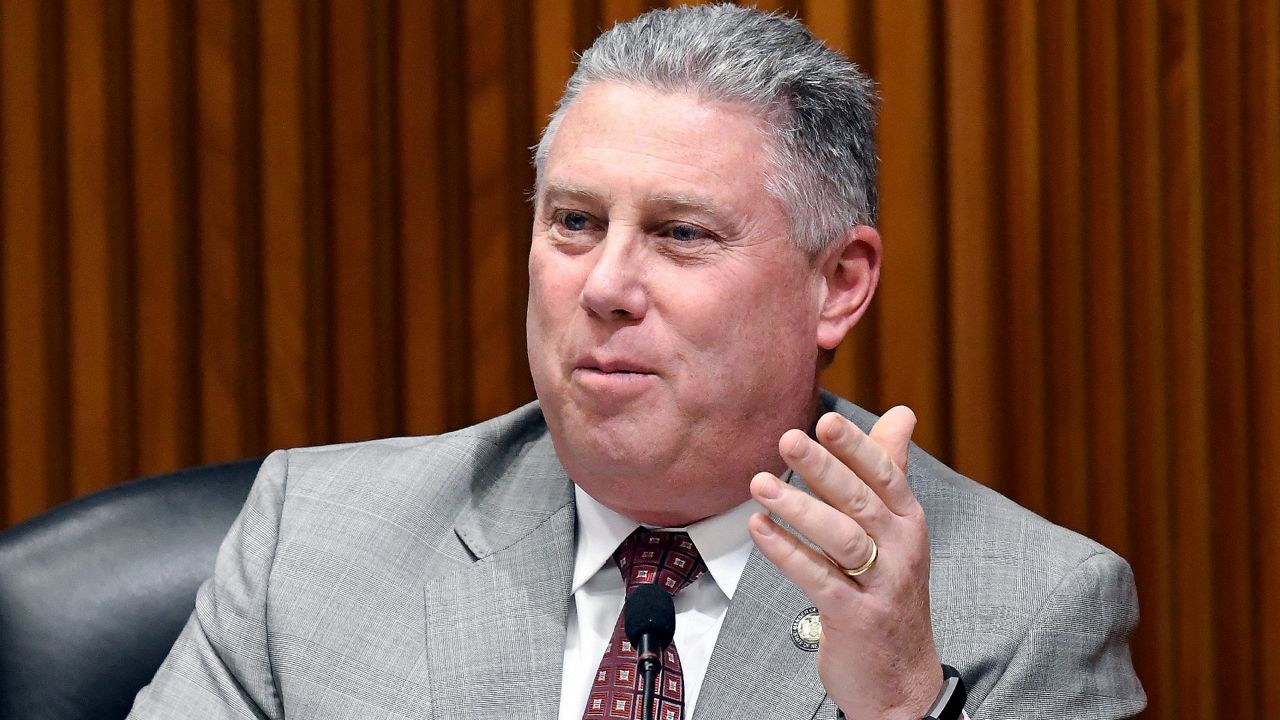
Even though the funding bump has been well received by many impacted mayors across the state, the breakdown has left some lawmakers representing Albany, Rochester and Syracuse with concerns ahead of state budget negotiations. One of the most vocal has been state Assemblymember John McDonald, who represents communities around Albany and was formerly mayor of the city of Cohoes.
“It’s human nature, what about us? What about the rest of non-New York City?” he said. “Let’s try to move these numbers around so everyone feels like they’re being treated fairly.”
While McDonald acknowledged that New York City is the state’s economic driver, he doesn’t feel the current breakdown is proportional and argues the downstate funding deserves more scrutiny.
“What does it mean, what is it intended for so we can do as close to an apples-to-apples comparison?” he said, adding that the city should also look at its own books. “I know it’s a new mayor; however, I know he also has some very experienced hands, so I would strongly encourage—and I’ve told our Ways and Means staff — let’s take a deeper dive into what their financial challenges are. I don’t want to see New York City fail, but I also don’t want to see upstate cities fail.”
State Assemblymember Sarah Clark, of Rochester, agrees.
She told Spectrum News 1 that Rochester’s delegation of lawmakers in the Democratic majorities are preparing to join forces with other upstate members in pursuit of more AIM funding.
“I think there is a conversation and negotiation we’re really going to have to have with the governor — this isn’t the time to pick winners and losers across the state. We all need this, and we know our upstate cities and towns are a huge economic engine,” she said.
It’s a nuanced discussion. While the Big Apple gets plenty of special treatment, New York City doesn’t receive any AIM funding at all.
The governor’s office indicated that local governments asking for more AIM funding have been heard, and that’s what they would receive if this boost is approved in the final spending package due April 1.
“Gov. Hochul wants all of New York’s municipalities to succeed, which is why she is tripling the assistance available to cities, towns, and villages across New York State and providing an additional $20 million for financially distressed municipalities as part of her executive budget,” a spokesperson told Spectrum News 1 in a statement. “This funding is crucial to keeping New Yorkers safe and allowing local leaders to continue providing the vital services their residents rely on—and we look forward to working with the Legislature to pass this record-level funding for upstate municipalities.”
In the upper chamber, Albany-area state Sen. Pat Fahy channeled some of that nuance.
“AIM is clearly underfunded,” she said. “Yes, here in upstate, just as with public transit, just as with our housing investments, we’re always looking for some proportionality.”
But she also provided a reality check, calling Hochul’s proposal a “huge increase” and pointing to New York City’s massive annual budget and revenue provided to the state. She stressed that without revenue raisers, such as a PIT increase in NYC or increased revenue from mobile sports betting, there is little that can practically be done when federal uncertainty and Medicaid cuts have the state already on its toes.
“It’s those revenues that make up the bulk of the state revenue. Do I think we have an equal voice? It’s all proportional. We have 100,000 residents; they have 8 million in New York City. But I am looking at a lot of revenues and a lot of costs right now because we’re not getting the help we need from the feds,” she said. “Do I think we’ll get a billion and a half as was just given to New York City? It’s just unrealistic, we can’t afford it. And by the way, if I had the choice, my focus is going to be on making sure people have health benefits, making sure we keep our utilities more affordable.”
Syracuse-area state Sen. Chris Ryan, who chairs the Cities 2 Committee, which focuses on issues facing cities outside of New York City, echoed McDonald and Clark in the Assembly, signaling he would support a push for more during budget talks.
“As chair of Cities 2, I regularly hear from municipalities across the state that are facing rising costs and real pressure to close budget gaps,” he said. “While I acknowledge New York City is facing its own immediate fiscal challenges, the state must place a greater emphasis on sustained investments in upstate communities that do not have access to the same level of resources or tax revenue as New York City. While the recent $150 million investment in upstate cities represents a positive step forward, it’s not only disproportionate, but also a drop in the bucket compared to $1.5 billion. Upstate municipalities need a more permanent and predictable funding solution to ensure long-term stability and growth.”
Queens state Assemblymember Jessica González-Rojas said she is extremely grateful for the extra $1.5 billion Hochul proposed and other initiatives included in the 30-day amendments, pointing to language ensuring counties in New York City are reimbursed for health care costs years after cuts under Andrew Cuomo.
She acknowledged, though, that upstate cities are facing tremendous challenges, and suggested such widespread challenges lend credence to calls from Mamdani and others to hike taxes on the rich.
“We shouldn’t take from one part to give to another; there are different needs throughout the state of New York. But places like Rochester, Buffalo, and Syracuse — they face high poverty levels, there are children going to bed hungry, and that’s not right. We want to make sure every New Yorker has access to equitable resources,” she said. “There are four bills in the tax-the-rich platform. I would argue that if we include those proposals in our budget, that will bring more dollars to make sure the whole state is made whole.”
Republicans in the state’s legislative minorities have their own concerns about the funding — insisting that the additional money to New York City is a bailout designed specifically to help Mamdani achieve his agenda while also questioning the implications for upstate.