
Home » AIRLINE NEWS » Thousands of Travellers Stranded at LaGuardia Airport in New York, United States as 3 Flights Are Delayed and 1,034 Cancelled Disrupting Delta Air Lines, American Airlines, United Airlines, Southwest and More Across New York and Major US Cities
Published on
February 24, 2026
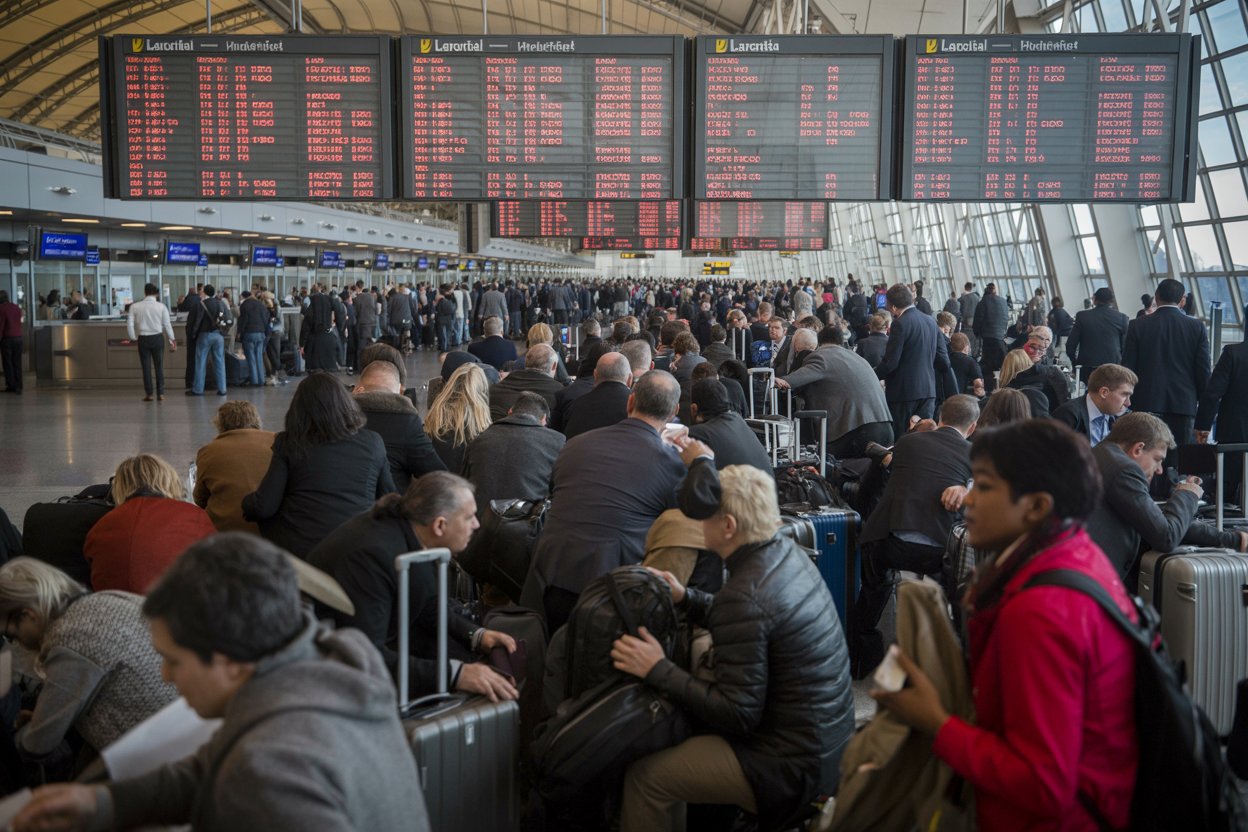
Image generated with Ai
LaGuardia Airport witnessed one of the most severe operational disruptions in recent memory after aviation data confirmed 1,034 flight cancellations and 3 delays within a single reporting period. For thousands of travelers moving through the heart of New York City’s domestic air corridor, the experience was not just an inconvenience — it was an abrupt pause in weddings, business meetings, vacations, and long-planned family reunions.
Inside the terminals in Queens, departure boards filled rapidly with cancellation notices. Families sat on luggage searching for alternate routes. Business travelers recalculated connections. For many, the sheer scale of cancellations created uncertainty that extended far beyond New York.
A Major Hub Under Pressure
LaGuardia Airport (LGA) is one of the primary domestic gateways serving New York City. According to the Port Authority of New York and New Jersey — the government agency responsible for operating LaGuardia, JFK, and Newark airports — LGA handles tens of millions of passengers annually and plays a vital role in connecting the Northeast with major U.S. cities.
The Federal Aviation Administration (FAA), which oversees air traffic control and national airspace management, regularly implements traffic management initiatives during severe operational stress. When cancellations exceed a certain threshold, it often signals large-scale weather systems, air traffic control staffing constraints, aircraft rotation breakdowns, or cascading network disruptions across multiple hubs.
Advertisement
Advertisement
While only three flights were officially categorized as delayed, the overwhelming number of cancellations suggests a broader preemptive shutdown or network reset rather than routine delay accumulation.
Why So Many Cancellations?
Large-scale cancellation events at major U.S. airports typically stem from one or more of the following:
Advertisement
Advertisement
Severe winter storms or extreme weather systemsAir traffic control flow restrictions imposed by the FAAAirline crew availability shortagesAircraft repositioning failures from earlier disruptionsSafety-related operational pauses
The National Weather Service frequently issues advisories that directly affect airport operations, especially along the Northeast corridor where weather volatility can escalate quickly. Even if conditions improve later in the day, airlines may cancel flights in advance to prevent aircraft and crew from becoming stranded overnight.
Unlike delays — which create ripple effects throughout the day — mass cancellations often represent a strategic decision by airlines to stabilize operations.
Impact on Domestic Travel
LaGuardia primarily serves domestic routes, meaning disruptions here can affect cities across the country. Flights connecting New York to Chicago, Atlanta, Miami, Dallas, Denver, and Boston often operate at high frequency. When cancellations exceed 1,000 in a single day, the impact spreads rapidly across airline networks.
Passengers connecting through LGA may find themselves rebooked through alternate hubs such as JFK, Newark Liberty International Airport, Philadelphia, or Washington Reagan National. However, during peak travel periods, alternative seats can fill quickly.
The U.S. Department of Transportation outlines passenger rights regarding cancellations, requiring airlines to provide rebooking options or refunds when flights are cancelled. However, compensation policies vary depending on the cause of disruption.
Economic and Tourism Implications
New York City relies heavily on steady air access for both tourism and business activity. LaGuardia’s central location makes it particularly important for short-haul corporate travel and weekend tourism.
Hotels, rideshare operators, airport shuttle services, restaurants, and conference venues all feel the immediate effects when cancellations surge. A single day of operational collapse can disrupt supply chains and scheduling across multiple industries.
For tourists, sudden cancellation can mean missed Broadway shows, postponed cruise departures from Manhattan or Brooklyn, or extended stays in already fully booked hotels.
Infrastructure Improvements and Operational Reality
LaGuardia recently completed a multi-billion-dollar redevelopment project led by the Port Authority of New York and New Jersey, transforming the airport into one of the most modern facilities in North America. The reconstruction improved terminal capacity, passenger flow, and gate efficiency.
However, even the most advanced infrastructure cannot fully shield airports from systemic aviation network shocks. When national airspace restrictions tighten or aircraft availability declines, airport modernization alone cannot prevent cancellations.
Aviation analysts often point out that U.S. air travel operates as an interconnected web. A disruption in Chicago O’Hare or Atlanta Hartsfield-Jackson can cascade into New York within hours.
The Human Side of Travel Disruption
For passengers inside LaGuardia, the experience today has been defined by long lines, overbooked customer service counters, and rebooking uncertainty.
Parents traveling with young children faced extended waiting times. Elderly travelers navigated crowded terminals. Business travelers scrambled to convert in-person meetings into video calls.
Air travel, while statistically safe and efficient, remains emotionally charged. The anxiety of uncertainty — not knowing when or how one will reach their destination — can amplify stress dramatically.
Yet amid disruption, scenes of cooperation often emerge: strangers sharing charging outlets, airline staff working overtime, and airport personnel guiding confused travelers.
Travel Advisory and Smart Planning
Travel experts recommend several steps for passengers flying through major hubs like LaGuardia during high-disruption periods:
Monitor FAA advisories and airline alertsAvoid tight same-day connectionsBook early morning departures when possibleConsider travel insurance for peak seasonsKeep alternate airport options in mind (JFK, Newark)
Travelers with flexible tickets generally experience smoother rebooking outcomes compared to basic economy fares.
National Ripple Effect
Because LaGuardia is deeply integrated into domestic route structures, today’s 1,034 cancellations may influence schedules across multiple U.S. airports. Aircraft and crews must be repositioned, meaning tomorrow’s operations could still reflect residual effects.
The FAA’s air traffic system continuously recalibrates to restore equilibrium, but recovery time depends on the underlying cause.
Looking Ahead
Despite the scale of disruption, aviation systems are built to recover. Airlines typically reposition aircraft overnight and adjust crew schedules to restore service.
For now, however, thousands of travelers in New York are navigating unexpected changes. Some will find alternate flights tonight. Others may wait until tomorrow. And a few may rethink future travel strategies entirely.
Air travel connects cities, economies, and families — but days like this remind passengers that even the most advanced transportation systems remain vulnerable to sudden disruption.
As LaGuardia works to return to normal operations, travelers are advised to remain patient, stay informed, and build flexibility into upcoming itineraries.
