
Sign up for the Slatest to get the most insightful analysis, criticism, and advice out there, delivered to your inbox daily.
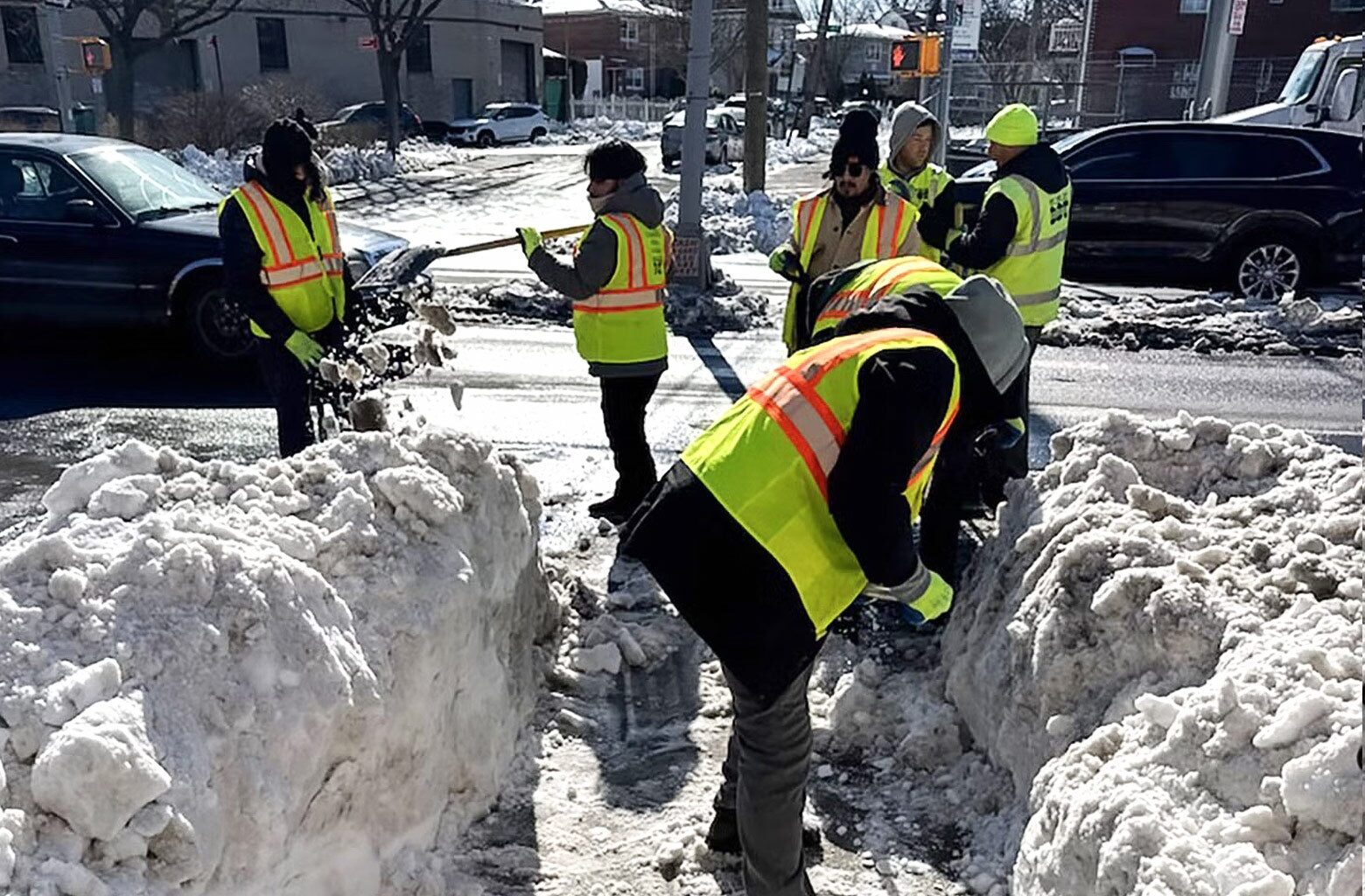
The historic nor’easter that’s pounded every state from Maine to West Virginia may finally be over, but the cleanup certainly ain’t. New York City saw its first true blizzard in a decade—and one of its strongest since the late 1800s—as nearly 2 feet of snow piled up across the five boroughs. Having just faced down another record-breaking snowstorm last month, the municipal government took extra advance action this round: banning nonessential road travel Sunday night, closing schools on Monday, and making a concerted recruiting push for a seasonal corps of paid emergency snow shovelers.
Considering how long it’s been since New York City had to rally the troops like this, many residents may have been previously unaware of the emergency snow shoveler program, which has been around since the late 1800s—initially offered as temporary employment for men left economically devastated by the panics of 1857 and 1893. This seasonal force has maintained its presence in NYC’s modern-era winters, coming out with shovels and vests and bells on the now-rarer, but no-less-stultifying occasions of heavier ice and precipitation in Gotham. (Thanks, climate change!) Mayor Zohran Mamdani was forced by this nor’easter to make an even more concerted push this week, expanding their ranks and even bumping up their pay, as of Monday, from $19 an hour to $30.
It all had us wondering: What’s it like to be a temporary snow shoveler, on behalf of the municipal government, in a city as dense and weather-vulnerable as New York? To find out, I spoke with Dan Bennette, a 38-year-old aviation professional and lifelong New Yorker who lives in Queens and first reported for duty during the January storm. Our conversation has been edited and condensed for clarity.
Nitish Pahwa: What inspired you to go for the program back in January?
Dan Bennette: I was unemployed for a little bit and looking for a little pocket money, so I saw during the first snowstorm that they were doing emergency shovelers and I just signed up online.
Did you bring your own gear?
No, they provided me with work gloves, a reflective vest, and all the shovels needed. If we encounter any ice, we have an ice pick or sledgehammer. There are multiple kinds of shovels. Some are metal, some are plastic, and it’s really when we get to a location that we decide who gets what. Usually the guys just pick their favorite shovels. I’m definitely a plastic shovel type of guy, unless we’re going through the ice.
What about other outdoor wear? How do you balance layering up for the cold versus dressing for hard work and sweat?
I have a really nice pair of Sorel snow boots, which have been really helpful with insulating my feet. I have one of those sports fabric shirts for breathability, and I put on a two-layer coat, so it has the thermal fleece on the inside and a water-resistant outer layer. You do heat up and you do sweat, and I just take off my coat to cool off and always keep my hat and Spyder gloves to keep my hands warm. I do find that the gloves that I use are just a bit higher-quality than the gloves they issue.
What was registration like? And how do they determine where to send you, and when?
It was an easy process. I signed up online, and through the application you pick a garage that’s most convenient for you. Once you hit submit, they’ll get back to you saying, “Please show up to so-and-so garage with all your documents that are being requested on that day.” You’ll do your normal work employment information paperwork, like an I-9 form. You show them your identification: two wallet-size passport photos, and your Social Security card. And they do an administrative day, where you’re only at the garage for like an hour, but you’ll be sent out the following day if the Department of Transportation activates the snow shovelers.
If you register once, are you on the list for any other occasions, just in case?
Yeah, once you sign up, you’re assigned to that garage of your choice and that’s one and done. You’ll be given a temporary ID, and they call you the day before for any day they’ll need you to come in.
How long are the shifts usually?
They are a full day. Eight hours long.
How many shifts did you work last time?
I did about a week-and-a-half’s worth of work. It usually runs from Tuesday through Friday.
What’s the deployment process like?
In the morning you show up and get put into groups. Each group will be assigned a DOT worker who is driving a yellow pickup truck. You’ll get in, and they’ll take you to multiple locations. We’re primarily focused on the crosswalks. Those red rectangles that you step off and get on for people in wheelchairs, those are probably our No. 1 priority, making sure they’re accessible. Then the truck rattles off down to bus stops, ensuring that they’re accessible: 4 feet wide for people with disabilities and in wheelchairs. Then move on over to the fire hydrants.
Do you ever run into issues with other vehicles or pedestrians, like snowplows or people cleaning out their own digs?
DOT is very mindful of placing the very large F-550 pickup truck behind us to ensure that no cars come up behind us. We’ve had rowdy truck drivers come kind of close to us, and the DOT guys will be like, “Watch out. What’s going on with you? Slow down.” One time, a garbage truck was coming down the road and the [DOT officials] told us to get out of the crosswalk area.
Where do you dump all the snow?
If we’re able to put it onto the middle of the road for cars to run over and crush it up, that’s one way. We can place it over to the side into a larger snow pile while making sure it’s not in the way of the crosswalks and curbs. Usually it’s pretty obvious where to put it: We can place it anywhere we like if it’s not egregiously in the way of something else.
Is there a sort of accountability mechanism to ensure everyone’s pulling their weight? Like, just in case someone’s dawdling, or being careless about where they’re dumping snow.
Yeah, for any type of person who might be just standing around admiring the clouds—we hold each other accountable, and a lot of my fellow emergency shovelers will definitely speak up and say something to you if you are not helping the rest of us clear out a crosswalk.
OK, big question: dog poop and pee. How much of it do you deal with? How much of it would you rather not deal with? Is this a Frank Zappa situation?
So, I actually haven’t come across too much dog poop. There is a lot of yellow snow. I haven’t had experience stepping in any, and none of the emergency shovelers have. For those people that do cover up their dog poo—I believe that’s just anti-social, selfish behavior, and I don’t know how to enforce picking up after dogs besides reporting someone’s name. I guess you would have to catch them in the act. That’s something maybe the mayor would have to put as a moral question to the city, asking New Yorkers to do the neighborly thing: keeping all of our sidewalks and communities clean for everyone else.
In your experience, are there more younger shovelers out there than older ones? And is there a decent gender balance?
I would say the majority is men. The age demographic is probably as young as 21 to your early 40s.
Amy Crawford
The Way a City Handles Snow Says Everything About How It Treats Pedestrians
Read More
When it comes to work locations, are there certain tasks or icy/precarious mounds that some of you may prefer not to do, and thus leave up to other people who are braver at taking it on?
We have some of the younger guys that want to prove their strength and will volunteer to tackle some of the mountains of ice built up on the corners. They make a canyon for the crosswalk and it’s very noble of them. I’m pushing 40, and even I’m a little reluctant to tackle these mountains that are bigger than me, but if they’re willing to take the lead, I could support him by getting the ice pick and breaking it up for him so he could shuffle it away. Many hands make light work in those situations.
Is there something new you learned about snow shoveling through this experience?
The Nancy Guthrie Case Is Haunting. So Is What I Just Saw Outside Her House.
The U.S. Had a Crazy Strategy to Beat Canada for Men’s Hockey Gold. I Can’t Believe It Worked.
Forget Norway. This Tiny U.S. State Dominates the Winter Olympics.
Kash Patel and the U.S. Men’s Hockey Team Deserve Each Other
Best shoveling practices: Even the official DOT workers want you to take a lot of breaks and warm up and drink water. We’re given many opportunities to sit in a warm vehicle, eat proper lunches. They don’t want you to strain or hurt yourself for a job that pays $19 an hour. Taking on as much as you feel comfortable doing is, I think, probably the best advice I’ve learned. Don’t overextend yourself in shoveling the largest amounts of snow you can.
Is there anything else you’d like to add?
The people that you meet are very interesting. That’s the most priceless experience, and probably makes it worth it in the end. I think I’ve made some good connections. And you get your foot in the door with the DOT. They are encouraging you to better yourself, to learn something. One official said, “You guys should look up and learn how to obtain a commercial driver’s license.” I told the guy, “I was never interested in getting a CDL until I spoke to you.” It’s funny how something like becoming an emergency snow shoveler could put you on a path to getting a city job because some guy in the locker room who’s in DOT encouraged you to get a CDL. I think that’s the most valuable part of this whole experience.

Sign up for Slate’s evening newsletter.