
NEW YORK CITY HISTORICAL SOCIETY
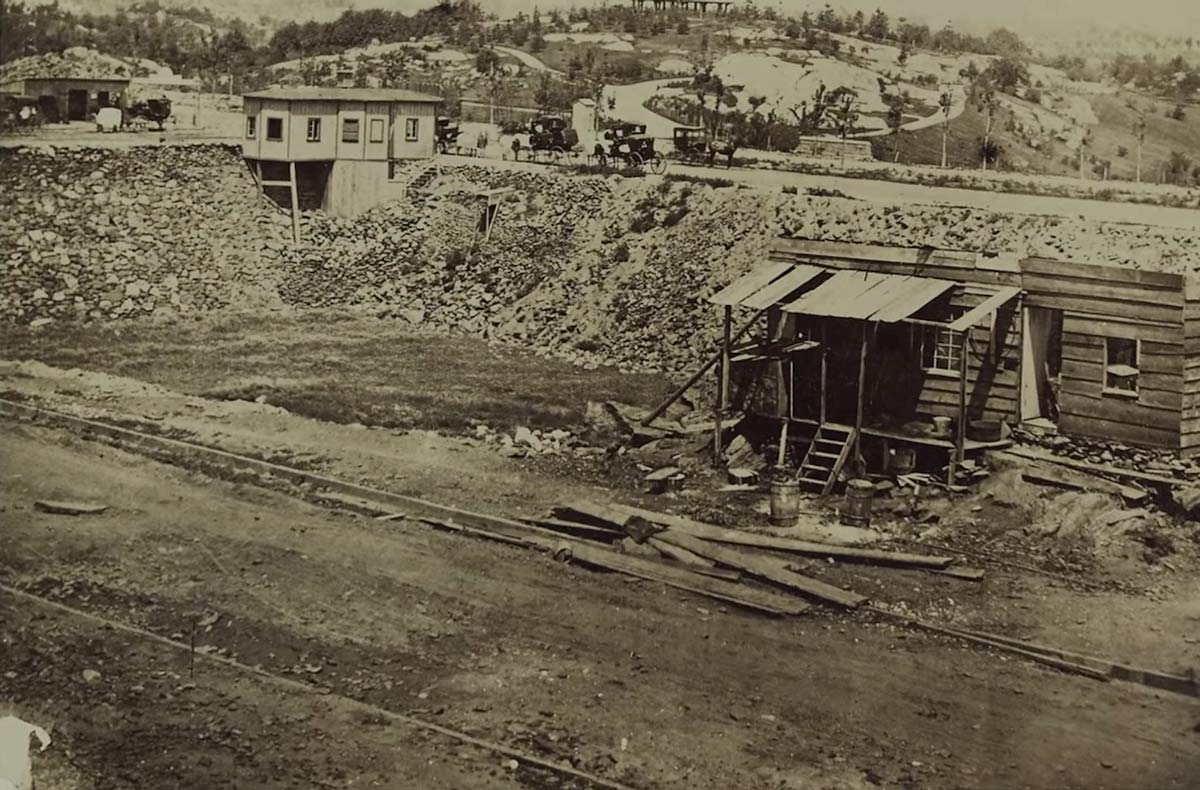
A home in Seneca Village, surrounded by the rolling hills that would become Central Park.
Editor’s note: The Post is highlighting significant and uniquely American stories every week in 2026 as part of our yearlong salute to U.S. history from a Black perspective.
Before Central Park was created, the landscape along what is now the Park’s perimeter from West 82nd to West 89th Street was the site of Seneca Village, a community of predominantly African Americans, many of whom owned property.
By 1855, the village consisted of approximately 225 residents, made up of roughly two-thirds African Americans, one-third Irish immigrants, and a small number of individuals of German descent. One of few African American enclaves at the time, Seneca Village allowed residents to live away from the more built-up sections of downtown Manhattan and escape the unhealthy conditions and racial discrimination they faced there.
Seneca Village began in 1825, when landowners in the area, John and Elizabeth Whitehead, subdivided their land and sold it as 200 lots. Andrew Williams, a 25-year-old Black shoeshiner, bought the first three lots for $125.
Epiphany Davis, a store clerk, bought 12 lots for $578, and the AME Zion Church purchased another six lots. From there a community was born. From 1825 to 1832, the Whiteheads sold about half of their land parcels to other African Americans. By the early 1830s, there were approximately 10 homes in the village.
For African Americans, Seneca Village offered the opportunity to live in an autonomous community far from the densely populated downtown. Despite New York State’s abolition of slavery in 1827, discrimination was still prevalent throughout New York City, and severely limited the lives of Black Americans.
Seneca Village’s remote location likely provided a refuge from this climate. It also would have provided an escape from the unhealthy and crowded conditions of the city, and access to more space both inside and outside the home.
During the early 1850s, the city began planning for a large municipal park to counter unhealthful urban conditions and provide space for recreation. In 1853, the New York State Legislature enacted a law that set aside 775 acres of land in Manhattan—from 59th to 106th Streets, between Fifth and Eighth Avenues—to create the country’s first major landscaped public park.
The city acquired the land through eminent domain, the law that allows the government to take private land for public use with compensation paid to the landowner. This was a common practice in the 19th century and had been used to build Manhattan’s grid of streets decades earlier.
Roughly 1,600 inhabitants were displaced. Although landowners were compensated, many argued that their land was undervalued. Ultimately, all residents had to leave by the end of 1857.
Comments