
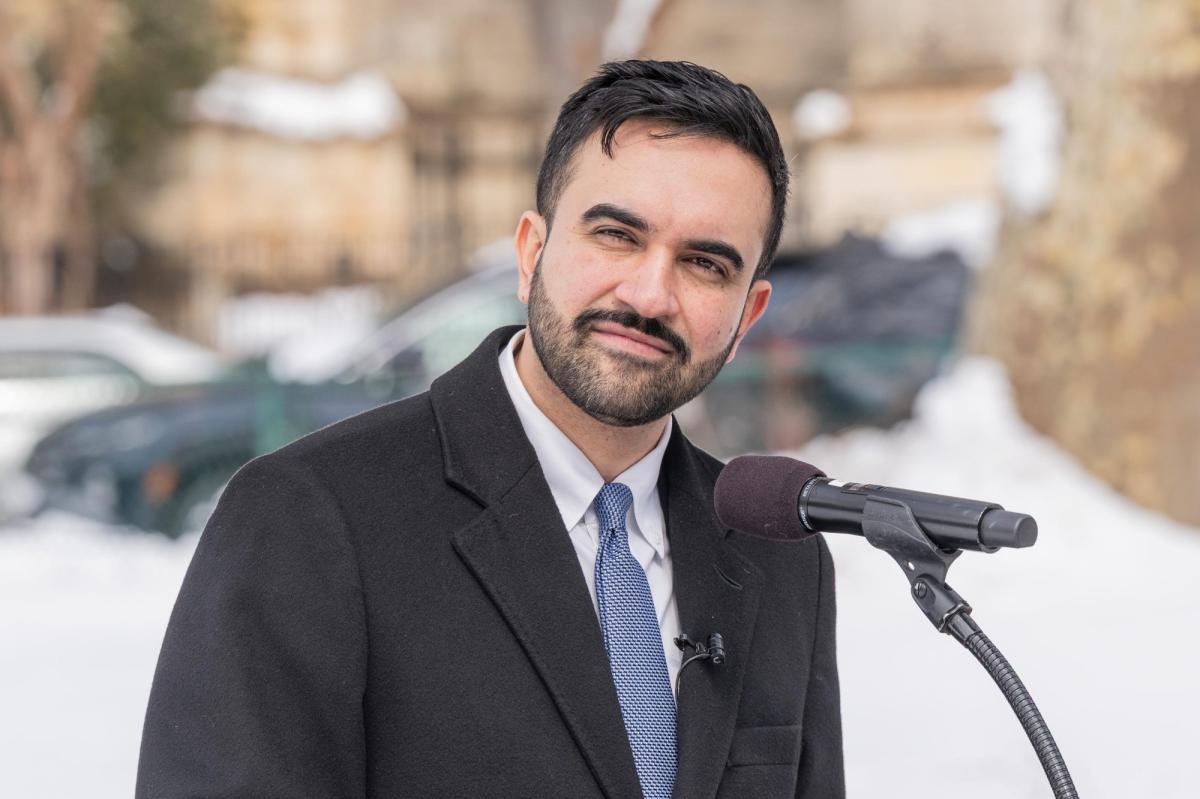
Mayor Zohran Mamdani professes determination to soak the rich — or, in Progressive-speak, make the affluent pay their “fair share” — but seems awfully confused about how to do it.
Witness his threat to raise Gotham property taxes by 9.5%, despite the fact that the increase would hit homeowners of modest means hardest, due to a distorted assessment system that hits Staten Island harder than Park Avenue.
Now we can add to the roster of Mamdani’s misguided notions his idea to use the upcoming World Cup matches as a pilot for his promised free bus service.
Doing so will “generate buzz” about the idea, he claimed this month, as he pushed for the necessary cooperation from Gov. Kathy Hochul and the MTA.
But if Mamdani’s goal is to tax the rich, free bus service for FIFA tourists — like the threat to raise property taxes — gets smart policy exactly backward.
The expected influx of 1.3 million tourists this June and July is a chance to capture a windfall of transit revenue, whether to support free service down the road or, more practically, to help pay for the new signals, vehicles and accessibility upgrades the MTA desperately needs.
These well-off visitors will want to get to MetLife Stadium, of course — where no city bus can take them.
But they won’t all be staying at the Holiday Inn Express in East Rutherford; plenty will be lodging in Manhattan with money to burn, eager to see the city’s sights — and won’t need, or deserve, a fare break.
Consider the example of Paris, host of the 2024 Summer Olympics.
The city’s initial plans called for free public transport — but organizers soon realized this meant local Parisians would effectively be subsidizing the travel of wealthy international visitors.
Instead, the transit system sold a special “Paris 2024” pass for its local trains and buses, available for visitors only — at a steep cost of 16 euros a day ($19 at today’s exchange rate) or 70 euros a week for unlimited travel.
Nor was there free transit for this month’s Milan Winter Olympics: Standard fares applied, including a 7-euro daily pass, with some routes to popular sites employing Uber-style “surge prices” of 10 euros.
That’s the playbook New York and the surrounding region should follow for the World Cup, whose New Jersey matches will surely fill hotel rooms in Manhattan and beyond with guests looking for ways to get around.
These are visitors who can afford pricey match tickets and steep hotel rates; why should they get no-fare transit?
This is a golden revenue opportunity for the MTA.
Just do the math.
Get opinions and commentary from our columnists
Subscribe to our daily Post Opinion newsletter!
Thanks for signing up!
Assume that only half of those 1.3 million visitors purchased an unlimited transit pass priced at $70 per week, similar to what Paris charged.
That would mean an extra $45 million per week for the MTA, with matches stretching from June 13 to July 19.
In total, that’s a nearly $300 million windfall for the agency — a significant downpayment on defraying the cost of a post-World Cup trial of no-fare bus service, or helping the MTA with its overall capital needs.
Keep in mind bus service is normally estimated to cost the MTA between $650 million and $1 billion a year.
And a higher-priced transit pass might bring in even more.
International tourists likely have what economists call a low elasticity of demand — that is, they’re not likely to pinch pennies on a transit pass.
The sheer convenience will likely matter more to them.
Now is the time for the MTA to begin coordinating with New Jersey Transit to design a FIFA World Cup transit pass connecting New York’s system to MetLife Stadium and other Garden State destinations — with a cost paid by visitors, not subsidized by local residents.
Or, as Mandani himself has said regarding the city’s budget imbalance, “The onus for resolving this crisis should not be placed on the backs of working and middle class New Yorkers.”
He’s right.
Better to ask wealthy European and Brazilian FIFA tourists to pay their “fare” share.
Free transit, the mayor would do well to keep in mind, will never be free.
Bus drivers must be paid, their health insurance and pensions covered.
That’s the core problem with socialism, as Margaret Thatcher famously put it: running out of “other people’s money.”
The World Cup offers an influx of that very thing — and Mamdani and the MTA would be foolish to disdain it.
Howard Husock is a fellow at the American Enterprise Institute and author of “The Projects: A New History of Public Housing.”