
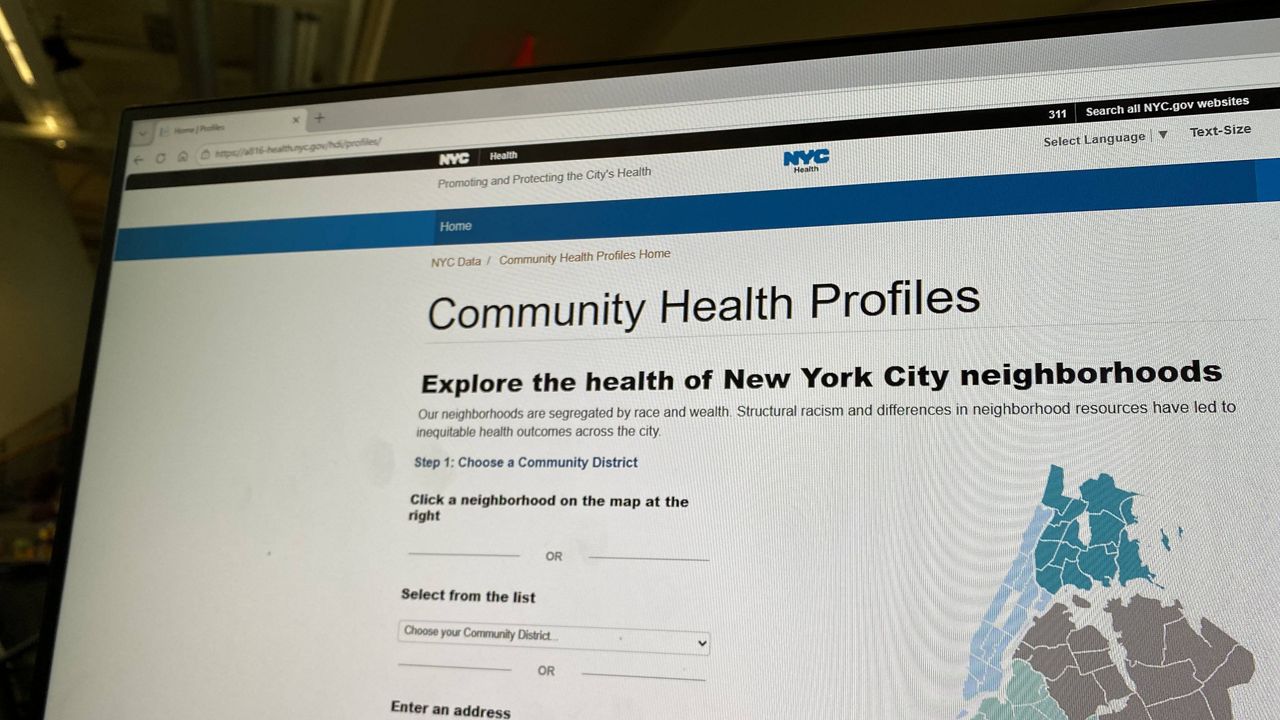
A Bronx congressman is seeking to expand New York City’s Community Health Profiles program nationwide, arguing neighborhood-level data is key to tackling health disparities.
The online dashboard system, created by the city’s Health Department, provides health data for 59 neighborhoods across the five boroughs. Users can review statistics ranging from preterm births to obesity rates and compare communities across the city.
Democratic Rep. Ritchie Torres said the data underscores stark inequities.
What You Need To Know
Rep. Ritchie Torres is introducing legislation to expand New York City’s Community Health Profiles program nationwide
The NYC dashboard tracks health data across 59 neighborhoods, including life expectancy, preterm births and obesity rates
Torres’ proposal would fund 25 communities to create similar systems with support from the CDC
“The difference in life expectancy between the South Bronx and the Upper East Side of Manhattan can be as much as a decade,” Torres said.
He described the country as a “tale of two Americas,” saying, “We live in an America where zip code is often destiny.”
According to city data, life expectancy in the Wakefield section of the Bronx is about 82 years. In nearby Mott Haven and Melrose, it drops to 78. On Manhattan’s Upper East Side, residents live to nearly 87 on average.
Torres, who previously served on the New York City Council, said he saw firsthand how targeted policy decisions could redirect what he called a “perceived destiny” by addressing health inequities.
He is introducing legislation that would provide federal funding for 25 communities across the country to build similar public health dashboards, with support from the Centers for Disease Control and Prevention.
“We can only manage what we measure, and we cannot improve public health unless we have data about public health,” Torres said.
Javad Malik, an infection prevention specialist at Memorial Sloan Kettering Cancer Center, has advocated for expanding the model nationally.
Malik said social determinants of health — including income, housing and access to care — play a central role in life expectancy.
“It really comes down to that point of people’s social determinants of health,” Malik said.
Torres said the goal is to focus “like a laser” on ending what he called epidemics that disproportionately put low-income communities, including the South Bronx, at risk.