
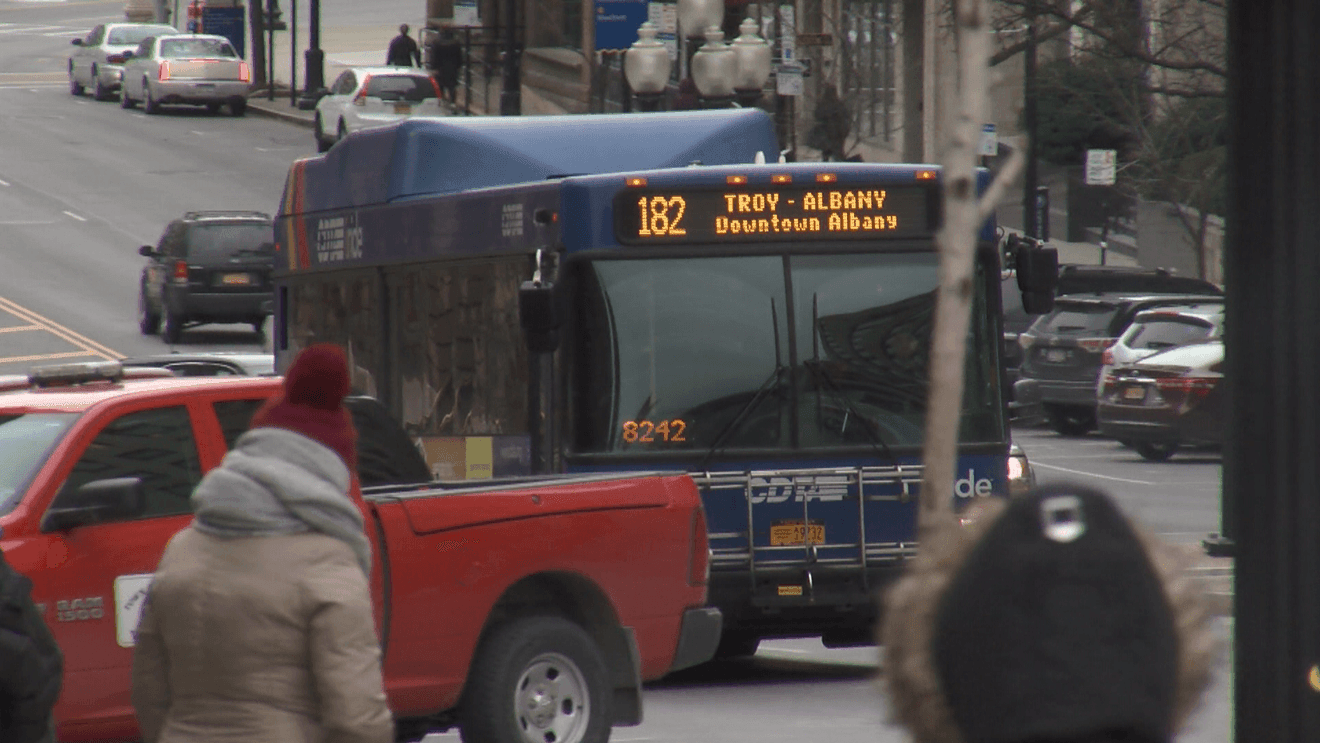
NEW YORK STATE (WRGB) — A proposal in the New York state Legislature to put an additional $25 vehicle registration fee for upstate drivers is drawing sharp debate, with supporters saying it would shore up struggling transit systems and opponents warning it would add to residents’ costs.
The fee is modeled after a downstate registration charge, where a $50 fee goes directly toward funding the Metropolitan Transportation Authority.
Assembly Transportation Committee Chairman Bill Magnarelli, D-129th Assembly District, is pushing the upstate fee as a way to improve public transportation outside the New York City area.
MORE: New York’s new license point system takes full effect Monday, making suspensions easier
“I’m trying to get mass transit in Upstate New York up to par,” Magnarelli said.
He said the legislation would bring significant new money to transit agencies.
“This would allow us to receive approximately $125 million for Upstate New York transit systems,” Magnarelli said.
New York Public Transit Association President Miguel Velázquez said the additional revenue would provide stability as other funding sources have declined.
“We have exhausted our COVID funds, so those have been used up. We have been seeing since COVID, as you well know, an increase in inflation which is impacting us, has been impacting us,” Velázquez said.
Republican gubernatorial candidate Bruce Blakeman criticized the proposal in a statement, raising affordability concerns and calling it congestion pricing, saying:
“Families struggling to pay for groceries, housing, and utilities could be hit with an extra $25 tax just to register their car. This is congestion pricing coming to a state near you — and it’s only the beginning.”
Velázquez said that investing in upstate transit can help residents who depend on buses and other services for essential trips.
MORE: Winter Driving: What the Law Requires and How to Stay Safe
“Those folks, especially in Upstate New York, who rely on public transit to get to those critical jobs, health care, doing their groceries, those critical trips, they’re able to do that because affordability is such a big issue for them,” Velázquez said.