
It is no secret that New York City has a civility problem.
Spend a week on the subway and you will see it: riders blasting music without headphones, people crowding the door leaving many stuck on the platform, people stretched across three seats while an elderly passenger stands, the occasional outburst that leaves a car silent and tense. We have grown used to averting our eyes and lowering our expectations. The city still moves, still functions, but something in the social contract feels thinner than it once did.
New York is loud. It is crowded. It is impatient. But lately it can also feel indifferent.
And then came the blizzard.
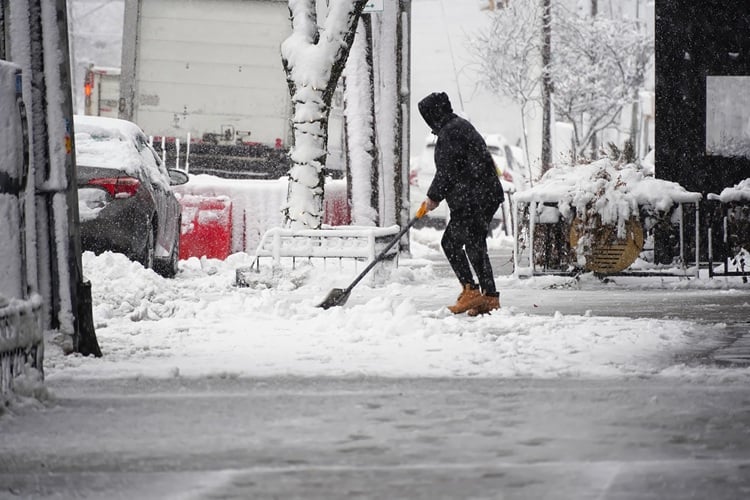
The snow fell thick and fast, blanketing sidewalks and stoops in white. For a brief moment, the city slowed. The usual choreography of honking and hurry gave way to something quieter. Shovels came out. Neighbors who usually pass each other with little more than a nod found themselves shoulder to shoulder against the same drift.
I was outside shoveling in front of my building, doing what every New Yorker knows must be done before the snow turns to ice. It is cold, repetitive work. You push, you lift, you clear a strip of pavement that will soon fill again. There is no applause for it. Just the knowledge that if you do not do it, someone could slip.
That is when I saw them.
Two uniformed gentlemen, shovels in hand, clearing not just their own frontage but the sidewalks and curbs along the entire block. They moved steadily. No cameras. No supervisor. No obvious obligation beyond the simple fact that the snow needed to be cleared.
Curious—and honestly a bit stunned—I asked where they were from.
“535 Park Avenue,” one said.
They did not have to be there. They could have cleared their own stretch and stopped. Instead, they were making the block safer for everyone—parents pushing strollers, older residents navigating uneven pavement, delivery workers trying to keep their footing. They were cutting through the slush at the curb so people could cross without stepping into icy water.
When I thanked them, one smiled and said something I will not forget: “We’re all a family.”
In a city of eight million, that can sound naïve. We are not a cul-de-sac or a suburb. We are a vast, layered metropolis. We do not know most of our neighbors’ names. We rush past one another. We retreat into headphones and screens.
And yet, in that moment, they were right.
Cities function when strangers act as if they owe each other something—not intimacy or agreement, but a baseline of care. A recognition that the sidewalk is shared. That the curb cut matters. That the person behind you on the subway stairs is not an obstacle but a fellow citizen.
We talk endlessly about crime and quality-of-life complaints. Those concerns are real. Order matters. But what ultimately holds a city together is not only enforcement. It is culture. It is the quiet decision to do a little more than what is strictly required, especially when no one is watching.
Those two men with their shovels embodied that ethic.
They reminded me that beneath the headlines, there is another New York I rarely see – one that rarely trends. The New York of doormen helping elderly residents with groceries. Of neighbors checking in during blackouts. Of small-business owners anchoring their blocks.
This is the soul of New York. Not perfection. Not constant warmth. But a stubborn sense of shared responsibility that surfaces, especially in moments of stress.
The blizzard will melt. The sidewalks will return to gray. The subway will test our patience again.
But I am grateful for what I saw.
Those two gentlemen from 535 Park Avenue did more than move snow. They cut through a bit of cynicism. They reminded me that this city’s character is not defined only by its loudest or worst moments, but by people choosing decency.
In the middle of a storm, with nothing to gain, they cleared a path for strangers.
We’re all a family, he said.
For a moment, it felt true and it felt like New York.