
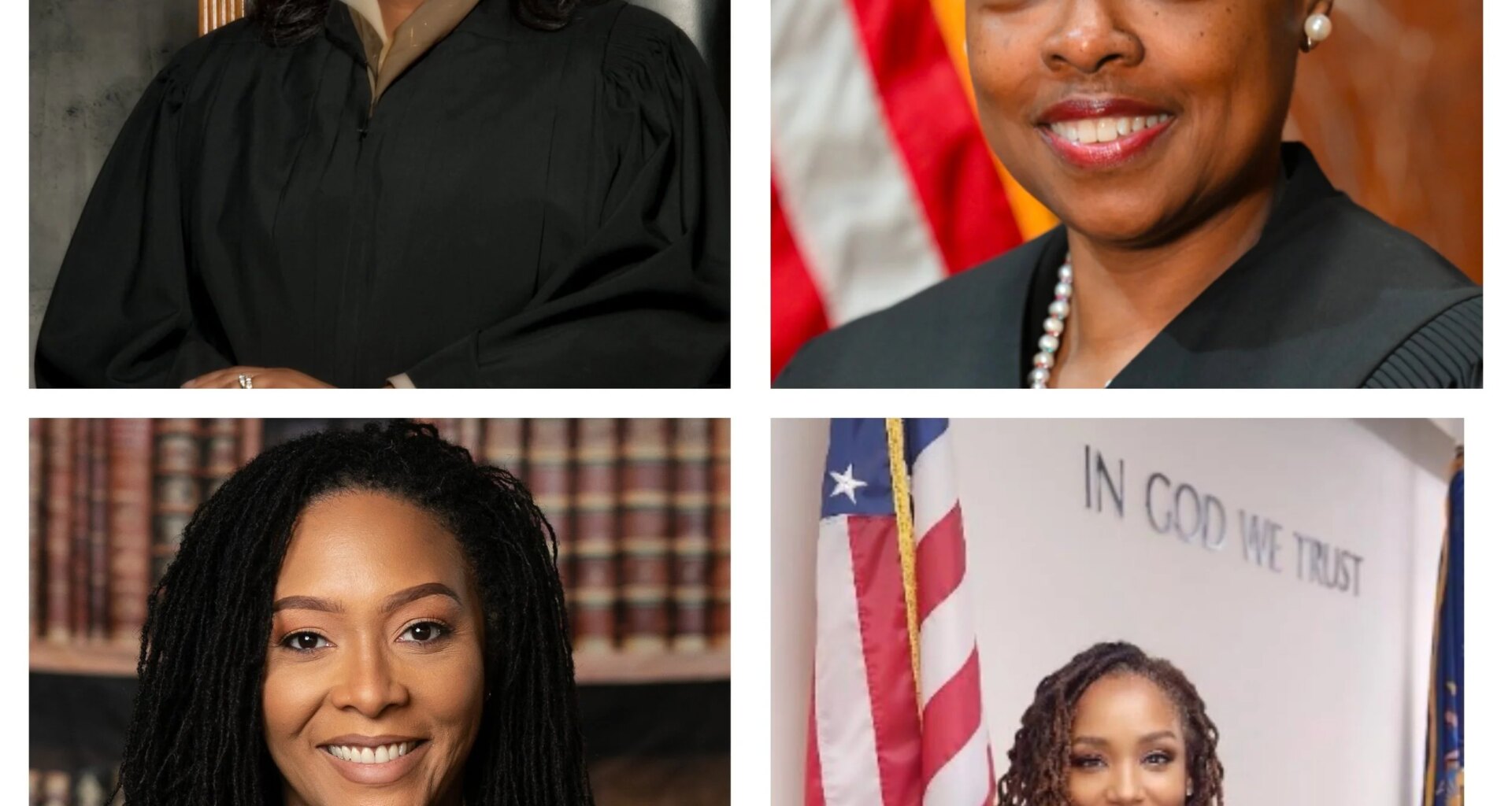
“A diverse court system brings together a wide range of professional and personal experiences to the bench, thus strengthening decision-making and promoting fairness,” Zayas said in a statement. “This sort of broad-based judicial diversity also helps ensure that the justice system reflects the communities it serves, interacting with people in the most constructive and meaningful manner while helping to build public confidence and trust.”
Jawan Finley, the long-time president of the Macon B. Allen Black Bar Association, said this historic group of court leaders was not created in one night but was the result of decades of advocacy, mentorship and the work of previous trailblazers who paved the way for this moment to happen.
Finley said it was the work of Constance Baker Motley, the first Black woman appointed to the federal judiciary; Sheila Abdus-Salaam, the first black woman appointed to the New York Court of Appeals’ and Fern A. Fisher, the first black woman to serve as the deputy administrative judge for the New York City Courts, who enabled Queens to have this historic group of women.
“These women stand on the shoulders of those who dared to climb towards the ceiling and chip away at its layers at a time when leadership roles in the court were reserved for white men,” Finley said in a statement. “Their hard work and tenacity served as pathways for black women to join the bench in great numbers, step into supervisory, administrative and leadership roles and serve as mentors for the next generation of judges.”
Michelle Johnson, Grays and Cassandra Johnson are all also long-standing members of the Macon B. Allen Black Bar Association. Finley also said that while the work of past trailblazers enabled this moment to happen, the long legal careers and guidance from their fellow jurists gave these four Queens judges the skills, knowledge and perspective needed to guide the courts with professionalism and sensitivity.
“Justices Grays, Justice Johnson, Judge Parris and Surrogate Johnson represent a rebalancing of institutional authority in spaces once defined by exclusion,” Finley said in a statement. “They shape courtroom culture, oversee judicial assignments, manage caseload priority and influence justice… Their presence changes the courtroom tone and restores the communities’ confidence in the justice system.”
While the current makeup of court leaders is a significant step, Queens as a whole has a way to go before judicial diversity is representative of the most diverse county in the country, if not the world.
According to UCS data of self-reported judicial demographics, Queens saw a decrease of Black jurists at the onset of the COVID-19 pandemic. Only recently, did the numbers again begin to rise.
In 2020, Queens had 21 Black judges, but the following year, that number dropped down to 13. As of 2025, 18 Black judges sit on the bench across all Queens courts, roughly 20 percent of all state judges in the borough.
In Queens Criminal and Supreme Criminal Court, each have only two Black judges or justices respectively.
In a statement to the Eagle, Zayas said UCS is dedicated to diversifying the bench as well as judicial leadership, especially in Queens.
“While there has been much progress made in recent years to diversify the bench in New York, this progress only underscores the importance of continuing these efforts, to promote a justice-system that effectively solves people’s problems and impacts lives for the better,” Zayas said.
Michelle Johnson said that judicial diversity is not just about creating equal pathways to the bench, but establishing trust and credibility with the communities the courts serve. When a court user sees a judge that looks like them, it helps them feel their case was heard fairly and without prejudice; a sentiment that is especially important now as polling data shows that public confidence in the courts is at historic lows, Johnson said.
“I think that it lends a sense of credibility to the court,” Michelle Johnson said. “Even if they disagree with the outcome of the ruling, to see that the courts are representative of the people they serve, I believe, lends overall credibility to the court’s work.”
“That’s not just Black people, that’s all courts,” she added.