
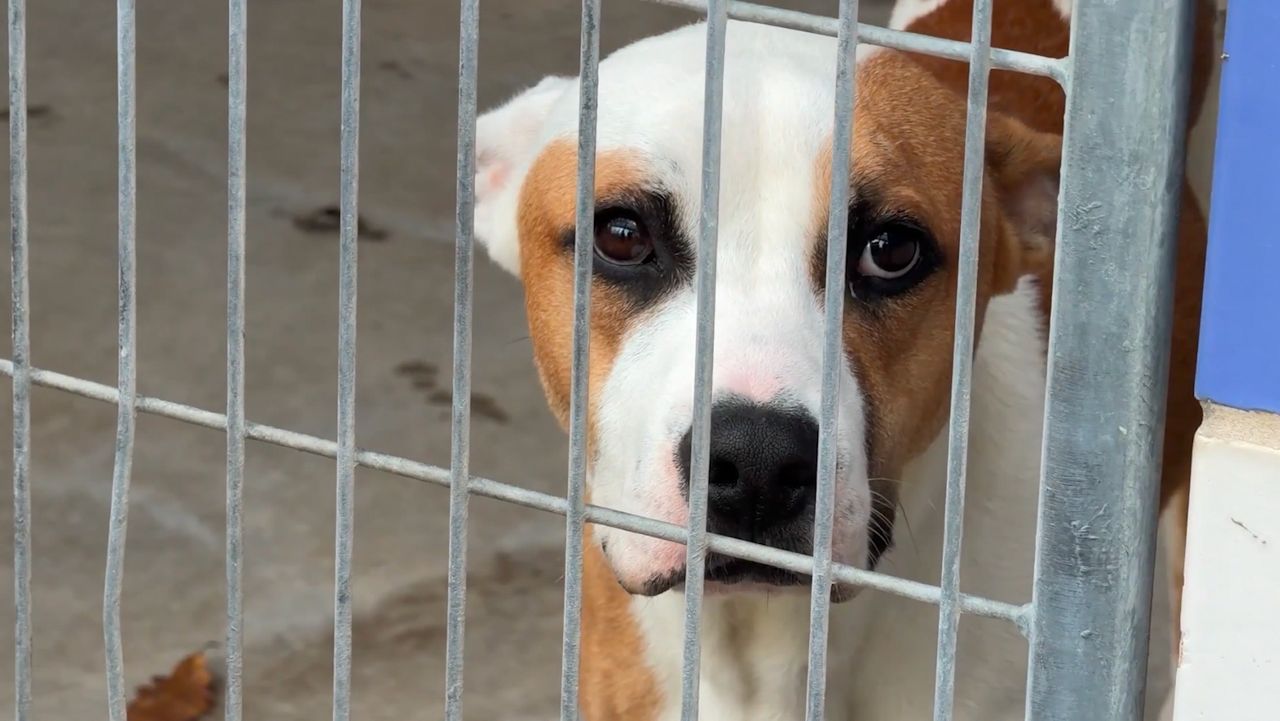
A growing number of New York counties have built their own animal abuse registries, but advocates say a patchwork of local laws isn’t enough to keep convicted abusers from simply crossing a county line to obtain another pet. Now, two state lawmakers are pushing competing bills to create a statewide solution.
About half of New York’s counties have launched public registries listing the names and addresses of people convicted of animal cruelty offenses. But the system has a significant flaw, according to Diane Fingar, vice president of the New York State Humane Association.
“There’s nothing to prevent somebody in one county who is on a registry from moving to another county that doesn’t have a registry and continue to legally acquire animals,” Fingar said.
Two legislators are working to close that gap, but with different approaches.
In the Senate, Republican James Tedisco is pushing a bill that would require anyone convicted under Buster’s Law, New York’s landmark felony animal cruelty statute, to register their name and address with the Division of Criminal Justice Services. That information would be made publicly available.
“Having an animal or a pet is not a constitutional right. It’s a privilege,” said Tedisco, who represents the Glenville area.
On the Assembly side, Democrat Sarah Clark of Rochester is sponsoring a bill under the Agriculture and Markets Law that casts a wider net, covering not just felony offenders but misdemeanor animal cruelty convictions as well. Under Clark’s bill, registration would last seven years, or a lifetime for repeat offenders. It would also require background checks against the registry for anyone applying for a pet store or animal shelter license.
“I think it’s just a moment in time. It is right to do it statewide,” Clark said.
The two bills have sparked debate over where a registry like this belongs: in the criminal justice system or under agriculture law. Tedisco said he remains open to finding common ground.
“I think we should come together, talk about it and see if we could compromise one way or another on this,” he said.
Both bills have been referred to committee. Some counties are already deferring action on local registries, waiting to see if the state moves first.
Officials in Schenectady County, which does not currently have a registry, said they are holding off temporarily, agreeing that a statewide approach would be more effective than a county-by-county one.
Fingar said support for such a measure should be broad.
“Who wouldn’t want it? Why wouldn’t you want it?” she said.