
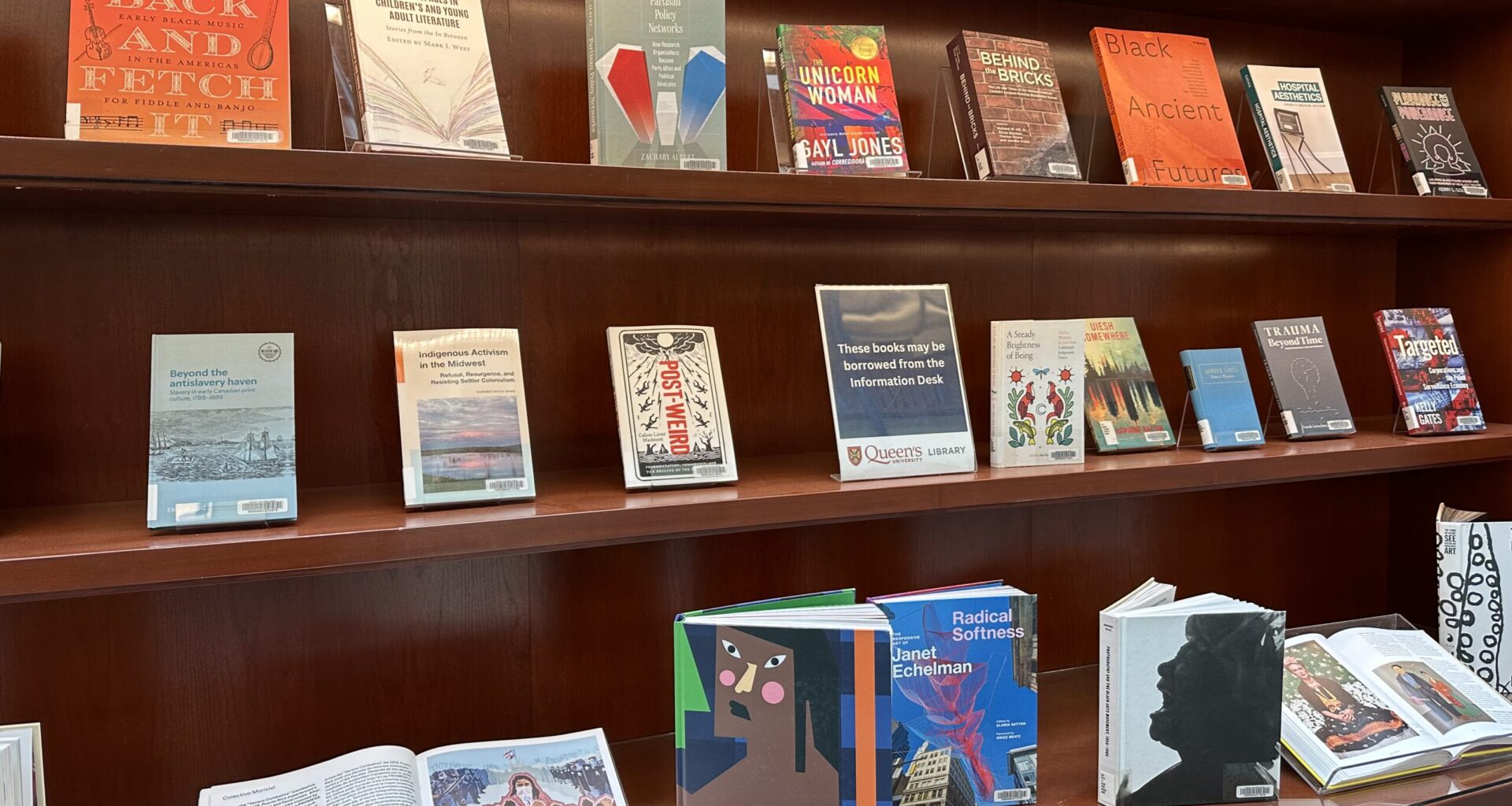
As an English student, reading poetry comprises a large part of my week-to-week, something I’m aware isn’t the case for everyone.
In fact, for casual readers, poetry might be the last thing you’d pick up in your free time. If your memories of reading Grade 10 Shakespeare still haunt you, I’m here to help. In celebration of Black Histories and Futures Month, here are three incredible, modern Black poets whose work you must explore.
As a Pulitzer-winning poet and the U.S. poet laureate from 2017 to 2019, Smith has the uncanny ability to weave earthly details into sweeping verses about the metaphysical. For example, in “Don’t You Wonder, Sometimes?” from her book Life on Mars, Smith ponders the existence of an elemental being “Dragging a tail of white-hot matter / The way some of us track tissue / Back from the toilet stall.” This line is as profound as it is absurd, prompting laughter and consideration in equal measure.
Some of her more powerful works confront racial identity in the face of history, pondering Black existence in the face of colonization. One of my favourite poems from Smith is “Ghazal,” from Wade in the Water, with haunting, bleak imagery that lingers after you close your eyes. The cadence and flow of Smith’s writing makes it just as enjoyable to read as it’s interesting to consider long after.
I love poetry that leans into rich imagery to illuminate concepts which may otherwise be hard to visualize. In “Family Affair,” from her book The Seventh Town of Ghosts, Akorful confronts the deceased, interweaving a joyful gathering among residents of heaven and Earth with jarring interruptions from the police.
Much of Akorful’s work blends dream-like inner thoughts into testimonies of writing and living while Black in Canada. In “Vacation,” physical geographies form a history of her own identity, expanding into a meditation on life and death. Akorful’s poetry’s raw, haunting, and beautifully rendered, an invitation into a creative world you’re bound to get lost in.
Hayes’ poems have an artistry to them that can enthrall poetry scholars and casual readers alike. His poem “Golden Shovel” from the National Book Award-winning collection Lighthead is a form-defining invention all its own. The last words of each line come from poems by Gwendolyn Brooks, the first Black poet to win the Pulitzer Prize. The term “golden shovel” now refers to works where poets use one line from an existing poem they admire, using each word as the last word of each line in their new work.
But the literary genius of Hayes’ work doesn’t make it inaccessible. His verse is often playful, full of emotional twists and meditations on Black masculinity, pop culture, and his own heritage. I especially love “Cocktails with Orpheus” for how it makes the reader aware of their own body, if not a little elevated by the fantastical descriptions of light.
***
These poets are a great place to begin your journey, but there are works by countless other incredible Black poets available free online or through Queen’s libraries. Pick up a poem or collection this month and see how poetry transforms you.
Tags
black history month, Black poetry, Literature, Poetry
All final editorial decisions are made by the Editor(s) in Chief and/or the Managing Editor. Authors should not be contacted, targeted, or harassed under any circumstances. If you have any grievances with this article, please direct your comments to journal_editors@ams.queensu.ca.