
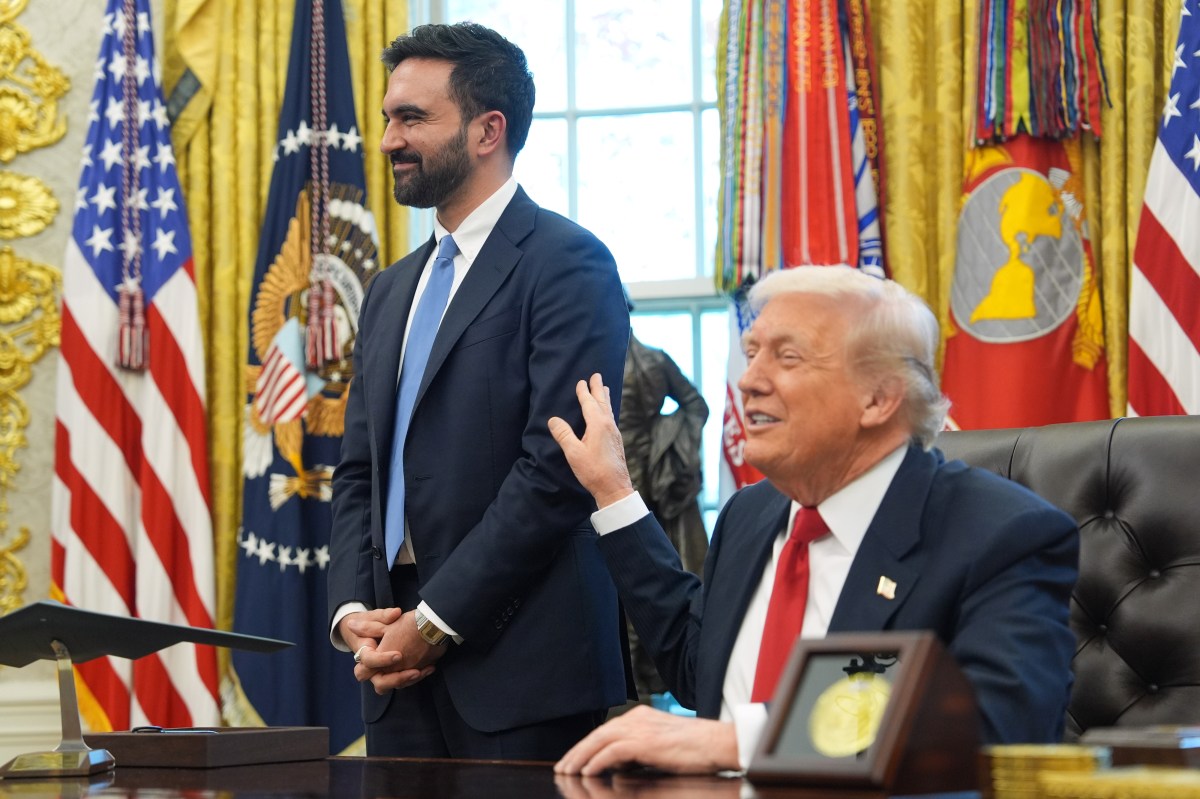
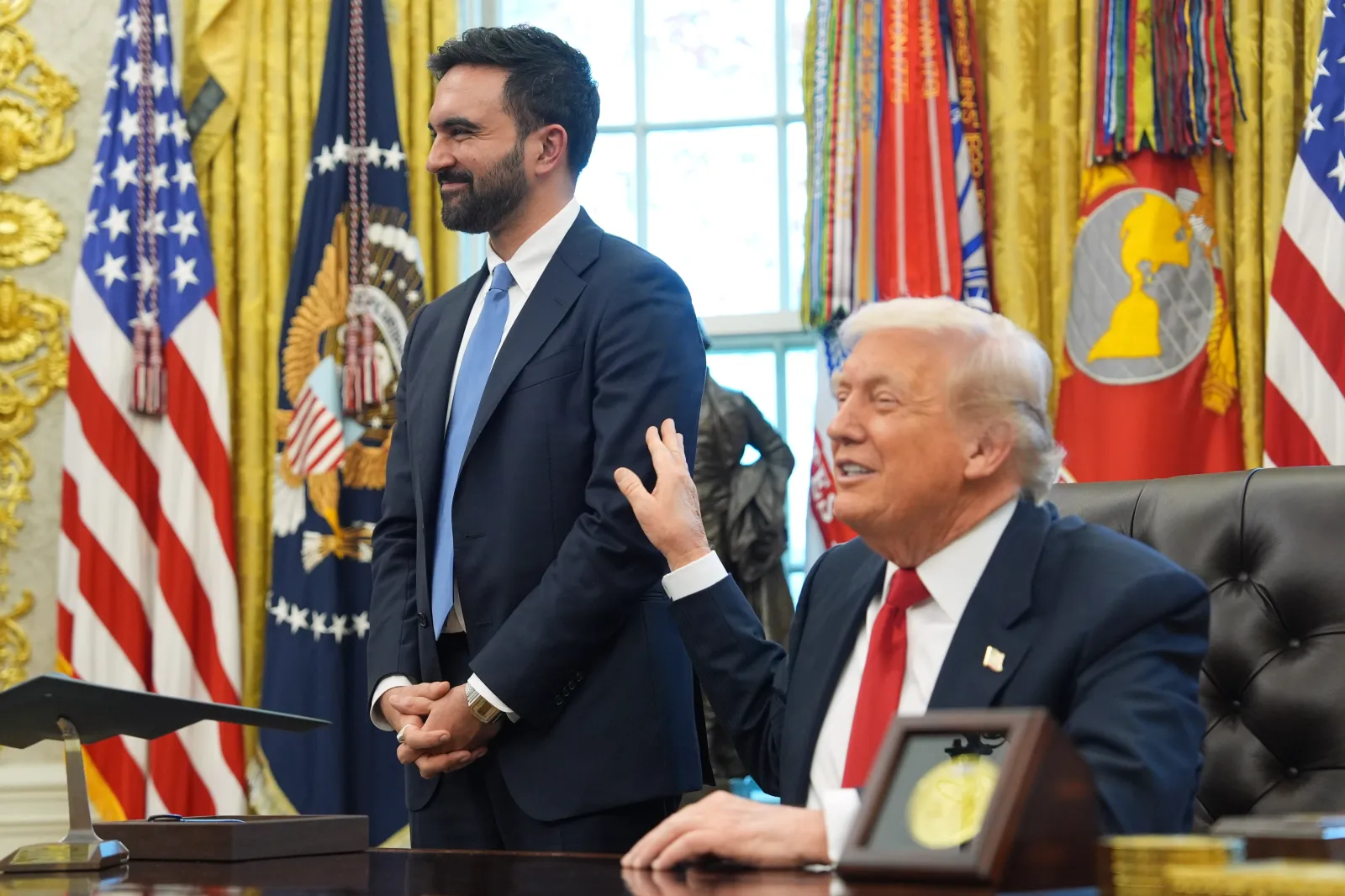
New York City Mayor Zohran Mamdani said he was “looking forward to building more housing” in the city, following a “productive” meeting with President Donald Trump in Washington, D.C, Thursday.
In a photo shared by the 34-year-old mayor on Instagram, Trump can be seen smiling next to him and holding two “New York Daily News front pages.” In his left hand, he is holding the 1975 front page reading “Ford to City: Drop Dead,” published after President Gerald Ford refused to bail out New York City, then nearing bankruptcy.
In his right hand, he is holding a fake copy reading: “Trump to City: Let’s Build.” Below the headline, a smaller type reads “Backs New Era of Housing” and an even smaller one reads “Trump Delivers 12,000+ Homes; Most Since 1973.”
According to Anna Bahr, a spokesperson for New York City Hall, the two New York Daily News printouts were given to the president by Mamdani, as reported by The New York Times.
“He came to the president today with a couple of pitches that would produce and construct more housing in a handful of projects than has happened in 50 years,” Bahr said.
What Proposals Have Mamdani and Trump Discussed?
In a statement released on Thursday evening, Mamdani’s office confirmed that the Democratic socialist and the president discussed “a historic investment in affordable housing” at Sunnyside Yard, a 180-acre rail yard in Western Queens and “home to the busiest rail yard in North America.”
This is not a new idea. The proposal was first floated under former Mayor Bill de Blasioin March 2020 as a $14 billion project backed by Amtrak, which owns Sunnyside Yard together with the Metropolitan Transportation Authority and General Motors.
But then the pandemic hit, and de Blasio’s successor, Eric Adams, did not take the project up during his term in office.
At the center of the discussion in Washington on Thursday was Mamdani’s attempt to secure more than $21 billion in federal grants to “construct the world’s largest deck over the site” which would allow the city to build 12,000 new affordable homes.
These would include 6,000 new Mitchell-Lama-style homes, government-subsidized, affordable rental and cooperative housing units for moderate- and middle-income residents.
According to the mayor’s office, the project would also create 30,000 “good-paying union jobs” and “deliver new parks, schools and health care clinics” to the area.
“The proposal represents a once-in-a-generation opportunity to confront the city’s housing crisis at the scale it demands,” Mamdani’s office said. “If realized, the project would mark the largest housing and infrastructure investment in New York City in more than 50 years.”
Senior city housing official Cea Weaver, whose appointment by Mamdani was somewhat controversial because of previous statements she had made on private property and homeownership, told the Gothamist that the project would also bridge sections of Western Queens separated by the rail yard.
“It’s a barrier between some of the most diverse neighborhoods in Queens,” Weaver, director of the Mayor’s Office to Protect Tenants, said. “And so I think it’s important that we’re able to connect neighborhoods.”
However, she also expressed concern over the scale of the project, and its cost, “It’s extraordinarily expensive, and we need federal support in order to be able to do it,” she said.
How Many Homes Are Needed in New York City?
Mamdani was elected on the back of his promises to improve affordability in the city, especially when it comes to housing—the single largest expense for the average New Yorker.
According to a report by WalletHub published last year, New York renters spend 54.52 percent of their median monthly household income on housing, the highest figure in the nation. On the other hand, homeowners in the city spend 30.7-percent of their income on housing—a less burdensome sum, but still high compared to the rest of the country.
While wages for New York City renters have stagnated over the last 20 years, increasing by less than 15 percent after adjusting for inflation, the average monthly rent for an apartment has increased by almost 40 percent, according to the official data.
Not only rental costs are leaving New Yorkers behind, but a chronic housing scarcity and housing underproduction has also driven up housing costs over the past several years, putting a damper on mobility and leaving many households to live in inadequate units, according to the nonpartisan think tank Citizens Budget Commission.
As of 2023, according to the mayor’s office’s data, New York City had 3,705,000 total housing units. Of these units, 1,109,000 were owner-occupied and 2,324,000 were renter-occupied. In the same year, the rental vacancy rate was 1.41 percent, below the 5 percent threshold required for rent regulation to continue under state law.
According to a 2024 analysis by the Regional Plan Association, a nonprofit planning group, New York City’s housing shortage is estimated at 540,000 units.
Mamdani has made a point of increasing housing supply in the city, a goal that would require building thousands of new homes—though he might need Trump’s help to get enough funding to get a project such as the Sunnyside Yard one started.

In a polarized era, the center is dismissed as bland. At Newsweek, ours is different: The Courageous Center—it’s not “both sides,” it’s sharp, challenging and alive with ideas. We follow facts, not factions. If that sounds like the kind of journalism you want to see thrive, we need you.
When you become a Newsweek Member, you support a mission to keep the center strong and vibrant. Members enjoy: Ad-free browsing, exclusive content and editor conversations. Help keep the center courageous. Join today.
