
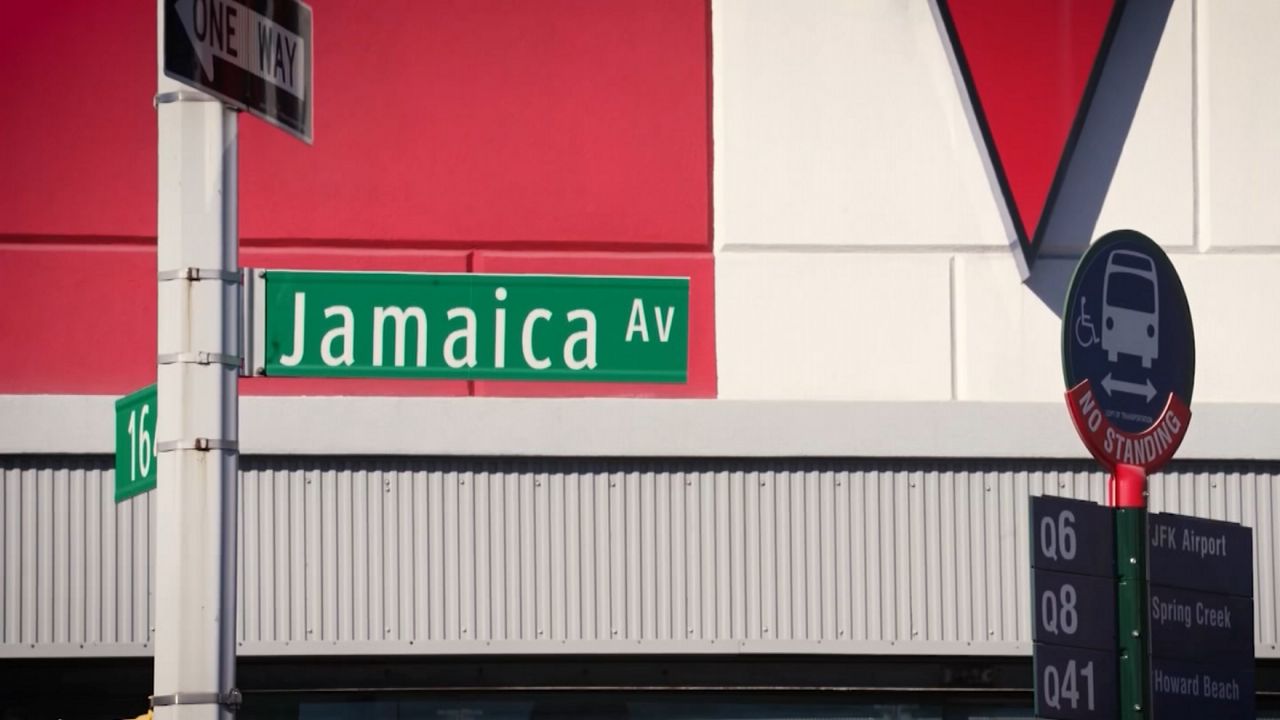
Jamaica Center, The Ave, the Colie Block — for kids and young adults coming of age in the 80s, 90s and early 2000s, it was everything.
“We had all the newest things. If it was jeans, electronics, music,” Ralph McDaniels, founder of Video Music Box, said. “You could get gold fronts, you could get diamonds.”
What You Need To Know
Jamaica Center, The Ave, the Colie Block — for kids and young adults coming of age in the 80s, 90s and early 2000s, it was everything
Groups that helped shape and define hip-hop found their inspiration and cultivated their images on Jamaica Avenue — the center of which was the Colosseum Mall, formerly a Macy’s that was converted into a marketplace for small businesses
The Jamaica Colosseum Mall officially closed on Jan. 31
The City Council is funding the creation of a task force made up of community members. It will be charged with holding the line on residents’ fears of being priced out, as well as preserving the legacy — the DNA — of the area
And you never knew who you’d see. Homegrown stars like Ja Rule, 50 Cent and LL Cool J shot music videos in the area.
“This five-mile radius is everybody from Fubu and Nas and 50 and DMC. Jam Master Jay, and it’s just ridiculous who came out of here. So clothing wouldn’t have been right, nothing would have been right, if Queens wasn’t here.” Dave Huie, former Jamaica Avenue business owner, said.
Groups that helped shape and define hip-hop found their inspiration and cultivated their images on Jamaica Avenue — the center of which was the Colosseum Mall, formerly a Macy’s that was converted into a marketplace for small businesses.
“The Avenue was everything for Queens and for my journey in hip-hop,” rapper Consequence of 192 Records and A Tribe Called Quest, said.
Consequence says writing rhymes as a teen was his therapy to deal with life’s ups and downs, and The Ave is where he found inspiration.
“Even in my first big record with Tribe, ‘Stressed Out,’ I was like, yeah, ‘I’ll be on the avenue where they be actin’ brand new. I’m splurgin’ on these Reebok joints for shorty boo. All of the sudden, I seen these two kids frontin’, talkin’ out they joints, but they wasn’t sayin’ nothin’. We was basically just talkin’ about Queens,” he said.
Some people looking from the outside in will say it’s so materialistic, NY1 said.
“It’s Queens get the money. It’s Queen’s get the money. It is materialistic,” Consequence said.
“The Colosseum goes back to the 80s and before the 80s and the 70s and 60s and, you know, it’s the journey of African Americans,” he added. “The fight for self-containment and independence and financial freedom, you know, places like the Colosseum allow people to have financial freedom where they didn’t have to say, work for ‘the man‘ and clock in a time card.”
On Jan. 31, the Jamaica Colosseum Mall officially closed.
The latest casualty in what has been a decade-long erosion of small businesses and vibrancy on The Ave.
“At the end of the day, the youth dictate the culture. They do, and when it’s their turn, they do what they do with it,” Consequence said. “They live in a time of this is TikTok, this is Amazon, this is Gigster.”
Shopping and entertainment habits may have changed, but leaders in the area say policy and disinvestment also led to declining foot traffic on The Ave.
A rezoning plan passed by City Council last year aims to revive Jamaica Center, with new residential, commercial and industrial developments.
“If you look at the investments in Jamaica, they have lagged behind many other communities across the city. And so with the Jamaica Neighborhood Plan, we weren’t just focused on housing,” Democratic City Council Deputy Speaker Nantasha Williams said. “I was focused on a whole wide range of things that make a community a community.”
Money is flowing in to rebuild the Long Island Rail Road and AirTrain terminals — a nod to the influx of people moving into and through the area.
Williams says affordable housing and money to help people stay in their homes are included in the plan.
“We need to protect, we need to preserve, but how do we really do that in a way that gives people confidence? And what type of commitments can we get from the private sector and or the public sector to make it real?” she asked.
The City Council is funding the creation of a task force made up of community members. It will be charged with holding the line on residents’ fears of being priced out, as well as preserving the legacy — the DNA — of the area.
“I have a term-limited position, and I wanna make sure that the community can hold us, government, accountable for delivering on the things that was promised,” Williams said.
The Jamaica Center for Arts and Learning (JCAL) cultural institution working to uphold the legacy of The Ave’s golden era of hip-hop.
“I think the vibrancy walking down Jamaica Avenue is still there. It’s there in the support that we see when we do have events,” Courtney Ffrench, JCAL’s artistic director, said. “You have our audience come in and ask, ‘okay, so what’s happening today?’”
JCAL’s directors say The Ave is making new sounds and images that are a variation on themes of the past, reflecting the shifting demographics of the area.
“As a cultural institution, it’s both a challenge and an opportunity,” Leonard Jacobs, JCAL’s executive director, said. “Because we need to be responsive culturally to an enormously diverse group of people, while at the same time, paying respect and homage and focusing on the historic community that has always been here in Southeast Queens and in Jamaica in particular.”
And when it comes to hip-hop, the beat that started on The Ave lives on in different ways.
Consequence’s son, Caiden the Crown Holder, may not be on The Ave, but he’s one of many grabbing the torch.
NY1 asked Consequence what the difference between his lyrics and his son’s lyrics is, given that there isn’t the same level of gathering place and culture.
“You know, I think the physical has become digital, and so now the conversion, instead of it being a place, it’s an app and it’s the world. We all are tied together through technology,” he said.
The hope of many is that as Jamaica Center continues its evolution, both the old and new will hold that space together.