
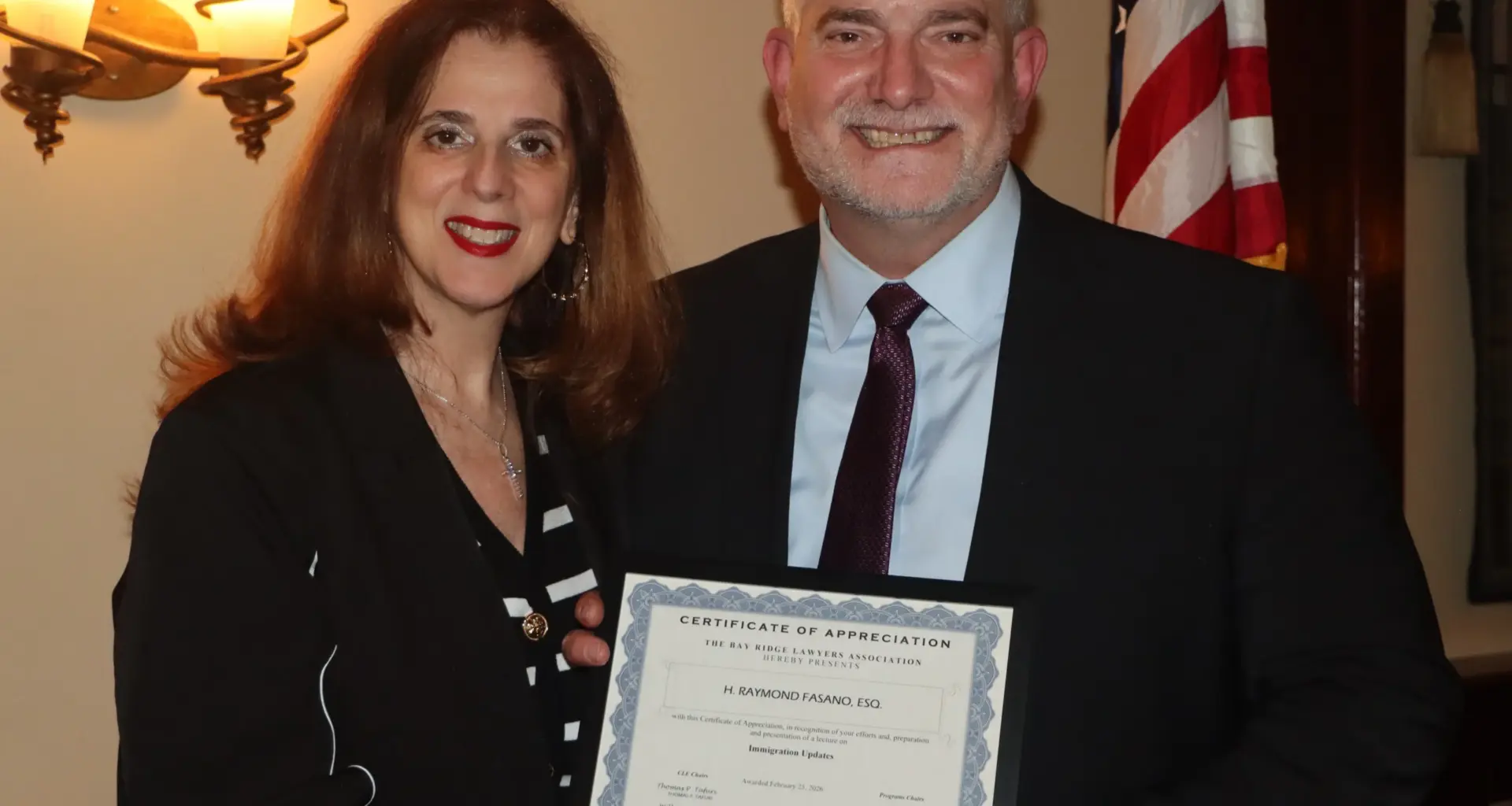
Second chances
Fasano also discussed “Cancelation of Removal,” a form of relief in U.S. immigration law that allows certain non-citizens in removal (deportation) proceedings to avoid being deported and instead receive lawful status.
“Immigration’s purpose is not really enforcement,” Fasano said. “When you read the Immigration Nationality Act in its entirety, it’s really about second chances and unifying families.” According to Fasano, too often, before non-citizens get a second chance, they are deported.
“Conditions are also made so onerous that the person is basically extorted into leaving,” he added.
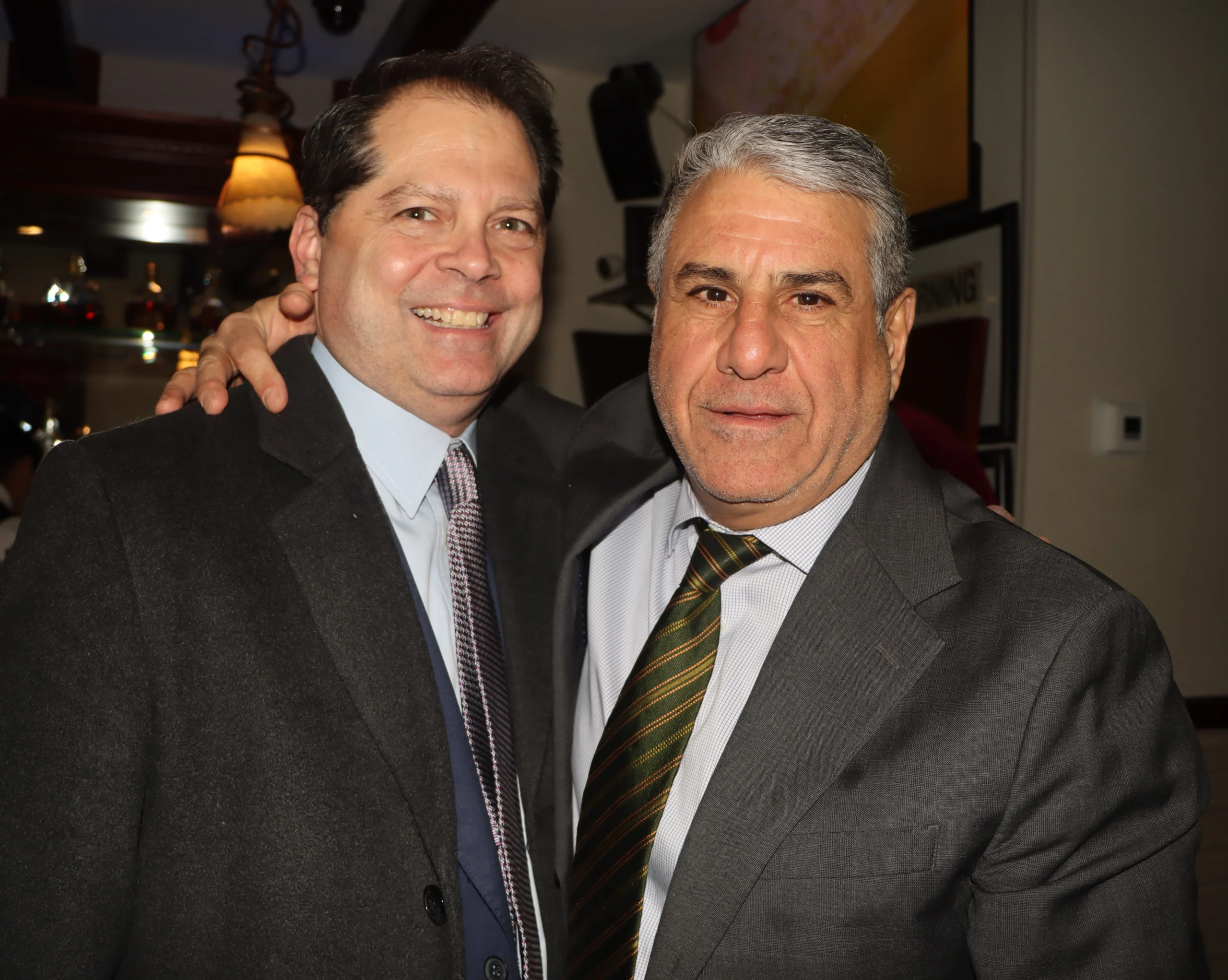 Stephen Chiaino, Esq., left, alongside Gary Hanna, Esq. Photo: Mario Belluomo/Brooklyn EagleDoing it by the book
Fasano also referenced President Donald Trump’s Feb. 24 State of the Union speech, where he claimed to be a supporter of legal immigration and doing things by the book.
“I honestly believe that there is no legal immigration right now,” Fasano noted. “There is no way that one of my clients can get status at this time legally, so I don’t know what Trump is talking about. In my opinion, this administration does not support legal immigration or immigration of any kind.”
Fasano pointed out that there are “inconsistencies in what the president says.”
“Trump said that the worst of the worst were being allowed into the U.S. Mental institutions were emptied out, and criminals were coming here to take over U.S. jobs,” he added. “Well, I don’t know a lot of criminals who would want to work lawfully in the United States. It just doesn’t make sense to me.”
The process of attaining citizenship may start in the U.S. or in one’s country of origin. However, should a non-citizen be in the midst of going through the motions and is confronted by the U.S. Immigration and Customs Enforcement, what recourse might they have?
“None,” Fasano replied. “They’ll just deport you.”