
by Michelle Mullen
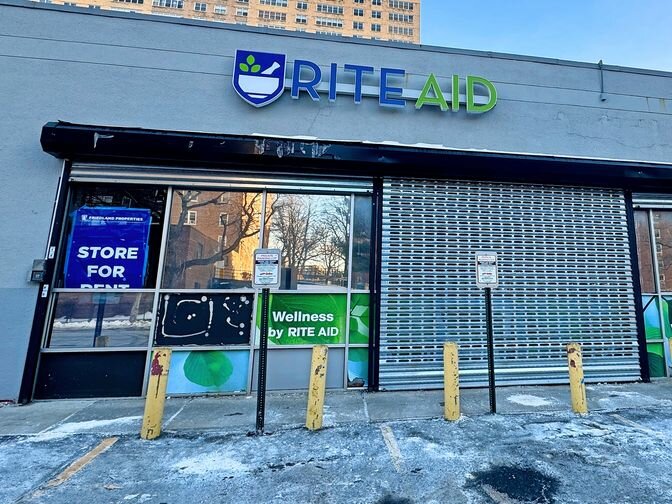
As negotiations move forward to fill the former Rite Aid space at 21B Knolls Crescent, elected officials have increased pressure on the shopping plaza’s landlords to lower rents and fill vacant storefronts.
The now-dilapidated former Rite Aid, which closed last year, became a symbol of broader disinvestment in the corridor. It followed the earlier departure of Chase Bank in 2020, as well as a handful of other businesses in prior years. Now, Junior Frias, owner of Ben’s Market next door, signed a 20-year lease with Friedland Properties to close his current business and open a supermarket in the vacant pharmacy space.
“I’ve been negotiating with the landlord for like the last six, seven months,” Frias said, pointing to rising rent demands as the primary obstacle. “It’s just very expensive.”
The new store is expected to operate as a Fine Fare or similar franchise supermarket, he told The Press, adding if construction proceeds smoothly, the build-out could take four to six months. `
“Hopefully by June, July, we should be there,” he said.
The move would close Ben’s Market at 19 Knolls Crescent. The storefront will likely become vacant once the new supermarket opens. However, Frias told The Press he is considering the possibility of opening a pharmacy in the space currently occupied by Ben’s.
For residents — many of them seniors living in the limited-equity co-ops directly behind the strip — the shopping center’s losses have reshaped daily life and raised questions about the future of a neighborhood built around walkability.
The return of a supermarket to the shuttered Rite Aid — where a CTown supermarket once operated — offers a measure of relief, but multiple storefronts remain vacant and broader rent negotiations remain unresolved.
The Knolls Crescent Shopping Center is split between two landlords. Friedland Properties controls the former Rite Aid and several adjacent storefronts, while ABC Realty owns four additional vacant spaces along the strip.
Residents say the divided ownership has complicated efforts to secure commitments and clarify long-term leasing plans, particularly as rent expectations appear to exceed what smaller or independent businesses can afford.
Assemblyman Jeffrey Dinowitz said the effort to fill storefronts has moved beyond public calls and into direct meetings with property representatives.
Earlier this month, he and Councilman Eric Dinowitz joined Bronx Borough President Vanessa Gibson and a staffer from Rep. Ritchie Torres’ office in a meeting with the managing agent for ABC Realty.
He described the meeting as cordial but candid, saying it became clear that rent expectations remain the central obstacle.
“The landlord knows how much rent he wants to get from a particular storefront,” Assemblyman Dinowitz said. “There have been people who wanted to rent various storefronts and they were not willing to pay that amount.”
Councilman Dinowitz echoed the sentiment, noting his message was clear — that vacancies are no longer being treated as routine business decisions but as issues affecting thousands of residents.
“What it feels like is that we have a landlord who doesn’t seem to have interest in filling the storefront,” he told The Press.
He added that outreach to both ABC Realty and Friedland Properties is ongoing and that his office has requested a follow-up meeting that would include community members directly at the table.
Among those helping shape the neighborhood organizing effort, is Community Board 8 Economic Development Vice Chair Cesar Tobar-Acosta, who has encouraged residents to distinguish between landlords and business owners like Frias.
He emphasized that filling storefronts will require sustained pressure, coalition-building with elected officials and continued documentation of how prolonged vacancies affect daily life. The strategy, he said, is to combine public pressure with research, media engagement and sustained follow-up.
“The only way to get things done is when people get together, when people show up, when people organize,” Tobar-Acosta said.
The resident effort continues to grow, with dozens attending a neighborhood meeting on Feb. 22 to plan next steps, even as a blizzard was forecast to arrive hours later. The turnout, organizers said, means the pressure on landlords is unlikely to ease anytime soon.