
When it comes to the popular embodied intelligence, there are two companies that cannot be bypassed – Unitree and Zhipu.
Both companies are in the category of billion-yuan valuations and have taken the lead in initiating the IPO process. Among them, Unitree has accumulated more than 1.5 billion yuan in financing so far. After Series C financing in 2025, its valuation reached 12 billion yuan. Zhipu has completed 11 rounds of financing in total, and its valuation reached 15 billion yuan by March last year.
Judging from the more valuable indicators, shipment volume and revenue, Zhipu and Unitree have formed a “duopoly” pattern, occupying most of the domestic market share at present.
According to official and third – party statistical data, the sales revenue of both Unitree and Zhipu exceeded 1 billion yuan last year, and the shipment volume of humanoid robots was about more than 5,000 units.
An investor described the two companies to us like this, “Unitree understands the present of embodied intelligence; Zhipu sees the future of embodied intelligence.”
The investor’s words reflect two current strategies. Unitree has blossomed everywhere in the first – tier market through its sales network; while Zhipu is building an industrial cluster for embodied intelligence through capital alliances.
The “present” of embodied intelligence means that the product has completed the commercial closed – loop and robots have entered the industrial production line. The “future” means that technology builds an ecological barrier and reshapes the relationship between humans and robots.
After the Spring Festival hustle and bustle fades away, this track is never short of conceptual popularity, but lacks the patience to land in industries and sectors.
The Capital Integration Game
Capital is the biggest driving force behind embodied intelligence, but when it comes to companies that can play the capital game well, Zhipu takes the lead.
Zhipu’s most astonishing move in the industry last year was to spend 2.1 billion yuan to gain control of Shangwei New Materials.
Traditionally, the growth path of a technology company is from the angel round to the IPO. However, during the Series B to Series C stage, Zhipu directly used the money raised in the primary market to buy the controlling stake of a listed A – share company in the secondary market.
Zhipu’s brilliance lies in that it avoids the suspicion of “back – door listing” and can enjoy the capital convenience brought by a listed company. Before its official IPO on the Hong Kong Stock Exchange, it can use Shangwei New Materials for acquisitions and financing. Zhipu has elevated capital operation to a new level. In essence, it uses the secondary – market platform to conduct primary – market integration and then feeds back the secondary – market valuation.
Zhipu, which is well – versed in capital operation, has far more actions than this.

In June last year, Zhipu and Hillhouse established an embodied – intelligence industrial investment fund worth hundreds of millions. At the same time, it announced that in the next three years, it will invest tens of billions of yuan through the “Zhipu Plan A” to incubate more than 50 high – potential early – stage projects and build a trillion – level industrial ecosystem.
According to incomplete statistics from Photon Planet, as of now, there are 53 companies associated with Zhipu. Among them, there are 4 wholly – owned subsidiaries of Zhipu, 3 independently – financed companies incubated internally, 10 joint – venture companies established with other manufacturers, and 24 share – holding investment companies.
Through Zhipu, we can see the capital play of many large enterprises. Centered around Zhipu robots, through four – layer structures of controlling and incubating, joint – venturing and binding, share – holding and layout, and industrial funds, it deeply integrates technology, manufacturing, scenarios, and capital to build an embodied – intelligence industrial cluster.
Through the joint – venture model, such as cooperation with Lens Technology and Lingyi Precision Industry, Zhipu has obtained mature consumer – electronics manufacturing capabilities and supply – chain management systems. This enables it to consider mass – production processes at the product – design stage and shorten the cycle from prototype to product. This kind of binding is exclusive and can widen the gap with competing companies in the same period in terms of production – capacity ramping.
By holding shares in companies such as Huixi Intelligence and Qianjue Robotics, Zhipu has established a complete technology matrix covering the “brain”, “cerebellum”, senses, and application scenarios. Since core components such as dexterous hands and joint modules are all provided by internal or share – holding companies, the efficiency of software – hardware collaborative optimization is higher than that of competing products assembled through outsourcing.
It is worth noting that Zhipu has internally incubated three subsidiaries, namely Shanghai Critical Point Innovation Intelligent Technology Co., Ltd., Shanghai Mifeng Embodied Intelligence Technology Co., Ltd., and Qingtianzu (Shanghai) Technology Co., Ltd.
The first two correspond to dexterous hands and data platforms, which are the “bottleneck” businesses in the embodied – intelligence track. Qingtianzu points to the most profitable business at present – robot leasing, aiming to expand Zhipu’s sales market.
In addition, Zhipu has also introduced industrial shareholders such as SAIC, BYD, and Longcheer, directly tying customers into a community of interests. Thanks to this, the SAIC factory has become a testing ground for Zhipu robots, accumulating a large amount of scenario – feedback data and practical experience for it. By establishing joint – venture companies, Zhipu has also locked in benchmark customers in core tracks such as the automotive and 3C manufacturing industries in advance.
The Disappearing Industrial Closed – Loop
The large – scale capital operations on the capital side present a different scenario when transmitted to the market.
Currently, robot sales are divided into several levels: at the top are whole – machine manufacturers like Unitree and Zhipu, which have pricing power and channel management rights and can also directly sign large – customer projects; the second level is regional agents, including provincial and municipal agents as well as agents focusing on specific industries, who generally have local customer resources; the third level is industry – solution integrators, who purchase original – factory robots, form software – hardware integrated solutions, and sell them in packages to end customers; the last level is leasing service providers, whose core business model is to purchase in bulk from the original factory and sell robots through leasing to small and medium – sized customers, providing a subscription – based leasing service by duration.
The data of robot bidding projects in 2025 shows that large orders worth over 100 million yuan are concentrated in government – enterprise and university research institutions. Practitioners in the embodied – intelligence field said that large government projects basically place orders directly with the original factory, and this part of the sales revenue accounts for nearly half, leaving no profit for agents.
“Most agents haven’t made money. The commercialization of embodied intelligence is still in its early stage, and there are signs that it hasn’t penetrated into all industries.”
Even orders are full of deception.
According to some industry insiders, “vague nature” is the most common way to inflate orders.
For example, Company A and Company B signed a strategic cooperation agreement, stipulating that “Company B will purchase XX robots in the next three years.” In the press release, it is reported as a big order, but legally, it is just an intention. Since there are no penalty clauses, once the market trend changes, the promised order can be cancelled. This is more like an empty promise and cannot be counted as real income.
Another common situation is resource exchange. Many robot purchasers have capital and strategic cooperation relationships with the companies behind them. Therefore, there may be a phenomenon of “mutual support”. Investors choose to purchase robots in order to show a good order – growth rate or to jointly create a benchmark case.
When local state – owned assets introduce enterprises, they usually promise “first – purchase and first – use” in order to keep the enterprises in the local area, create employment and tax revenue. As for whether the purchased robots can be used well, that is a matter of later – stage operation.
The most fatal problem is that embodied intelligence has generated numerous false demands under the drive of capital.
The wind of capital has blown towards embodied intelligence, and a large number of enterprises have emerged like mushrooms after rain. Many robot companies often first have a financing plan, then deduce how many orders and revenues are needed, and then look for customers in the market. This has caused a large amount of production – capacity and R & D losses, aiming at the preferences of the capital market from the beginning rather than the pain points in industrial scenarios.
With the impetus of capital, the result is obvious. Robots perform well in demos, but once put into the real industrial environment, they encounter problems.
You will find that the industrial closed – loop in the embodied – intelligence industry has disappeared.
A healthy industrial closed – loop usually starts from real needs, gives birth to products or solutions. Products generate profits by solving certain pain points and achieving cost – reduction and efficiency – improvement, and then feed back into R & D to create more needs.
However, in the current embodied intelligence, the above – mentioned closed – loop has been distorted. Driven by capital stories, “inflated” orders are created out of thin air, driving production – capacity expansion and valuation increase, completing the tasks of the next round of financing and cashing out, and supporting the telling of bigger capital stories.
Too Many and Too Few
Putting aside the capital bubble, the robot – leasing business is the main source of income in the current track.
Theoretically, once a company launches a product, it can be obtained through direct – sales and agent channels.
For example, according to the product introduction on the official website, Zhipu has the most complete product line, including wheel – legged, humanoid, quadruped, and commercial robots, almost covering all scenarios.
However, the market feedback is not the case. A robot agent told us, “In the market, Unitree robots are the most common, and the number of Zhipu robots is relatively small. Some manufacturers have only heard the name but have never seen the product.”
The cost of robot leasing and maintenance is becoming a burden on agents.
We learned that since Unitree started expanding its sales network earlier, there are more robots available for lease in the market.
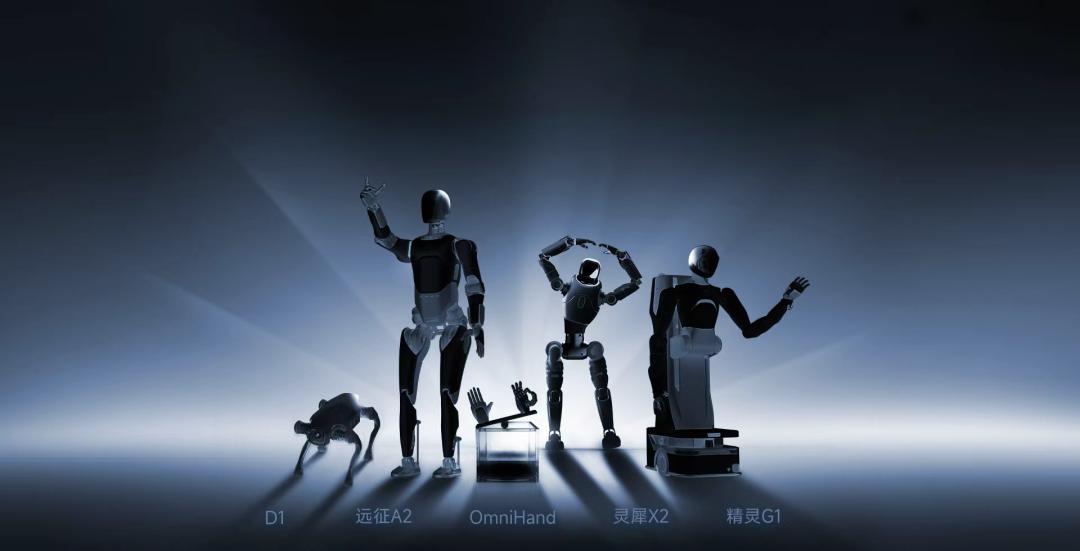
The daily rental price of Unitree’s half – sized robot G1 is generally between 4,000 and 5,000 yuan. As the saying goes, “rarity makes the price high”, so the rental price of Zhipu’s robots is higher. For the same half – sized robot, the daily rental price of Zhipu’s X2 ranges from 6,000 to 8,000 yuan. Zhipu’s full – sized general humanoid robots are rarely seen in the market, and the daily rental price of its Expedition series robots is at least over 10,000 yuan.
“Leasing” a robot doesn’t end with just sending it out.
The above – mentioned robot agent took the most common opening – ceremony scenario as an example. For a performance usually lasting 2 – 3 minutes, they need to assign at least two people and stay on – site for the whole day. One person is responsible for operating the robot, and the other is responsible for maintenance.
The maintenance of robots is a considerable expense. For an event like the above, the robot needs to be sent back to the factory for maintenance on average every two or three events.
The original factory usually promises a one – year maintenance warranty period. Even within the warranty period, if the robot has problems, the agent still has to pay for the repair out of their own pocket.
We have seen a maintenance bill for a Unitree robot. With only scratches on the protective shell and normal wear and tear, the total cost exceeded 5,000 yuan.
The just – past Spring Festival Gala was like a “magnifying glass” for capital. Embodied – intelligence enterprises spent hundreds of millions of yuan to perform martial arts, hip – hop, and somersaults on the stage, just to gain traffic exposure and promote a new round of financing.
The performances that made the audience applaud were based on pre – programmed procedures, fixed routes, countless adjustments, and a perfect performance environment. Those robot “stars” don’t need to avoid obstacles, handle emergencies, or face extreme working environments such as factories and construction sites.
Right after the Spring Festival holiday ended, there were wave after wave of financing in the embodied – intelligence track.
According to incomplete statistics, there are currently eight humanoid – robot enterprises in China that have entered the billion – yuan valuation echelon, including Ubtech, Zhipu Robotics, Unitree Technology, Galaxy General, Xinghaitu, Independent Variable, Zhipingfang, and Qianxun Intelligence.
There are too many and too few enterprises in this track.
There are too many people eager to tell stories with technology, and too few people willing to polish products in factories.
This article is from the WeChat official account “guangzi0088” (ID: TMTweb), author: Hao Xin, published by 36Kr with authorization.