
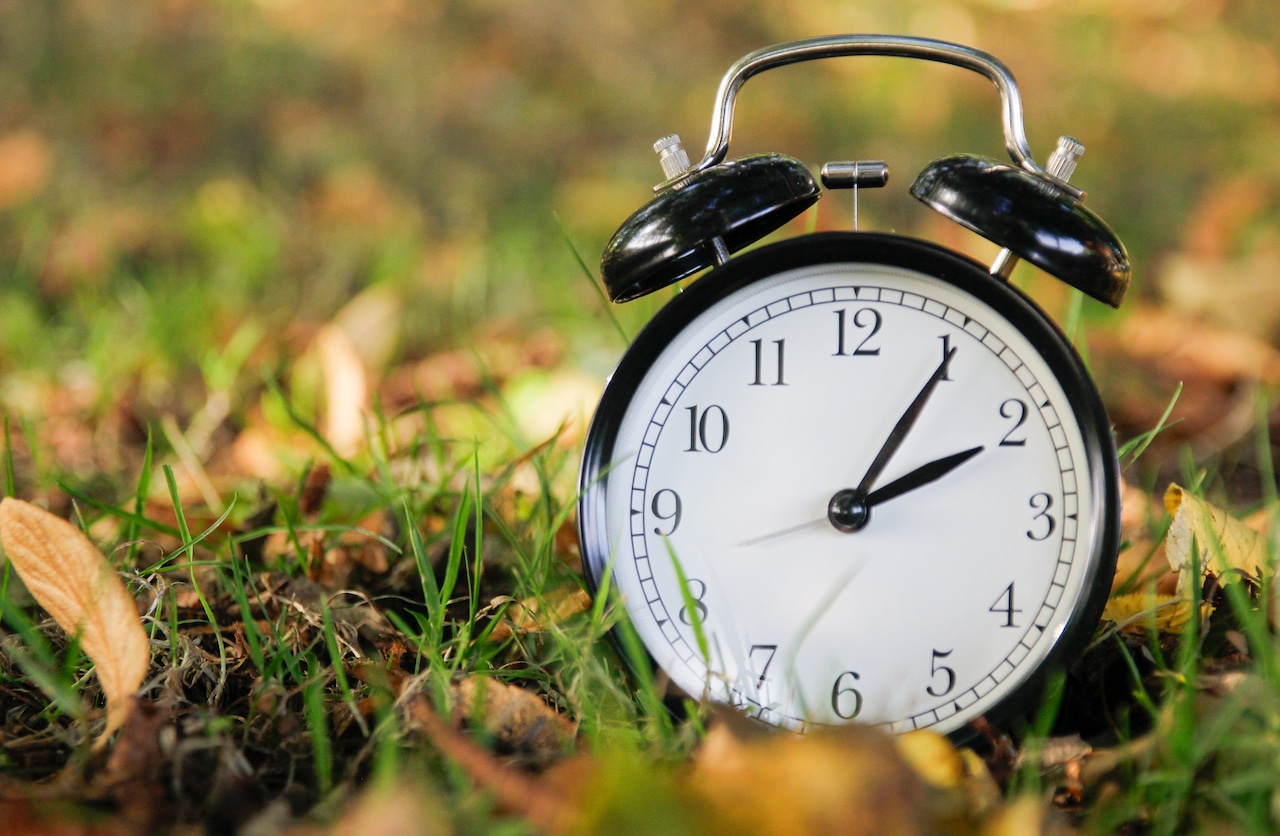
STATEN ISLAND, N.Y. — Daylight Saving Time is coming to an end, so enjoy these last few days of bright evenings.
But we have one more complete weekend to enjoy the longer days.
We’ll “fall back” to Standard Time on Sunday, Nov. 2, at 2 a.m., making the Daylight Saving Time period one day shorter than it was last year.
That gives runners in the 2025 TCS New York City Marathon one extra hour of sleep before the big race, but is something to consider for all runners and fans as they plan their day.
Daylight Saving Time always ends on the first Sunday in November, which falls just about as early in the month as possible this year. So it may seem as though its ending a bit earlier than we’re used to.
Yet it will seem even shorter next year. In 2026, the first Sunday in November falls on Nov. 1.
Once it occurs on Nov. 2, 2025, we head toward the year’s shortest, darkest day. That will take place on Sunday, Dec. 21. This day is known as the winter solstice.
It happens when the Earth’s tilt is farthest from the sun, causing the sun to appear at its lowest point in the sky at noon.
But then, our days will begin to gradually have more minutes of light until we “spring forward” into Daylight Saving Time on March 8, 2026.
Not everyone a fan
Not everyone likes the ritual though, and many lawmakers would like to see an end to the annual changing of the clocks.
Some states don’t even participate now. Arizona and Hawaii do not change the clocks twice a year. Also, American territories Guam, American Samoa, Northern Mariana Islands, Puerto Rico and the U.S. Virgin Islands remain on Standard Time year-round.
Some argue it’s unhealthy, because the circadian rhythms of our bodies are disturbed. Some studies, including one recent one by Stanford researchers, show that disturbance of circadian rhythms affects immunity and performance.
Others say it is dangerous, because the change back to Standard Time forces children outside onto bus stops in the dark. Also, sleepy commuters must hit the road in darkness each morning, a risk for accidents and injuries.
In New York, lawmakers introduced two bills in the State Assembly and Senate aiming in 2023 to make Daylight Saving Time permanent in the state. But neither was ever voted on.
And six new bills have recently been introduced in the New York state Assembly and Senate. These bills await action when the legislature reconvenes on Jan. 7, 2026.
Three of the six bills are in favor of making Standard Time permanent year-round. The other three bills propose making Daylight Saving Time the permanent standard for the state.
The three in favor of permanent Standard Time were introduced by State Sen. Leroy Comrie and New York State Assemblymembers Angelo Morinello and Jeffrey Dinowitz.
The other three advocate for Daylight Saving Time all year long. This would require federal approval. They were introduced by Assemblymember Dana Levenberg, Sen. Joseph Griffo and Sen. James Skoufis.
In fact, 31 states in total have considered or are actively pursuing legislation to eliminate the biannual clock change. Several additional states have competing bills.
If you purchase a product or register for an account through a link on our site, we may receive compensation. By using this site, you consent to our User Agreement and agree that your clicks, interactions, and personal information may be collected, recorded, and/or stored by us and social media and other third-party partners in accordance with our Privacy Policy.