
New York’s leaders are grappling with the implications of the ongoing conflict in Iran.
For Gov. Kathy Hochul, that means laying out how the state is amping up security and pressing the Trump administration for answers, while for New York’s Congressional delegation it means grappling with their congressional power over the act of war and how that aligns with the president’s decision.
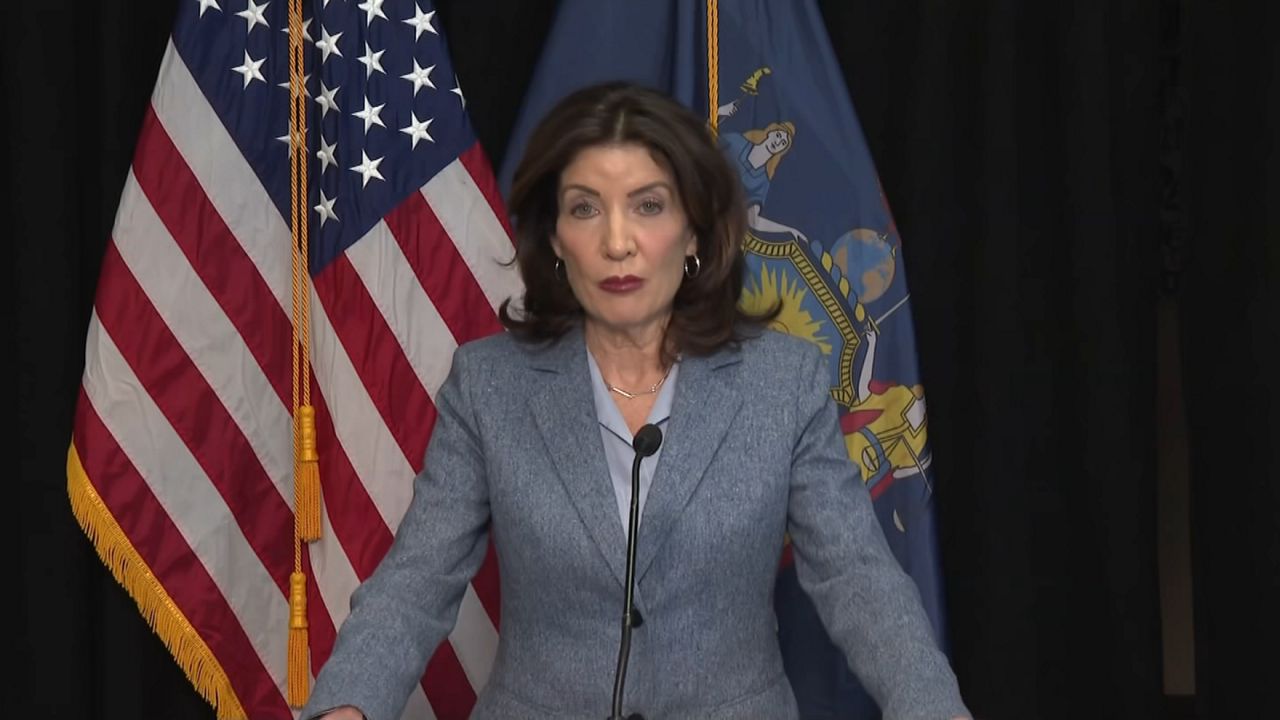
Hochul was in Erie County Monday and outlined her administration’s approach.
“We’re increasing our presence at sensitive sites, I also want to speak directly to Iranian New Yorkers, that you are safe here,” she said, adding that with the potential for retaliatory attacks and with Monday marking the beginning of the Jewish holiday of Purim: “I directed that my intelligence communities, cyber experts here in New York coordinate with local law enforcement as well as federal law enforcement to make sure we’re doing everything we can to keep locations secure, whether it’s places of worship for the Jewish communities, or places of worship for the Muslim communities.”
As for the strikes themselves, the governor offered a measured response to the Trump administration.
“This regime has been abhorrent for decades. It oppresses its own people, it supports terrorism, it threatens our allies and pursues dangerous ambitions,” she said. “No one is ever going to defend that regime — full stop. But the scale of what is happening now demands answers.”
Hochul, like many others, asked Trump for clarity on his long-term plan, as the president warned Americans Monday that the conflict could last several weeks and didn’t rule out troops on the ground.
“What is the objective? Is this going to turn into boots on the ground and the time of the endless wars that Americans are so tired of?” she said. “The president’s own words on Election Day, he said no more wars, so we have a lot of questions and deserve answers and ultimately what does success look like?”
In Washington, New York’s congressional delegation is also facing the question of what the future of the conflict will look like, and their power to shape it.
It comes as the debate continues over a war powers resolution which would require congressional approval for further military action.
Democratic Congressman John Mannion of Syracuse stressed his support for U.S. troops involved in the war, but also the resolution as he, like Hochul, questions the administration’s next move.
“When it comes to such serious actions that are easy to start but maybe difficult to end, we should be deliberative, and we should consult and engage with Congress because that’s where the war powers are enshrined in the U.S. Constitution,” he said.
While Republican Congressman Nick Langworthy of Western New York defended the Trump administration, telling reporters that lawmakers on Capitol Hill are expecting a congressional briefing and are within the 60-day window which is required for actions without congressional approval.
“We don’t have access to the same information. Once we receive the briefing, we will know precisely what the lead up to this is. I don’t think this is a decision the president came to flippantly,” he said.
Langworthy joined other Republicans calling on Democrats to back down in the standoff over funding Department of Homeland Security, tied to the Trump administration’s immigration crackdown, given the risks surrounding the situation in Iran.
“It is an accident waiting to happen, and to have our DHS and the DHS personnel working without pay or furloughed is absolutely unacceptable,” he said.
Neither Langworthy or Mannion expressed support for the idea of regime change in Iran. Mannion said that’s part of why it is so important to understand what the administration’s plan and objectives are moving forward.