
Black architects still make up only about 2% of the profession, and Shawn Hamlin and Stephen Wilder are working to change that.
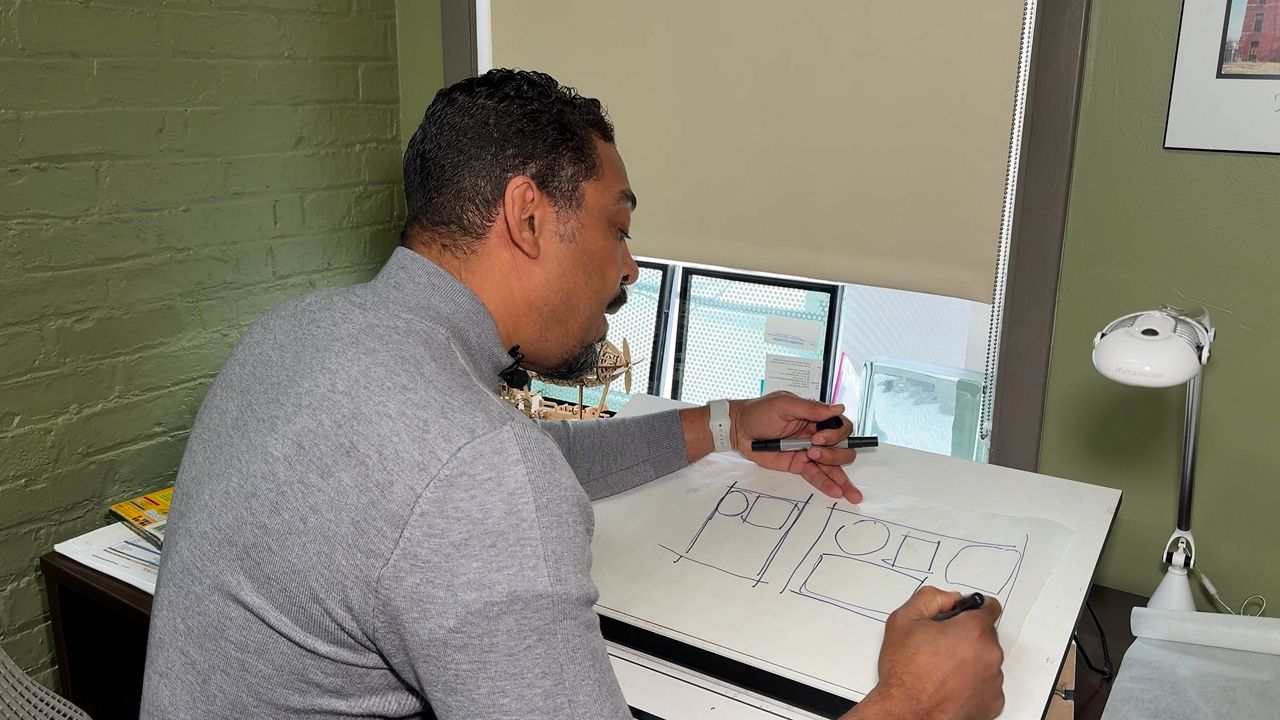
For Shawn Hamlin, every project starts the same way – with a conversation, then a sketch.
“It is nothing like envisioning something, drawing it and then seeing it come to life,” Hamlin said. “That feeling, and seeing people appreciate it, is beautiful.”
Hamlin’s interest in architecture started back in grade school, when he first learned what an architect does.
“Once I understood the concept, that’s what I wanted,” he said. “And so from that point on, my direction was to become an architect.”
This year, his firm, the Hamlin Design Group, marks 20 years in business, shaping public spaces across New York, from SUNY administration buildings to state offices and local schools.
“It’s not easy,” Hamlin said. “Challenges from the economy, to issues with clients and budgets. It is a very complex industry, but one that I’ve found very rewarding.”
Getting to that point didn’t come without setbacks. Hamlin said his firm weathered the 2008 recession and the economic shock of the COVID-19 pandemic.
“We went through a recession in 2008. And then COVID hit, as we know, in 2020, and we just kept plugging along,” he said.
In a field where Black architects account for about 2% of licensed professionals nationwide, advocates say access often comes down to who is in the room when decisions are made.
“We just want to be invited into all of these spaces because we’re usually not there when a lot of decisions are being made, and then we’re the ones that have to clean it up later,” said Stephen Wilder, principal of Think Wilder Architect and president of the New York Coalition of Black Architects.
Wilder said changing those numbers means reaching young people early, before they rule out architecture as a career.
“We have something called Project Pipeline, where we have events for kids as young as 9 years old all the way through high school,” Wilder said. “We’re engaging them and we’re meeting them and we’re connecting with them and showing them what architecture is and how important it is.”
When Black architects are at the table, he said, the work, and whose stories are centered, can look different.
In Albany, Hamlin’s firm is designing a new interpretive center honoring Underground Railroad and civil rights leaders Stephen and Harriet Myers, who helped freedom seekers find safety in the Capital Region.
“That will be an incredible project for the community because that story, I think, is a unique story to upstate New York of the movement of slaves from the South coming northward,” Hamlin said.
As Black architects bring new visions to life, Hamlin and Wilder both hope more young Black designers can see themselves in the blueprint.