
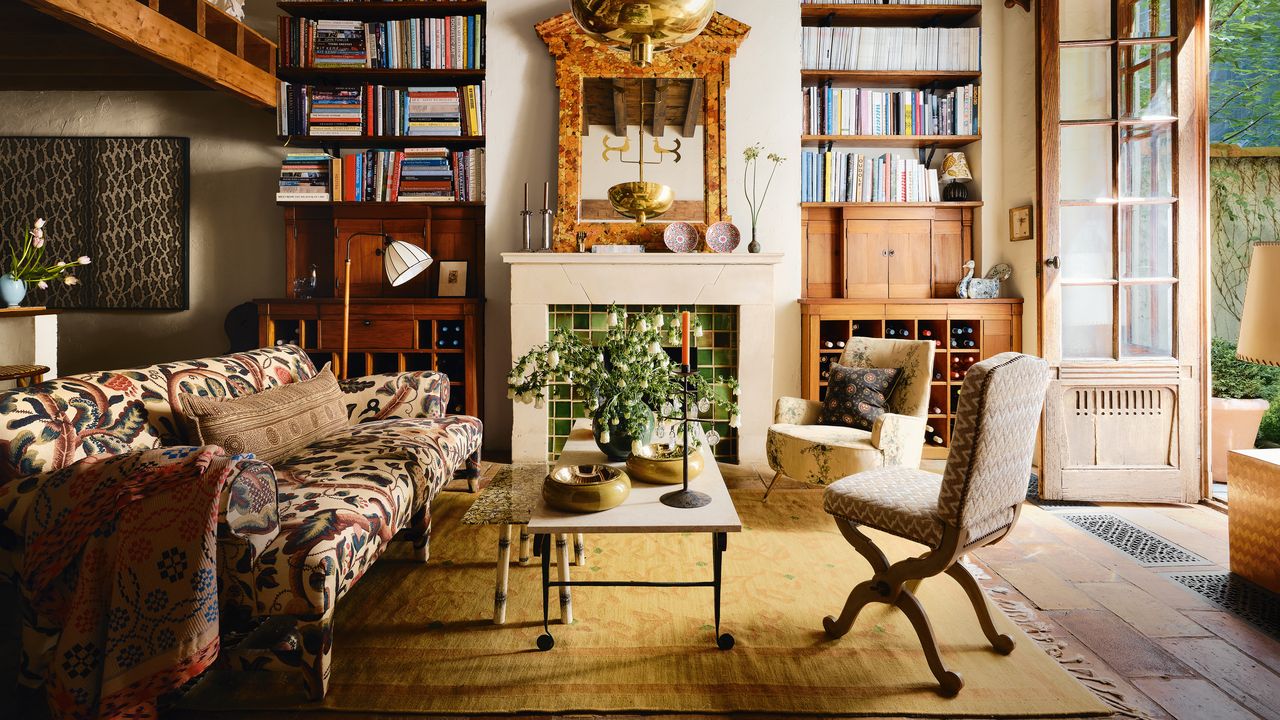
The ground-floor apartment had been renovated for its former owners by architects Fairfax & Sammons in the early 2000s, the plaster walls and exposed wood inspired by rustic Provençal farmhouses. ‘I’m very emotional about real estate,’ says Ceara. ‘I walked in and felt, “This is mine, I have to have it. It is the set for this important chapter of my life.” I didn’t even know what that would entail or involve, but I knew I would go to any length to get it.’
Once purchased, Ceara explains that her approach to decorating the space was not dissimilar to the one taken when restoring her historic house in Charleston. ‘If you are a caretaker of an important building, you don’t gratuitously change the architecture to suit your style. Instead, you adapt your aesthetic to the architecture. This project felt similar. Though the architect’s additions are not historic, I worked with the setting they had created and decorated around it. The envelope was beautiful. It just needed a light touch.’
The process of moving was a relaxed affair. Ceara was her own client, and there was no hard and fast start date to living there. ‘I sent some things up from Charleston, and I found the sofa at an antique shop and re-covered it in Claremont’s ‘Tree of Life’ fabric. The Italian chair by the fireplace was bought at auction one Thanksgiving. I wound up paying three times more in shipping for it, and, while not pristine, it’s perfect for the setting. It can’t all be shiny, can it? My friend, designer Blake Sams, was invaluable’.
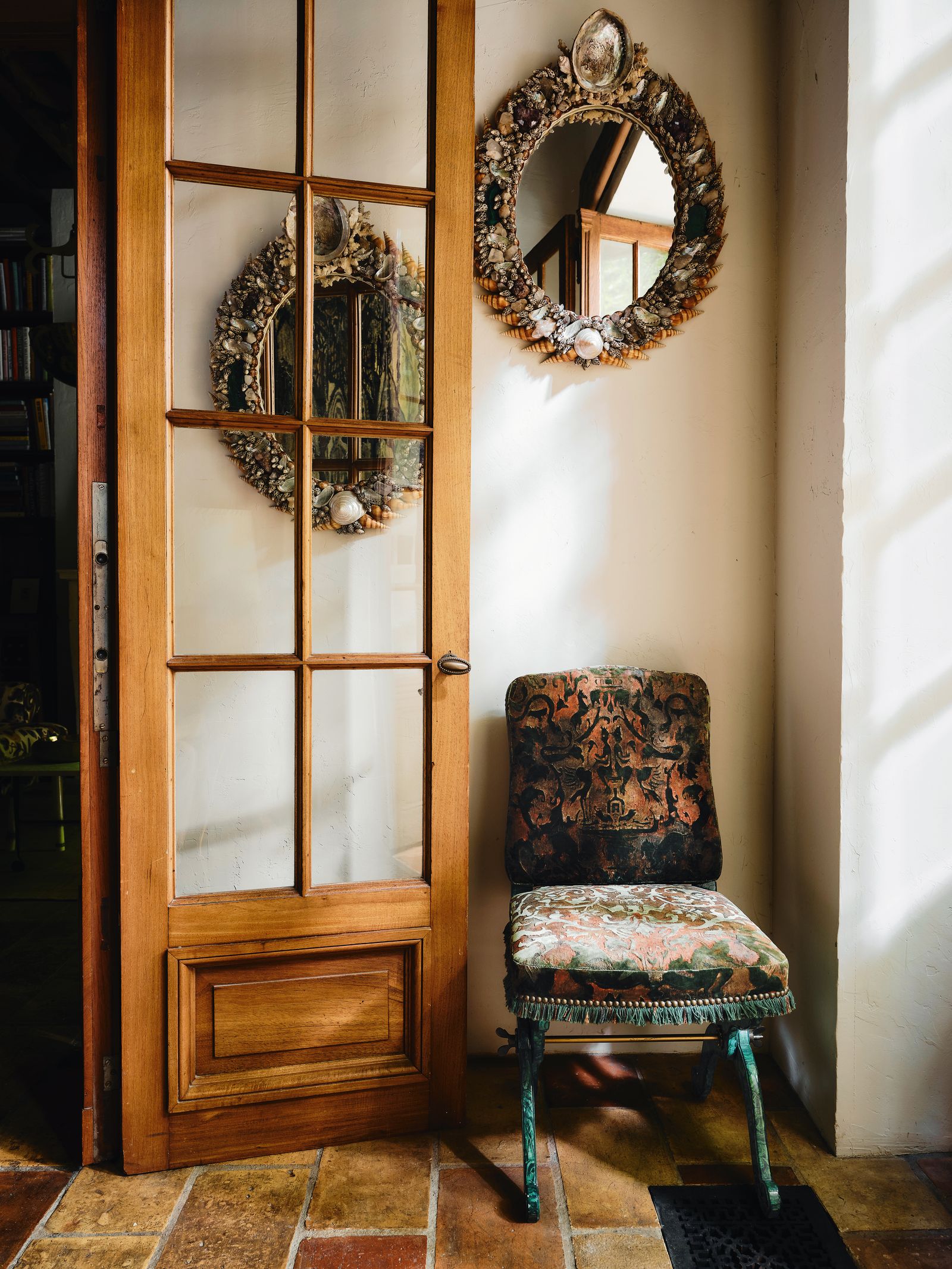
A pair of antique shell mirrors and an Ann Getty & Associates folding ballroom chair were bought at the sale of the collection of Ann and Gordon Getty in 2024.
Dean Hearne
Ceara’s family’s advocacy of open land and the natural world informs her choices as a designer, too. The roosters decorating the brass chandelier in the sitting room had exactly the feel Ceara wanted for the space. ‘They suggest the countryside, yet it’s Italian mid-century, so there is this edge and tension that I always like to create with whatever I’m doing.’ Above the chimneypiece is a 1980s Donghia scagliola mirror, from Liz O’Brien’s gallery in New York.
In the bedroom, off the sitting room, the tapestry above the bed – ‘an abstract Gothic cathedral scene, probably a mid-century piece’ – was in Ceara’s family house growing up. ‘When I decided to hang it there, I settled on floral linen from D Porthault, which is quite feminine, flanked by Mike Diaz reclaimed yarin pine tables.’ A cashmere blanket with insect and plant motifs from Saved NY was the final flourish. The room is lit by a pair of terracotta lamps by Jennifer Nocon decorated with birds and fish and inspired by Henri Matisse’s cutouts. A small Pablo Picasso pitcher bought at auction holds flowers, and matches several that Ceara and her four sisters inherited from their parents.