
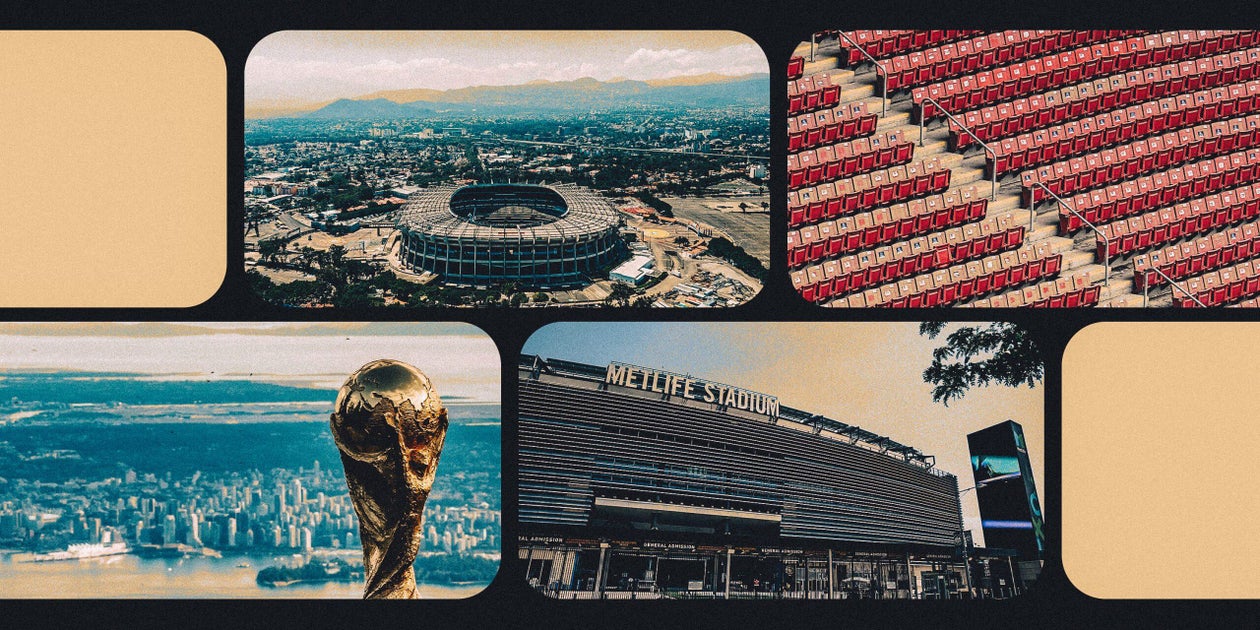
Sixteen cities spread across the United States, Mexico and Canada will host the World Cup’s 104 matches across a 39-day period this summer.
The World Cup is a huge operation, costing each host city hundreds of millions of dollars and leading to big changes to environment and infrastructures.
Transport links are being revamped, stadiums are being adapted, grass pitches are being installed — all so that the three host nations are as ready as they can be to host the greatest sporting show on earth.
For some of them, the build-up to the 48-team tournament is passing without conflict or controversy.
But for others, there have been tensions and disagreements over funding, concerns over security, fan festivals scrapped and, in the case of Guadalajara, serious unrest after widespread cartel violence last month.
With 100 days to go until the tournament kicks off in Mexico City on June 11, our reporters look at the key storylines in each of the 16 host cities…
Kansas City
Kansas City is riding high after luring England, Argentina, the Netherlands and Algeria to base camps in the region. And it seems prepared. Its prep has benefited from region-wide buy-in, with local governments (on both sides of the Kansas-Missouri state line), soccer clubs, businesses and citizens supporting World Cup hosting efforts.
“There is a united, collective belief that this could be transformational for the way people think about Kansas City, and for the confidence we have in ourselves,” Pam Kramer, the host committee’s CEO, said last month.
But there are still big questions, namely: How will a spread-out region with subpar public transport handle hundreds of thousands of visitors?
Organizers have rented more than 200 buses and unveiled a transport plan that features shuttle service to and from Arrowhead Stadium; the city’s downtown Fan Fest; the airport; and other locations.
Fan Fest — which will be free and open for 18 days throughout the tournament, on the National WWI Museum and Memorial’s south lawn — will act as the central hub.
It all sounds great on paper. But it can’t be stress-tested until June 16, the date of Kansas City’s opening match, when tens of thousands of Argentine fans will descend to see their team play Algeria.
The World Cup will be, by far, the biggest event this region has ever hosted. That comes with excitement but also uncertainty.
Henry Bushnell
Guadalajara
Guadalajara, capital of Mexico’s Jalisco State, has been tense ever since widespread cartel violence in late February.
Nemesio Ruben Oseguera Cervantes, known as “El Mencho,” the leader of the Jalisco New Generation cartel (CJNG), was killed by Mexican security forces on Feb. 22. The CJNG immediately retaliated and triggered civil unrest.
The Mexican government announced that 25 National Guard soldiers were killed in fights with the cartel over the following 48 hours, with at least 36 CJNG members also dying during firefights. The CJNG also burned vehicles, blocked roads and disrupted flights to Guadalajara’s airport, with thousands of tourists in Jalisco ordered to shelter in place amidst the chaos.
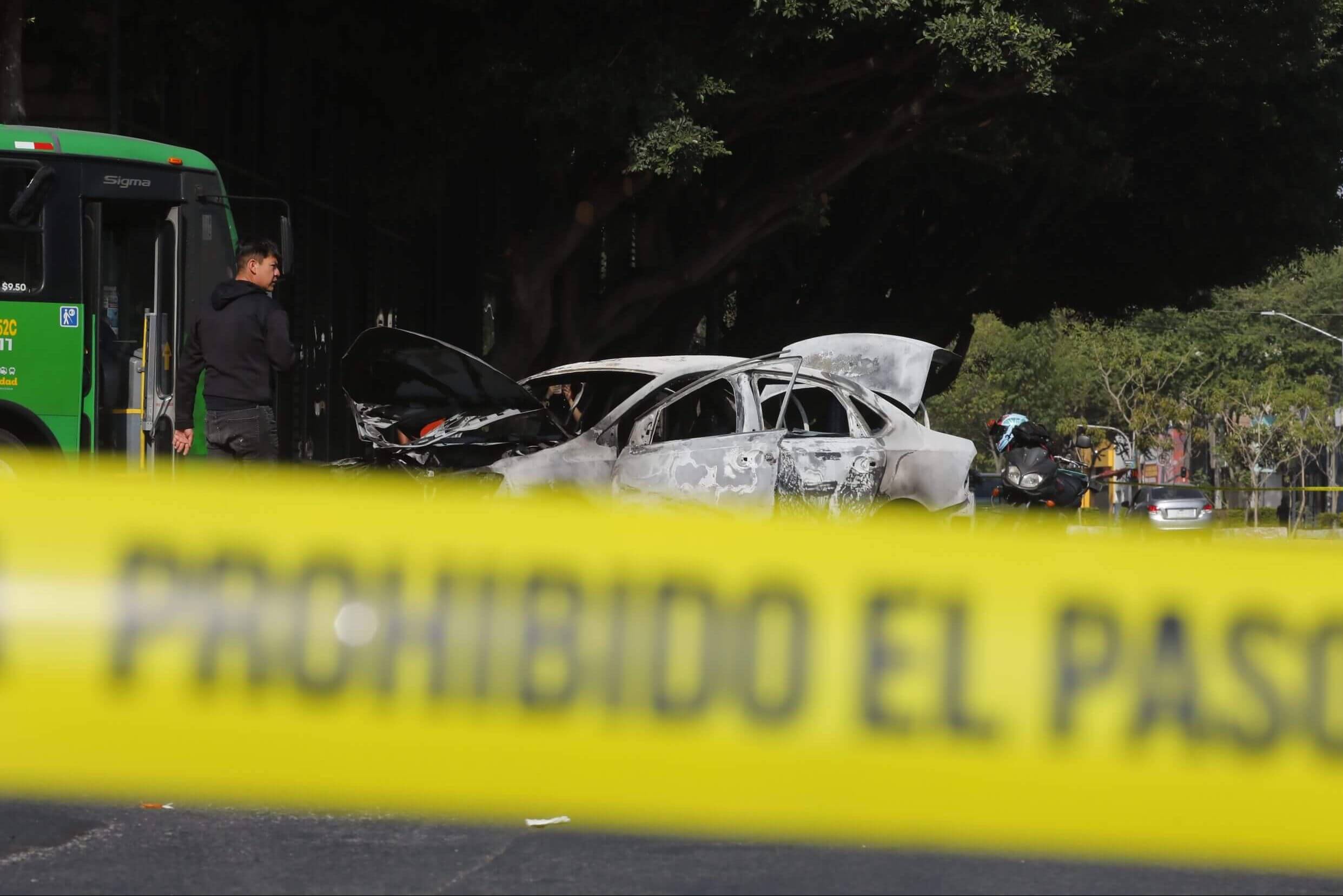
(Stringer / Anadolu via Getty Images)
The unrest sparked World Cup questions. Guadalajara’s matches are set to take place at the Akron Stadium in Zapopan, a suburb west of the city, and the site of multiple violent incidents.
Over the week since, however, a sense of order is being restored. FIFA, in response to concerns, said it has “full confidence” in all three host countries and their cities. And even amid the initial unrest, a senior FIFA official told The Athletic that World Cup games would only be relocated as a very last resort, if or after significant concerns were relayed by both safety and security officials, as well as commercial partners.
But of course, the city and World Cup organizers will be on high alert. “At FIFA Mexico, we are closely monitoring the situation in Jalisco and remain in constant communication with the authorities,” a FIFA spokesperson told The Athletic last week. “We will continue to follow the actions and directions from the different government agencies, aimed at maintaining public safety and restoring normalcy.” Mexico’s president, Claudia Sheinbaum, said last week that FIFA representatives would soon visit assess security plans, among other issues.
Several experts on crime and security in Mexico indicated to The Athletic that the cartel would be financially motivated to ensure the World Cup was not disrupted, owing to their range of business interests within Jalisco, but that the power vacuum within the CJNG after El Mencho’s death meant the security situation remained unpredictable.
The qualifying playoffs later this month also look set to go ahead, with FIFA putting tickets on sale Tuesday.
Jacob Whitehead
Houston
There seems to be limited drama in Houston, at least in comparison to some of the other host cities.
There is much excitement that Cristiano Ronaldo (with the other Portuguese players tagging along) will play his first game of the tournament there, plans were recently announced to create a “cooling corridor” in the downtown area to mitigate against temperatures that routinely go north of 104F (40C), while last week the local public transport authority proudly announced a slightly expanded bus service for the tournament.
Houston’s official Fan Fest appears to be going ahead without much of a hitch. Located in the East Downtown area, it is promising to not just be some sort of FIFA island with high walls and isolated from the surrounding area, but trying to ‘infuse the energy’ of the World Cup via partnerships with local bars and restaurants, and tap into the city’s Hispanic community.
Any nod to the Hispanic community, of course, might feel hollow if ICE are patrolling the streets. Some immigrants in Texas have reported feeling uncomfortable leaving their own homes as crackdowns have increased over the last year, and not without reason: ICE bragged in November that they arrested 1,500 people during a 10-day operation in Houston.
Chris Canetti, chair of the local organising committee, admitted recently that he has little knowledge of or control over ICE’s plans during the tournament.
Nick Miller
Dallas
No venue is hosting more World Cup games than Dallas’s nine — including England’s opening group game — and the international broadcast center will also be at the city’s Kay Bailey Hutchison Convention Center. So it’s going to be pretty busy.
The city’s Fan Fest appears to be going ahead as planned, and will have capacity to host 35,000 people each day. There are cost concerns over who will pay for security during the tournament in general, but Dallas, like Houston, can count on a multi-million-dollar boost from the Texas Major Events Reimbursement Program — so they are under less financial pressure.
Meanwhile, plans are afoot to create pedestrian zones in the city center for periods during the tournament, in order to encourage assorted fan-related events and “bring some activity downtown,” city council member Bill Roth told The Dallas Observer.
Nick Miller
New York City/New Jersey
This was a joint agreement between New York City and New Jersey to host the World Cup, so, while MetLife Stadium will host eight games, including the final, the Big Apple will also have a role to play during the tournament.
For FIFA, that has presented some challenges, in that the newly-elected New York City mayor Zohran Mamdani was a vocal critic of the organization’s pricing strategy during his campaign. Running a campaign on affordability naturally leant itself to some FIFA-bashing, as Mamdani called for an end to dynamic pricing and a cap on resale. Yet he has been reasonably quiet about FIFA since taking office.
FIFA, of course, have made New York City their second home in the U.S., opening an office in Trump Tower in Manhattan while President Donald Trump’s son-in-law Jared Kushner was part of the charm offensive that led FIFA president Gianni Infantino to take both the Club World Cup final and World Cup final to MetLife Stadium.
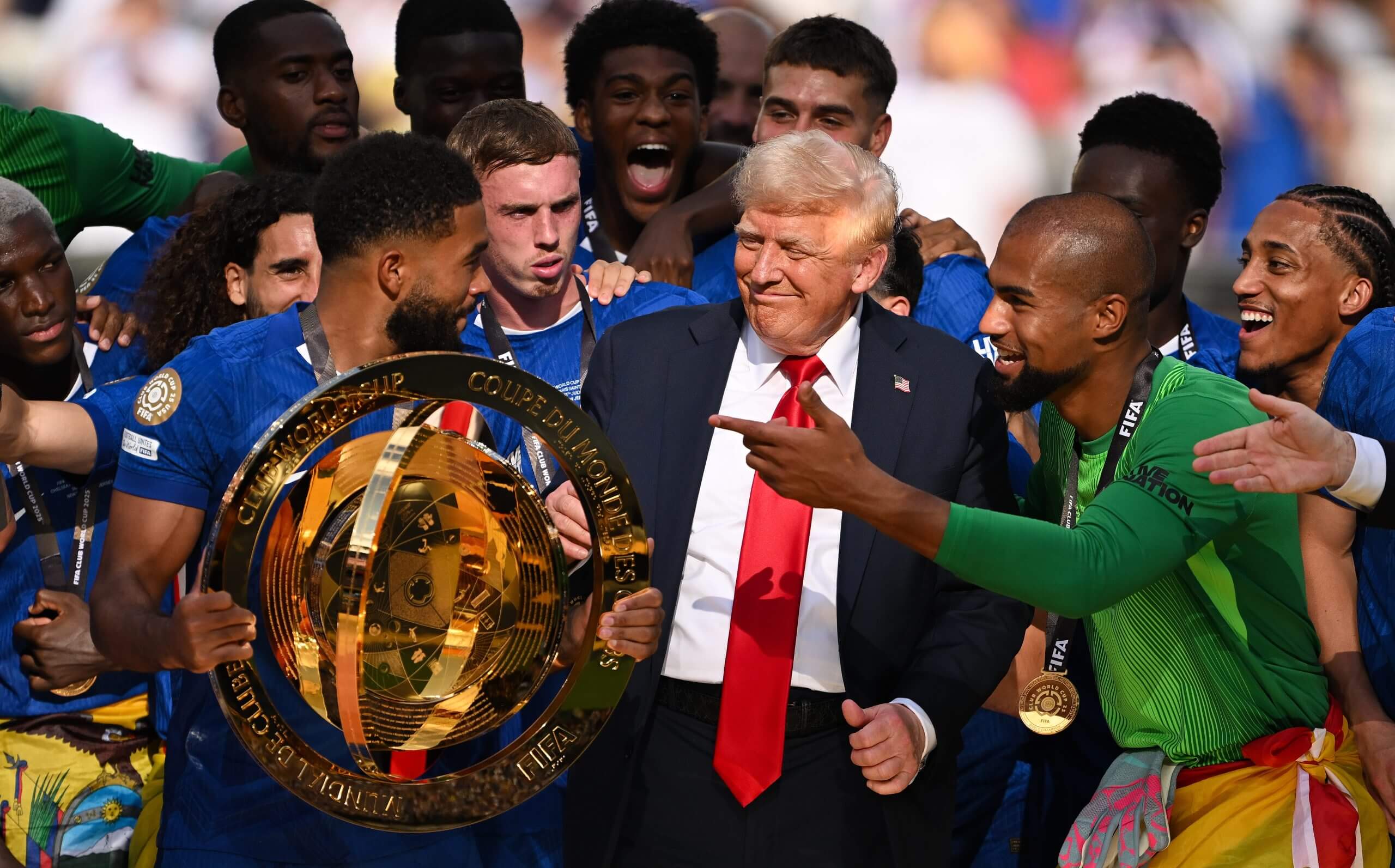
(David Ramos / Getty Images)
The NYC/NJ host committee did receive a setback last month, however, when the newly-elected New Jersey governor Mikie Sherrill decided to cut the official FIFA Fan Fest from Liberty State Park, amid differing budget priorities to her predecessor Phil Murphy, whose wife Tammy Murphy remains chair of the board of the host committee.
The plan had been in progress for over a year, announced last winter with ambitions of a fan festival open for all 104 games and tickets had already been sold. Now, the host committee has provided refunds and is seeking a new location for a more limited official Fan Fest, while Gov. Sherrill has announced a smaller $5 million allocation for initiatives such as watch parties and street fairs in tandem with local communities across New Jersey.
New York City does have some fan viewing experiences lined up, with a fan village at Rockefeller Center in midtown Manhattan between July 4 and July 19 — but this is not an official FIFA event — and the same too is true of an event between June 17 and June 28 at the USTA Billie Jean King National Tennis Center in Queens, which will be a 10,000 capacity fan zone for some group games between June 17 and June 28. It will, however, have a $10 entry fee — a steep change for fan zones during World Cups, which have traditionally been free.
In better news for NYC/NJ, they do have Brazil training at the New York Red Bulls’ facility during the World Cup, and further teams will be announced in the coming weeks to stay in the area too.
Adam Crafton
Atlanta
During the World Cup, the downtown Atlanta area is preparing to showcase more than $100 million in infrastructure investments. The objective is to improve public transportation and redevelop several areas adjacent to the massive Mercedes-Benz Stadium. The ground is considered one of the country’s premier sports and entertainment facilities.
Home to the NFL’s Atlanta Falcons and MLS side Atlanta United, “the Benz” as locals call it, will host eight World Cup matches, including one round of 16 game and a semi-final. Natural grass will be installed for the tournament, and World Cup contenders Spain and Morocco will headline the nations that will hope to make history in the Southern city.
For Atlanta, the World Cup offers a unique opportunity to solidify itself as a viable option for major sporting events. The Super Bowl will return to the city in 2028 and Atlanta Mayor Andre Dickens told reporters last April that he expects the city to generate over $1 billion in revenue from the World Cup.
Felipe Cardenas
Philadelphia
Philadelphia’s World Cup build-up has been relatively free of controversy. Its host committee is well-run, with strong private support. Its Fan Fest — at Lemon Hill, near the picturesque Boathouse Row and Philadelphia Museum of Art — will be free and open every day of the tournament.
Months ago, there were concerns about SEPTA, the local transit authority in a struggle for state funding, but those have eased.
Philly’s biggest challenge will be the July 4 round of 16 match, which coincides with America’s 250th birthday. Meg Kane, the World Cup host committee chief, told me last year that the city was essentially developing “dual plans” for safety and security — one for the five group-stage games and another for the July 4 match, which will be an entirely different beast.
Henry Bushnell
Monterrey
Just under 400 miles (640 kilometres) as the crow flies to the northeast of Guadalajara in the Mexican state of Nuevo Leon, Monterrey has been isolated from the cartel violence that engulfed Jalisco and other parts of the country — but ensuring fans’ safety is the main concern for those in charge.
The Estadio BBVA — where Liga MX side Monterrey play their home games on the outskirts of the city — will host three group stage matches and a round of 32 tie. More immediately, it will be the venue for the World Cup play-off semi-final between Bolivia and Suriname on March 26 and the winners’ final against Iraq five days later.
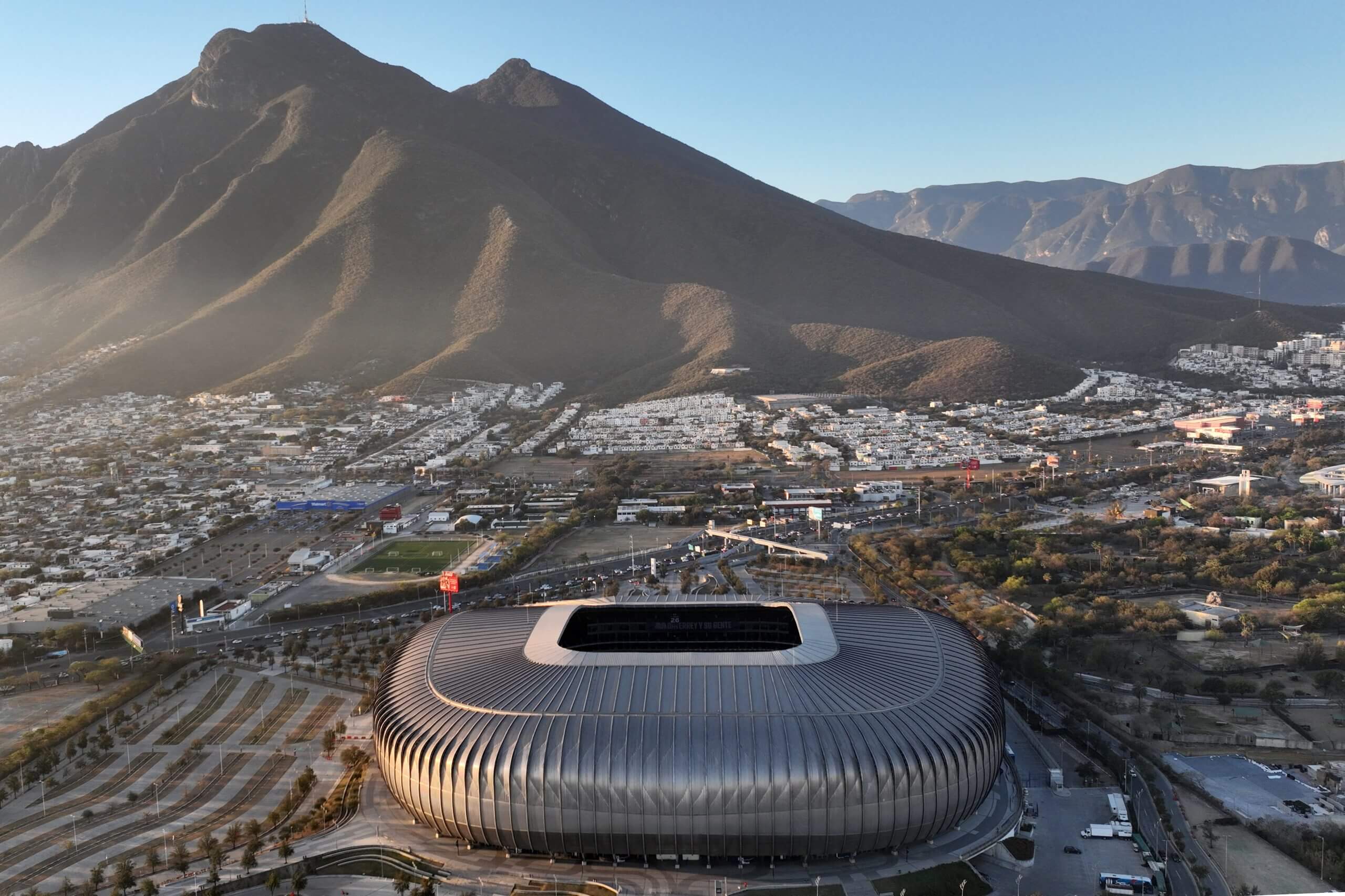
(Julio Cesar Aguilar / AFP via Getty Images)
“Nuevo Leon is protected,” state governor Samuel Garcia told reporters last week. “We’re going to arrive at the 2026 World Cup very strong in terms of security, and I hope things are resolved soon in Jalisco so there can be peace and security in Mexico.”
Garcia added that 4,000 additional soldiers would be deployed for the World Cup push. In another press conference, he announced that for the next four months the state would implement “Operacion Presencia Total” — Operation: Total Presence — with reinforced police and helicopter patrols.
“Nuevo Leon won’t wait for an incident or tragedy to happen,” Garcia said.
Tomas Hill Lopez-Menchero
Boston
This, currently, is the most fraught host city, considering the local town of Foxboro — home to Gillette Stadium — is refusing to give FIFA an entertainment license for the event due to a disagreement over a $7.8 million funding gap.
The local Select Board — made up of elected and non-salaried residents — are standing up against both Boston’s host committee, the Kraft Group who own the venue and FIFA themselves, saying it is not on local taxpayers to fund the huge security bill that comes with FIFA competitions. They have set a deadline of March 17 for a party to produce the money, either in confirmed cash or as bonded money.
In February, the local host committee announced plans for a Fan Fest at City Hall Plaza during the tournament which it said would be for “up to 16 days” of the 39-day competition, which is a big climb down from the original agreements with FIFA who wanted Fan Fests throughout the tournament.
The host committee lead Mike Loynd said his team needed to be “fiscally” responsible, given the mix of public and private money involved, and that more detailed plans would follow in March. He also did not confirm the event would be free for guests to attend, saying it was a “goal” to make it so. The host committee is also still to learn the full extent of Massachusetts state funding for the World Cup, with NBC Boston previously reporting the host committee is seeking $20 million.
Adam Crafton
Seattle
Seattle had originally wanted to create a fan center in one place, potentially attracting more than 500,000 visitors, but last week the city announced it was instead following a streamlined “distributed model” across four different locations.
Lumen Field will host six matches through June and July, including a USMNT group fixture, and a round of 16 tie. The other teams playing in Seattle are Australia, Egypt, Iran, Qatar and a European play-off winner that might be Italy.
While River Plate used FIFA’s designated training camp option at the Seattle Sounders’ Longacres base during the 2025 Club World Cup, it remains unclear which nation will use the facility this summer.
Egypt are considering a stay in Spokane, a five-hour drive east of Seattle. In December, the country’s football association sent a formal letter to FIFA requesting that a planned LGBTQ+ celebration around Lumen Field on June 26, when Egypt play Iran, does not go ahead.
Despite objections, the local organising committee in charge of Seattle’s Pride weekend is pushing ahead with its planning.
Simon Hughes
Mexico City
While doubts swirl in Guadalajara, the message coming from Mexico’s capital, which hosts the opening game and four more matches this summer, is very much ‘business as usual’.
“Mexico City is peaceful and functioning normally,” said Clara Brugada, the head of the local government, last week. “During the events (in Jalisco), Mexico City remained calm, peaceful and orderly, with no significant violence. We reiterate that our city is ready to welcome the World Cup.”
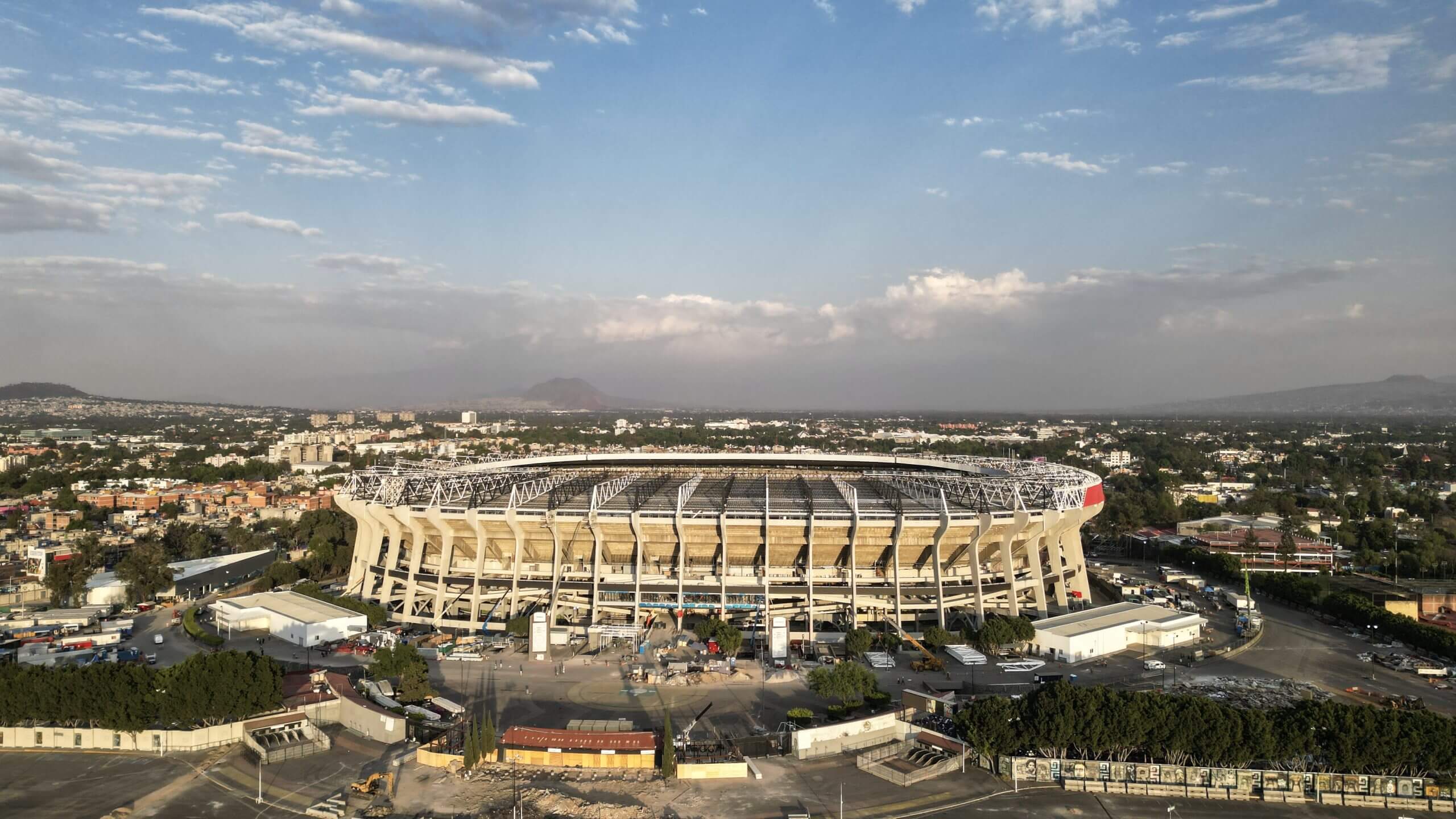
(Yuri Cortez / AFP via Getty Images)
It is worth noting that Brugada’s sense of tranquility has been replicated in the local press. Case in point: the biggest World Cup story over the last few days has been the announcement of three commemorative number plates, yours for a cool 1,500 pesos ($87; £65).
Jack Lang
Toronto
The smallest World Cup stadium has, predictably, stayed out of the limelight.
Toronto is preparing to host five group stage matches and one round of 32 match. Their centrepiece will be Canada’s opener, the third match of the entire tournament. However, there are still concerns over the stadium and its surrounding areas.
Anyone driving on the Gardiner Expressway in downtown Toronto right now will see the 17,000 temporary seats being erected on the north and south side of the stadium, raising the capacity to meet FIFA’s minimum for a World Cup stadium.
And they will likely see what an eyesore the temporary seating is: the waterfront stadium is aesthetically one of the best of the tournament, but the scaffolding and makeshift feel certainly cheapens its feel. How will fans paying hefty prices respond to sitting in this kind of temporary seating at the biggest sports event on the planet?
If you are driving on the Gardiner right now, take a mental snapshot because driving to the stadium could be practically impossible during the World Cup. The stadium is on the shores of Lake Ontario and the necessary perimeter around the ground will eliminate many nearby parking lots. With so little land to the south of the stadium and the perimeters necessary for safety reasons, the space around Toronto Stadium is shaping up to be one of the most congested areas of all 16 World Cup stadiums.
While Toronto organizers have promised a “fulsome mobility plan,” Sharon Bollenbach, executive director of the FIFA World Cup 26 Toronto Secretariat, said in September “there will be very limited parking” and “we’re really going to be encouraging people to find other methods versus driving.”
The lone mass public transit station for the stadium, Exhibition, has previously experienced heavy congestion during busy Toronto FC gamedays.
Joshua Kloke
Vancouver
BC Place Vancouver will host seven matches, including Canada’s final two group stage games as well as a round of 32 and round of 16 match.
Should Canada win their group, they would stay in Vancouver for their round of 32 match, which could bring more eyeballs to the Vancouver Stadium. And that makes sense: the venue could low-key be one of the best of the tournament, if they pull off one massive upgrade.
The stadium offers stunning natural beauty around it and ample rapid public transit nearby. Parking will be limited but the arena is also one of the most walkable from the downtown core among any World Cup stadium. Visitors could end up falling for one of the most relaxed and beautiful cities in the world.
The only real question: the stadium currently has some of the hardest and most unappealing turf of any North American stadium. How will the new grass surface that organizers are installing inside the domed stadium grow and hold up?
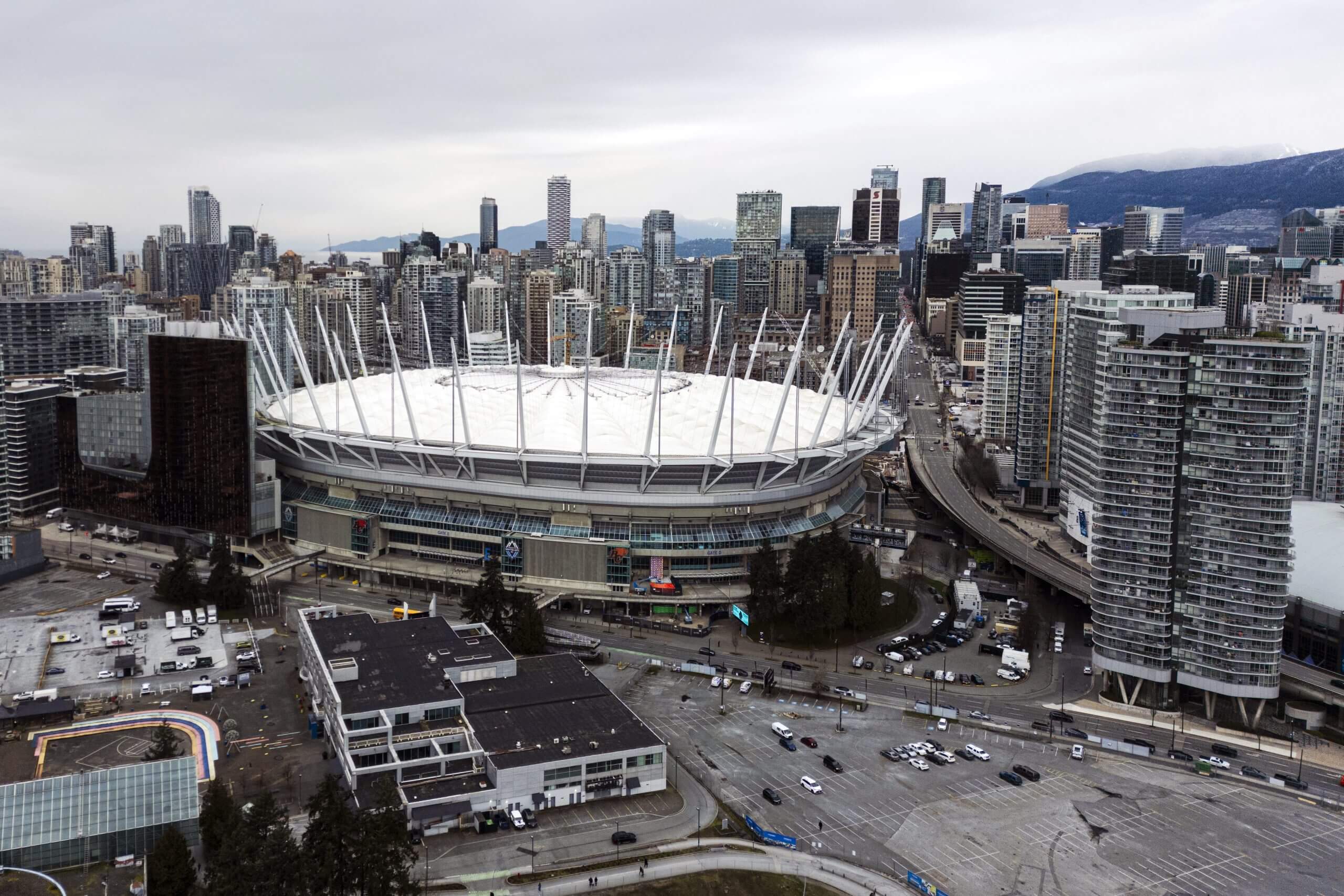
(Nav Rahi / AFP via Getty Images)
That process is currently underway. If the grass pitch is consistent with other stadiums, don’t be surprised if the Vancouver Stadium ends up becoming one of the more memorable of the entire World Cup.
Joshua Kloke
Miami
Miami will host four group stage games — including a Colombia-Portugal headliner — two knockout matches and the third-place game. A city used to holding parties has said the World Cup could be an unprecedented event.
In that context, though, Ray Martinez, COO of Miami’s World Cup host committee, recently said at a House Homeland Security Committee hearing that they might have to alter or scrap Fan Fest plans if they don’t soon receive federal funding for security.
“We’re quickly approaching that (deadline),” Martinez said last week. “We’re 107 days out from the tournament, but more importantly, we’re about 70-something days out from starting to build the Fan Fest. These decisions have to be made.
“Generously I said that within the next 30 days is the drop-dead date. I know that the local agencies are very anxious, but without receiving this money, it could be catastrophic for our planning and coordination.”
Miami World Cup 2026 co-chair Rodney Barreto denied there was any concern that the Fan Fest might be canceled during an event unveiling a FIFA Museum in Miami. The Fan Fest is expected to be held at Bayfront Park in downtown Miami, and is set to run from June 13 to July 5, welcoming as many as 30,000 fans per day.
“Our Fan Fest is happening, we’re committed to it,” Barreto said, according to the Miami Herald. “It’s all being staged. We have an agreement with the City of Miami, with Bayfront Park. We’re excited. We feel very comfortable all our people are well advanced in their planning and it’s all going to happen.”
Barreto also told the Herald that the city hired a firm to come up with a transportation plan for fans “that’s going to take in Brightline, Tri Rail, buses, Uber, Lyft, everything.”
Paul Tenorio
San Francisco
San Francisco’s involvement in the World Cup will be briefer and, most likely, less eventful than many other host cities.
Levi’s Stadium, the home of the San Francisco 49ers, has five group matches, all of them low-key, and its last fixture will be in the round of 32 on July 1.
The nature of the draw and the allocated games — featuring not a single Pot 1 team — immediately tempted the Bay Area’s host committee to scale down its plans for the summer. The Athletic reported in December that commercial opportunities are not vast in the absence of the World Cup’s top seeds, and internal discussions took place about canceling FIFA’s Fan Fest, to avoid costs which could rise above $1 million a day.
Little more has been said since then, and it isn’t as if the stadium is in or near downtown San Francisco either. It lies 50 miles to the south in Santa Clara, although an estimated half a million people are expected to visit during the tournament.
While there are little sub-plots to the games scheduled there — Jordan competing in their first World Cup, for example — what they desperately need is for the USMNT to top Group D and come to the Bay Area for the Round of 32.
Otherwise, the roadshow will pass through quietly in comparison to other parts of North America.
Phil Hay
Los Angeles
LA will be at the epicenter of the World Cup.
SoFi Stadium in Inglewood is staging no fewer than eight matches, including the USMNT’s opener — the tournament’s first game in the States. It also landed two round of 32 fixtures, and a quarterfinal.
Organisation around LA’s pitch to host was smooth and, to this point, its planning has been largely free from controversy. Fan Fests are due to take place across the region — one, over the World Cup’s first weekend, will be staged at the Los Angeles Memorial Coliseum — and the organising committee has scheduled a 39-day calendar of events.
Phil Hay