
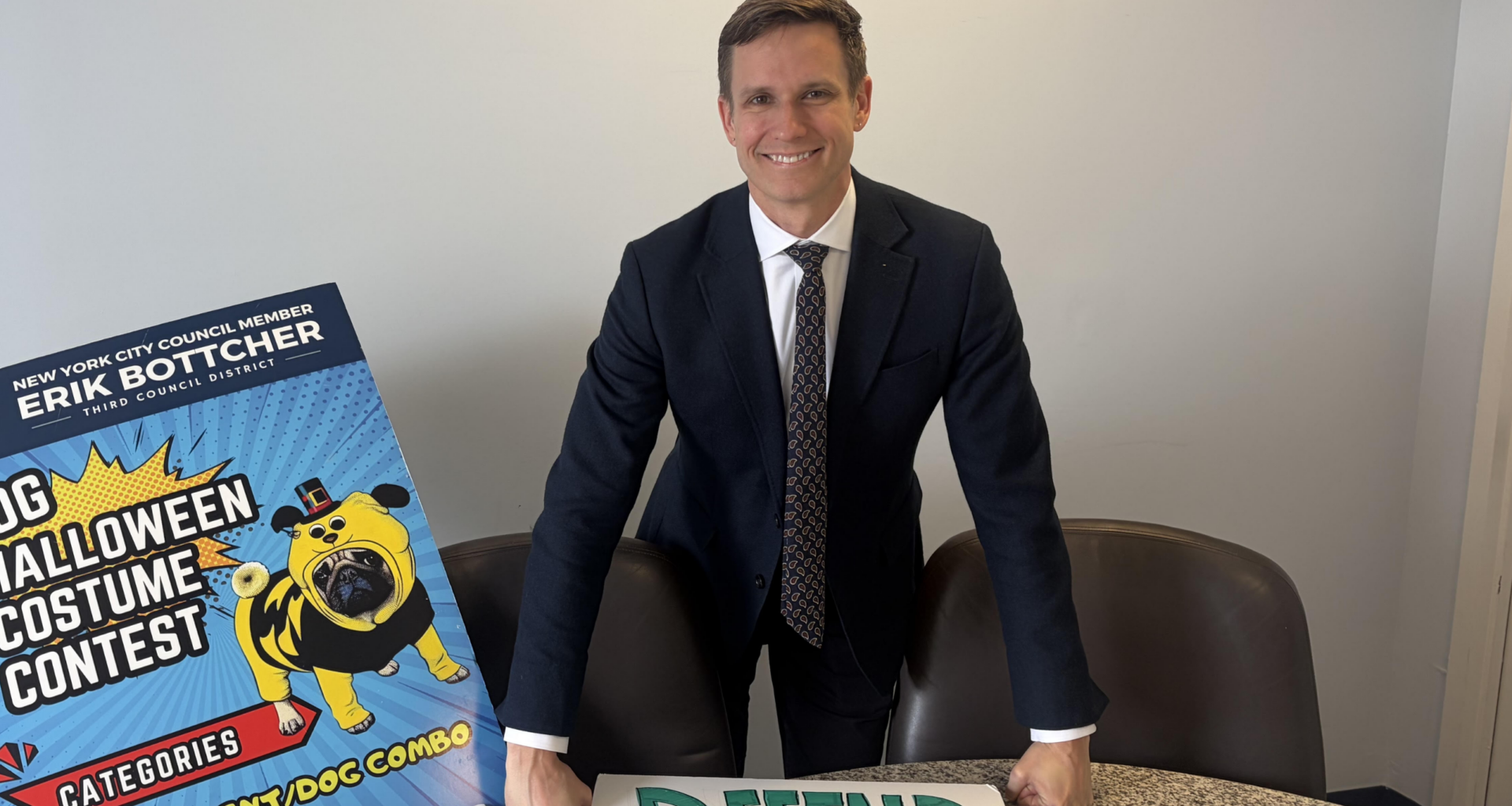
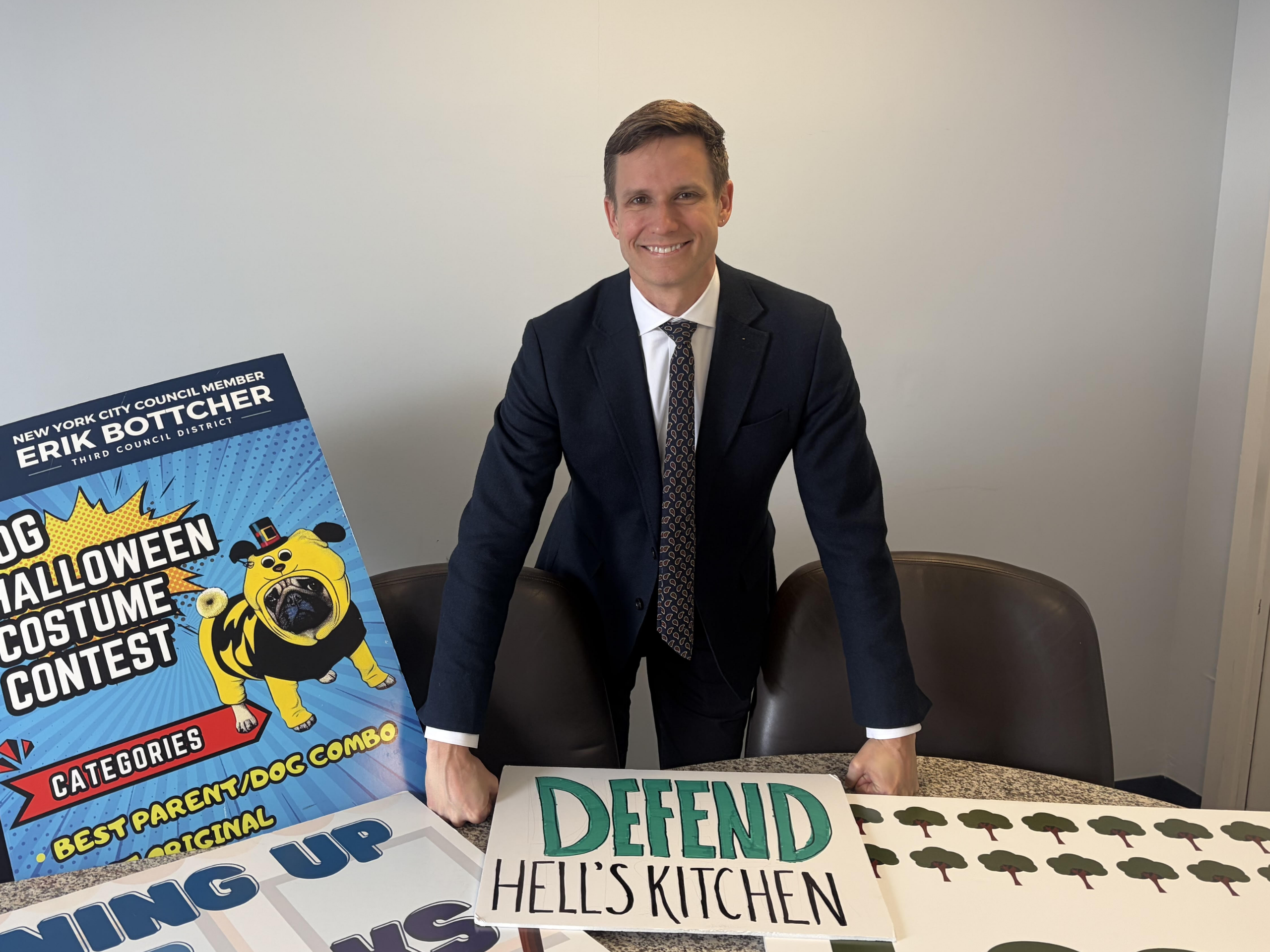
 Eric Bottcher, former City Councilmember, now a New York state senator representing the UWS. Photos by Scott Etkin
By Scott Etkin
Erik Bottcher, now a little over three weeks into his term as a newly-minted New York state senator, is no stranger to the West Side of Manhattan – he has served City Council District 3, representing Chelsea and Hell’s Kitchen, as a chief of staff and councilmember for the past 11 years. But his new senate position marks his first time representing the Upper West Side.
Brad Hoylman-Sigal previously held the seat for Senate District 47, which covers Greenwich Village to Manhattan Valley, or as Hoylman-Sigal liked to say, “from the gay bars to Zabar’s.” After Hoylman-Sigal was elected Manhattan Borough president last November, Bottcher won the vacant seat in a special election on February 3rd.
Bottcher’s career in politics began as an advocate for gay rights, which traces back to his adolescence. Growing up in a small town of 950 people in the Adirondacks, Bottcher has said that he struggled with depression in his teenage years due to bullying over his sexuality. Later, in his 20s, he found a sense of belonging in New York City.
Bottcher entered government work as an LGBTQ liaison for the City Council in 2009, then served in a similar role for then-Governor Andrew Cuomo, helping to pass New York’s law legalizing same-sex marriage. Later, he worked for seven years as chief of staff for then-City Councilmember Corey Johnson. Once Johnson reached his term limit for serving on the council, Bottcher ran for and won his seat – Council District 3 – which he held from 2022 until winning the Senate post.
State senators typically spend the first six months of the year in Albany, but West Side Rag was able to meet with Bottcher at his new district office in Chelsea last Friday during his visit to the city. He spoke about his background, priorities, and views on key issues facing the neighborhood; the interview has been edited lightly for length and clarity.
WSR: Earlier in your career, some of your biggest successes came in fighting for LGBTQ rights. What would you say are your biggest accomplishments more recently on the City Council? And what’s an area where you wish you did more?
Bottcher: One thing I’m very proud of is the legislation that we passed last year to reform the sidewalk shed system. New York City has hundreds of miles of sidewalk scaffolding covering its sidewalks – enough to span from New York City to Montreal. So Councilmember Keith Powers and I passed a package of legislation putting common-sense regulations into place for sidewalk sheds.
My legislation sets a time limit for property owners to [submit completed construction documents and permits to the Department of Buildings] when they put scaffolding up, and to complete the work. And there are financial penalties if they don’t meet those time limits, unless they get an extension from the Department of Buildings. I’m excited to see some of those sidewalk sheds coming down because they have a deleterious effect on communities, public safety, and quality of life.
Another area that I’ve led on is addressing the mental health crisis. I passed legislation requiring every family homeless shelter in New York City to provide on-site mental health services. Homeless families are the most vulnerable of populations. One year in, we saw a dramatic improvement in outcomes for those families, a dramatic reduction in emergency room visits for mental health crises, an increase in connection to mental health care. And this is how we prevent serious mental illness from developing, because we know that early diagnosis and treatment is how you prevent serious mental illness.
We have so much further to go on mental health. We as a society have failed so badly on the issue of mental health, and the core of that is stigma. When I was 15 years old, I was hospitalized for a month after a series of suicide attempts. I was put in a youth ward with young people from all over New York state – victims of drug addiction, sexual abuse, physical abuse, gang involvement, depression. I credit that experience with being the beginning of my political awakening. The treatment that I got there is unavailable to the vast majority of Americans. My parents were lucky enough to have insurance that covered that. That’s not true for most people, and that needs to change.
WSR: One of the most heated topics on the UWS is e-bike safety for pedestrians. What’s your approach to this issue?
Bottcher: The e-bikes have gotten way out of hand. People need to look left, right, up, and down before they cross the street or even walk down the sidewalk. I support cycling. It’s my number one form of transportation. But even as a Citi Bike rider, I often feel unsafe by the e-bikes that are traveling at high rates of speed.
There’s been poor enforcement of our existing laws. It’s not legal to ride on the sidewalk. It’s not legal to ride against traffic. It’s not legal to ride recklessly and blow through red lights, yet that’s what we see every day.
In Council District 3, I helped win protected bike lanes on 10th Avenue and lower 6th Avenue with pedestrian refuge islands. But we need our laws enforced.
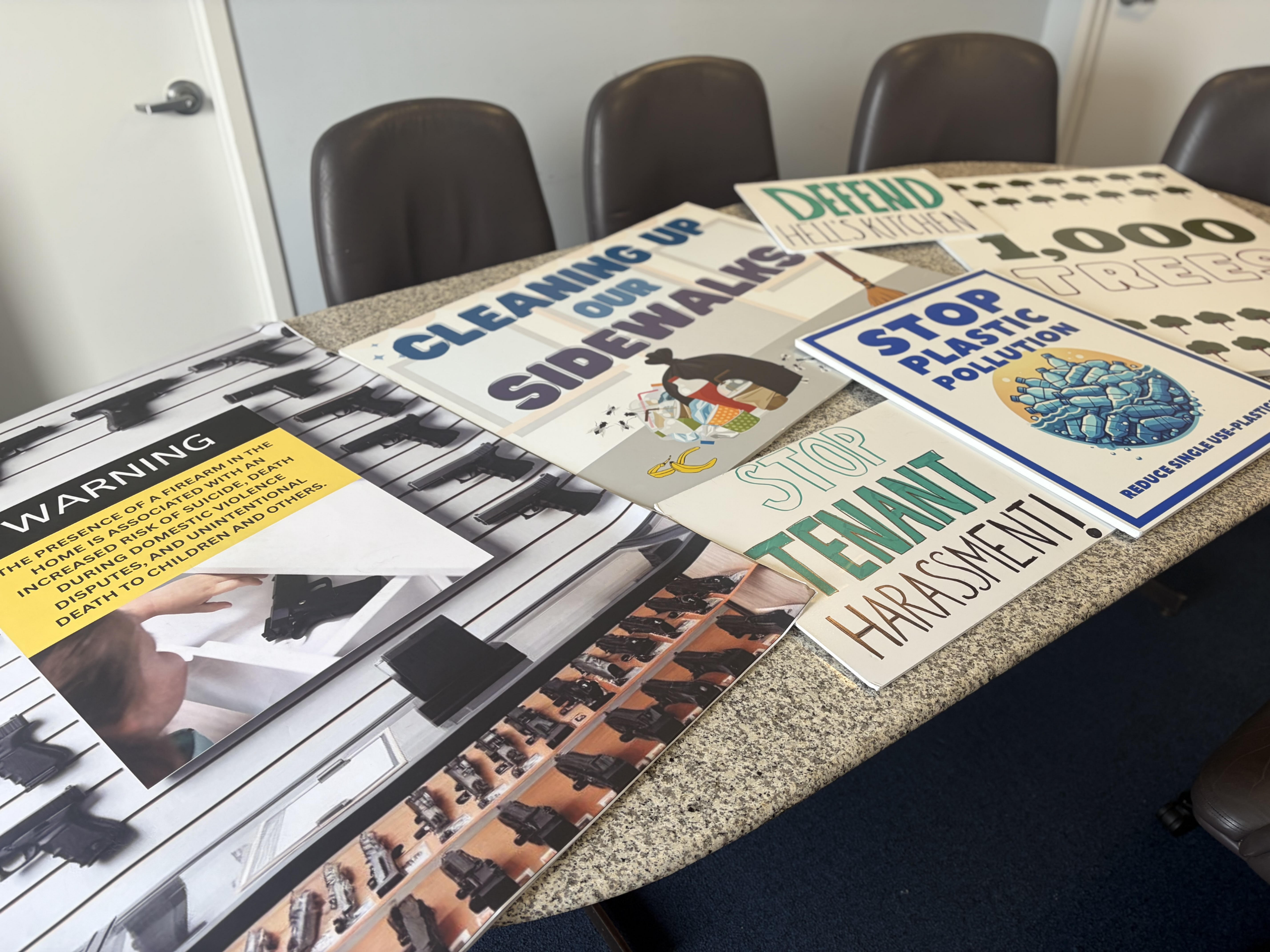 Signs from some of Bottcher’s initiatives when he served on the City Council.
WSR: Some crime stats in NYC are trending in a positive direction, but many Upper West Siders feel that the neighborhood is not as safe as it was before the pandemic, and there have been several instances of shootings and violence in the past few months. What’s your approach to improving safety?
Bottcher: At the City Council, I worked very closely with all of our local precincts, having direct lines of communication with the commanding officers, ensuring that our offices were in touch with each other so that we could respond in real time to public safety issues in the community. We also worked very collaboratively with all the [government and contracted] agencies to ensure that they were at the table.
If there’s a location in particular that’s presenting public safety concerns, we organize site visits with the police department, social service agencies, the contracted homeless services agencies, community boards, community groups – and we’ll discuss, ‘what are the issues we’re trying to address?’ ‘What plan could be put in place to address those issues?’ We establish concrete next steps and then execute on that plan, and then meet again and discuss what worked and what didn’t. We’ve found success again and again in bringing down crime with that approach.
Bottcher moved to New York City when he was 21 years old. He found a place to live on Craigslist, renting space on a futon for $450 a month in Hell’s Kitchen. “Every morning by the time [my roommate] woke up, I had to have the futon folded up with all my stuff put away,” Bottcher said. “And I’d never been happier, because I was living in New York City.”
WSR: You endorsed Mayor Mamdani, who made affordability the centerpiece of his campaign. What actions do you plan to take to help lower costs?
Bottcher: Housing is the primary source of affordability concerns for the vast majority of New Yorkers. A huge and growing percentage of New Yorkers are paying over half of their income on rent. In City Council District 3, I created a pipeline of nearly 15,000 new units of housing, including thousands of units of permanently affordable housing for our district. Those units are going to be coming online soon.
The work needs to continue on a state level. The housing shortage is a statewide problem, and one of the reasons that we’re under so much pressure in New York City is that the counties surrounding New York City and across New York state have not been contributing to addressing the housing shortage. So we need to compel other counties outside of New York to begin building housing again, to provide housing opportunities so that we can relieve pressure on New York City. That’s something that I have already begun discussing with my colleagues and the governor.
WSR: An event you attended on the Upper West Side last year was a town hall with Congressman Jerry Nadler about standing up to President Trump. How do you plan to stand up to Trump now as a state senator?
Bottcher: One issue that is before us right now is standing up to ICE and this campaign of persecution against immigrant families in our state. I want to extend the kind of protections that we have in New York City statewide.
We in New York City have concrete rules in place against cooperation with ICE in civil immigration matters. It has worked very well here in New York City and has not compromised public safety. It has created a humane framework in which undocumented New Yorkers feel safe reporting crimes and seeking medical attention and sending their kids to school. We should have that statewide. Trump is going to fight us every step of the way on that, but we can’t back down. We have to stand up for our values as New Yorkers.
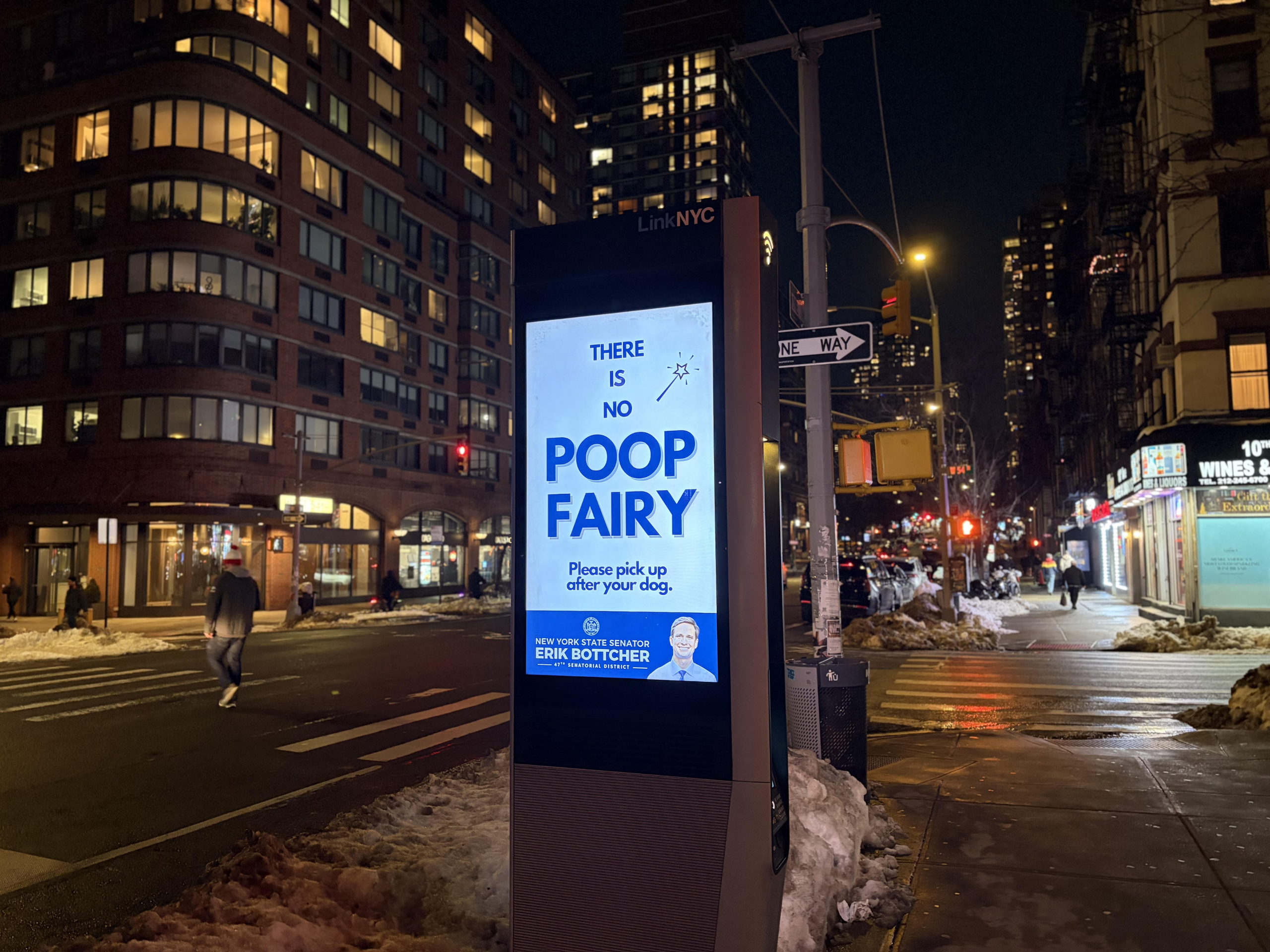 WSR: Let’s end with some lighter questions. What’s the story behind the ”poop fairy” dog poop campaign?
Bottcher: The poop fairy campaign is something that’s been done around the country in various forms for many years, and bringing it to New York has hopefully helped people think twice about their behavior. It’s been a huge success. By spreading the message on Link kiosks and elsewhere, it’s gotten people talking about it.
There’s very few issues in this day and age that people on all sides of the ideological spectrum can agree on. Everyone hates it when people don’t pick up after their dogs. It’s more than just an unsightly inconvenience. It can ruin a person’s day, make them late for an important job interview, or an important life appointment. It can just degrade the quality of our lives here in New York. If you don’t pick up after your dog, it’s not going to magically go away.
Kids love the poop fairy campaign. When I go to elementary schools in my district, all the kids know who I am, and it took me a while to figure out why. I finally figured out it was because of the poop fairy.
WSR: I know you’re new to the Upper West Side, but I have to ask the obligatory Upper West Side question: Who has the best bagel in the neighborhood?
Bottcher: Zucker’s is where I go near my apartment [in Chelsea. Zucker’s also has a location on West 73rd Street and Columbus Avenue.] That’s something that Chelsea and the Upper West Side have in common. My order is either cinnamon-raisin with plain cream cheese, or plain bagel with veggie cream cheese, always well-toasted.
WSR: The comments will let you know if that’s the right choice. Any parting message to Upper West Siders?
Bottcher: I want to invite people to reach out to me if they would like to meet. Invite me to their block association, to their local park group, to their tenants’ association. People in Council District 3 will tell you that they know me personally, and I really look forward to getting to know people.
For me, public service is about making the most out of every day that we are on this planet. Our time on this planet, in the grand scheme of things, goes by in a flash. What will each of us do while we’re here to make the world a better place? That’s why every day I try to do the most good for the most amount of people. And this new role is going to give me the opportunity to do that on an even larger scale.
Subscribe to West Side Rag’s FREE email newsletter here. And you can Support the Rag here.