
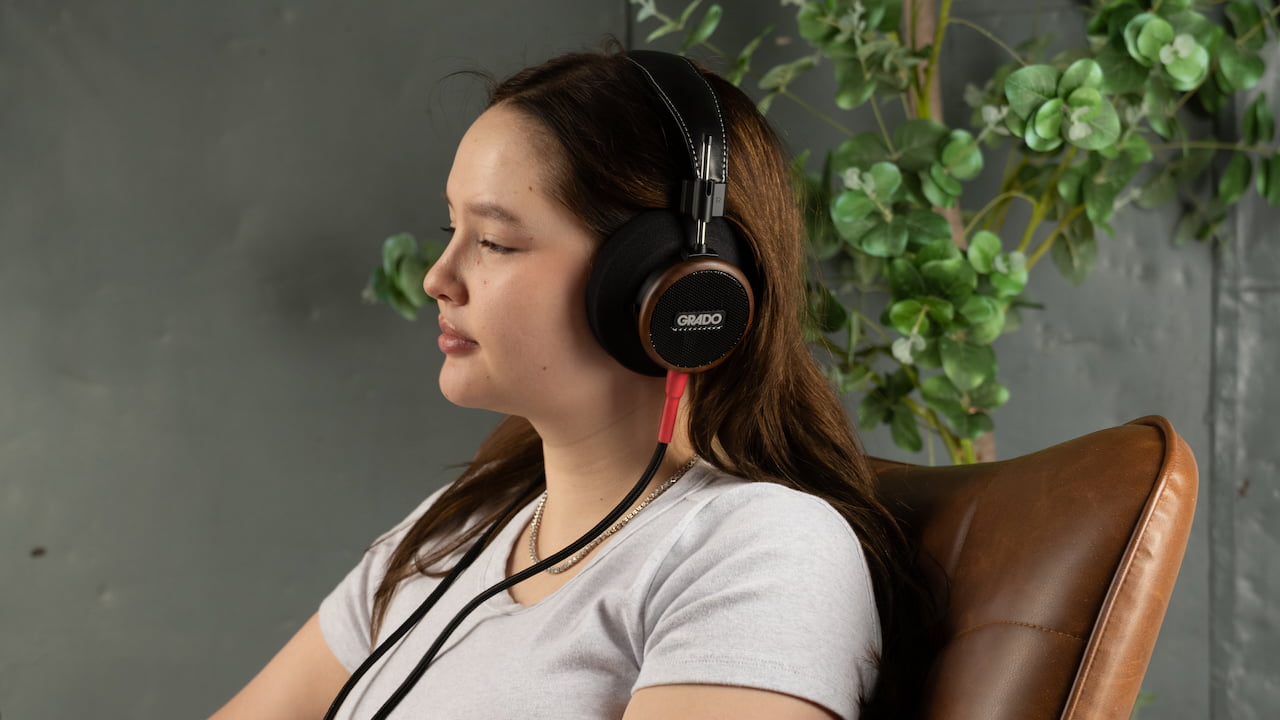
Grado Labs is expanding its Signature Series with the new Signature S550, a $995 USD open-back headphone that stays true to the company’s Brooklyn built design philosophy while introducing a slightly more relaxed sonic balance. As the fourth model in the growing Signature Line, the S550 carries forward the same core Grado principles: low mass dynamic drivers, careful material selection, and tuning that prioritizes speed, transient snap, and unfiltered detail.
The difference this time comes down to voicing. Where some Grado models lean forward and urgent, the Signature S550 is tuned, according to Grado Labs, to ease back just enough to introduce added warmth and a smoother top end while preserving the brand’s trademark punch, speed, and immediacy. Having already been impressed by the precision, control, and refinement of the Signature S950, the S550 appears positioned as a slightly more relaxed and accessible take on that formula at $995 USD, aimed at delivering long term listenability without abandoning the core Grado energy.
We plan to find out whether those design claims hold up when we audition it at CanJam NYC 2026 this weekend.
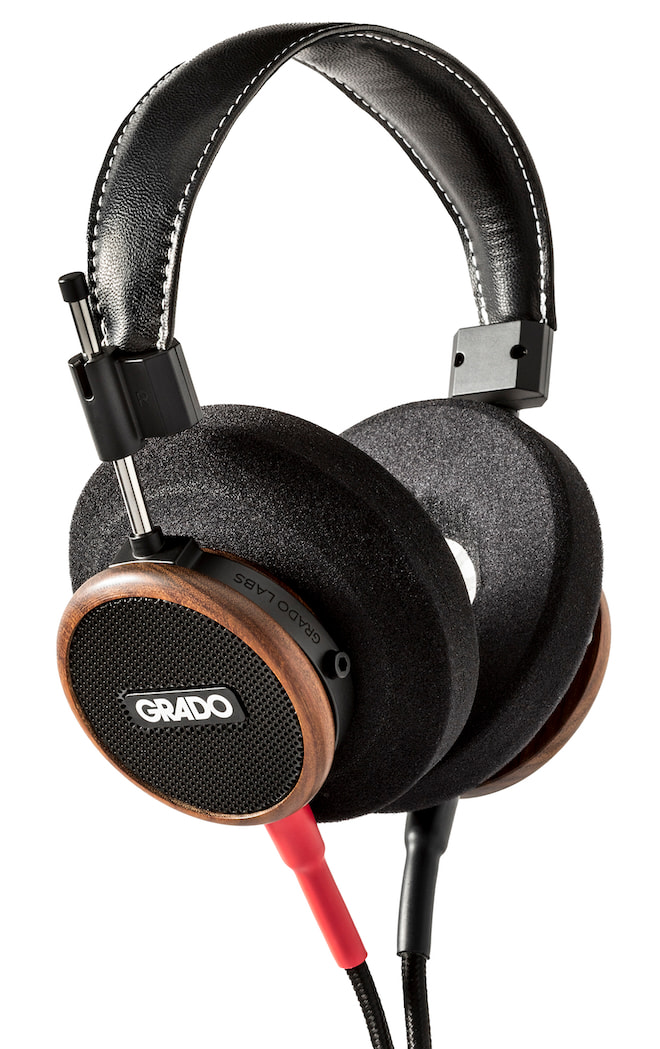 Grado Labs Signature S550 Open-back Headphones
S2 Dynamic Driver Optimized for All Wood Open-back Design
At the heart of the Signature S550 is Grado’s 50mm S2 dynamic driver, tuned specifically to work in concert with its all wood open-back enclosure. Rather than introduce an entirely new driver platform, Grado Labs focused on refining the relationship between the existing S2 driver and the acoustic behavior of the wooden housing. The goal, according to Grado, is a presentation that leans warmer and more forgiving while preserving speed, detail, and spatial openness.
We have not yet heard the S550, so those claims remain just that for now. What made the Signature S950 so impressive in our evaluation was its stronger and more controlled bass response, with tighter impact, improved resolution, and a noticeably faster character than many earlier Grado models. The top end was also significantly smoother, maintaining the brand’s signature energy without tipping into the brightness that has been a common criticism over the years. Comfort was improved as well, making longer sessions far easier.
Brazilian Walnut Housing Shaped for Stability and Tonal Balance
The Signature S550 uses housings crafted entirely from Brazilian Walnut, continuing Grado Labs’s long standing commitment to wood as a functional acoustic material rather than a cosmetic flourish. Each housing is individually formed, with natural variations in grain pattern ensuring that no two pairs are identical.
Walnut is selected for its density, internal damping properties, and structural stability. According to Grado, those characteristics help support a fuller and more balanced tonal presentation while maintaining consistent acoustic behavior over time. The rigidity of the wood also plays a role in controlling resonance within the open-back design. Grado further notes that the material is sourced with attention to sustainable practices, supporting long term availability while respecting the environments where it is harvested.
Detachable Cable System Brings Long Overdue Flexibility
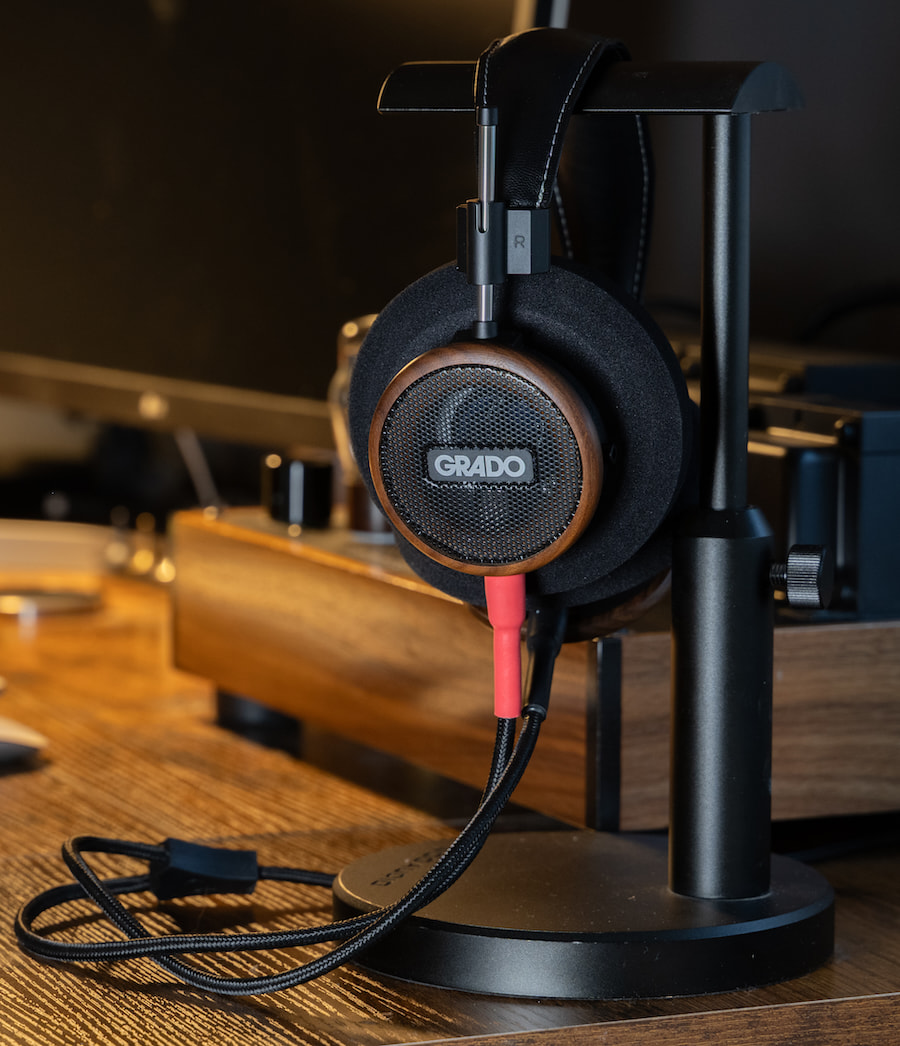
The Signature S550 ships with Grado’s Silver detachable cable, designed to be lighter, softer, and more flexible than the company’s legacy fixed leads. Each earcup is terminated with a 4 pin balanced mini XLR connection, allowing users to swap cables depending on source gear or listening preference. The included cable terminates in a 3.5mm mini plug and includes a 6.3mm adapter for broad compatibility with portable players, desktop DAC amps, and traditional headphone outputs.
This marks a significant shift for Grado Labs. For decades, Grado stuck with permanently attached cables that sounded fine but had a habit of snagging on chair arms, desk corners, and just about everything else. The newer Signature Series models, including the HP100 SE, were the first to embrace detachable cabling, reflecting how much the broader headphone market has evolved.
The rise of the Head-Fi era pushed brands like Sennheiser, Audeze, Meze Audio, Dan Clark Audio, and HiFiMAN toward user replaceable cables years ago. Beyond simple convenience, detachable systems allow listeners to tailor length, termination, and in some cases subtle system synergy with different amplifiers and sources. The key is flexibility and practicality, not chasing exaggerated cable myths or paying absurd prices for incremental changes.
Comfort, Fit, and Personalization with the Signature Headband System
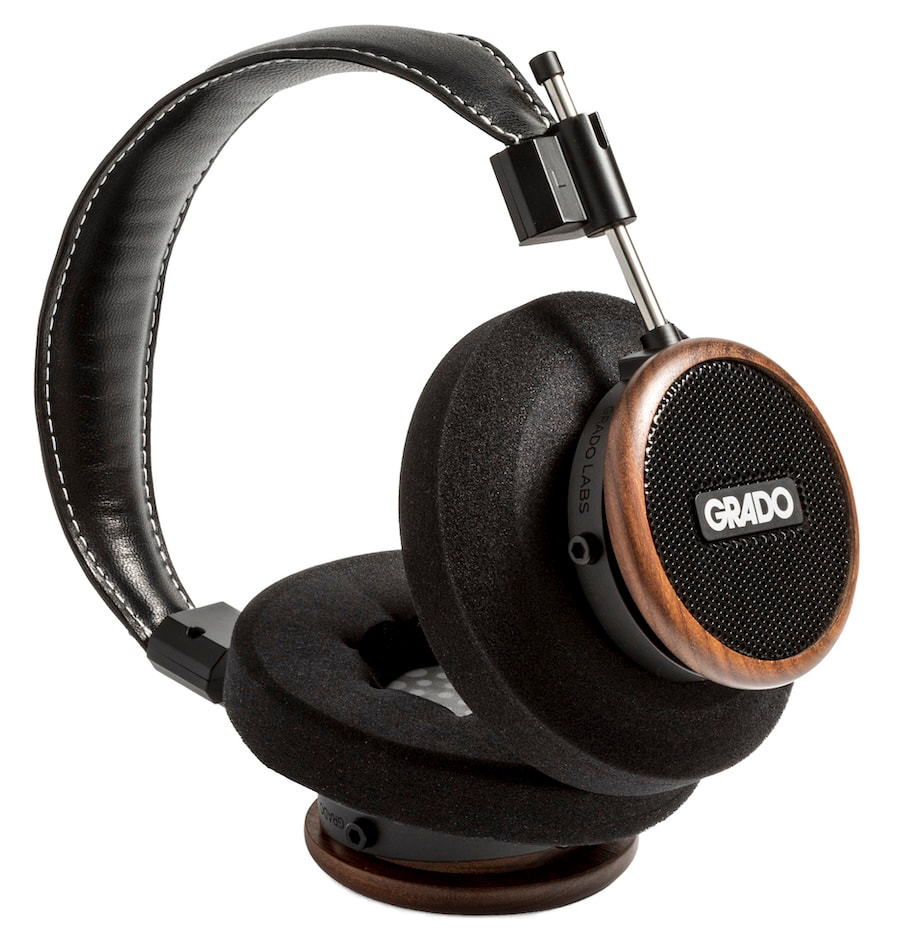
The Signature S550 ships with Grado’s new B cushions and remains compatible with the brand’s full range of ear pads, allowing listeners to tailor both comfort and sonic balance to personal preference. Pad selection has always played a meaningful role in Grado designs, influencing soundstage width, bass presence, and perceived treble energy. In addition to the B cushions, the S550 supports Grado’s S, F, L, and G ear cushions, each offering distinct variations in spatial presentation, comfort, and low frequency impact.
Advertisement. Scroll to continue reading.
Like all models in the Signature Line, the S550 uses the updated Signature headband assembly from Grado Labs. A flexible metal support is integrated within the leather headband, enabling gentle adjustment for a more personalized fit over time. The S550 adopts the narrower leather strap seen on the S750 and incorporates engraved metal gimbals, stainless steel height rods, reinforced junction blocks, and controlled housing rotation for improved durability and long term stability.
We are hopeful the S550 carries forward the improved padding introduced with the Signature S950 and HP100 SE, both of which represented a noticeable step forward in comfort compared to earlier generations. If that refinement continues here, extended listening sessions should be far less of a negotiation.
Technical Specifications & Amplification Considerations
The Signature S550 is an open air dynamic headphone built around a 50mm driver and rated at 38 ohms nominal impedance. Grado specifies frequency response from 6 Hz to 44 kHz, total harmonic distortion below 0.2% at 100dB, and sensitivity of 112dB @ 1/mW. Driver matching is rated to an extremely tight 0.005dB, reflecting careful channel consistency. The headphone weighs 335 grams without the cable, keeping it relatively manageable for extended listening sessions given its full size open-back construction.
With a 38 ohm load and high sensitivity, the S550 is not especially difficult to drive and should pair comfortably with quality portable players, desktop DAC amps, and even stronger integrated amplifier headphone stages. That said, like most resolving open-back designs, it is likely to benefit from a clean, stable source with adequate current delivery, where improved control and dynamic headroom can translate into tighter bass response and greater overall refinement.
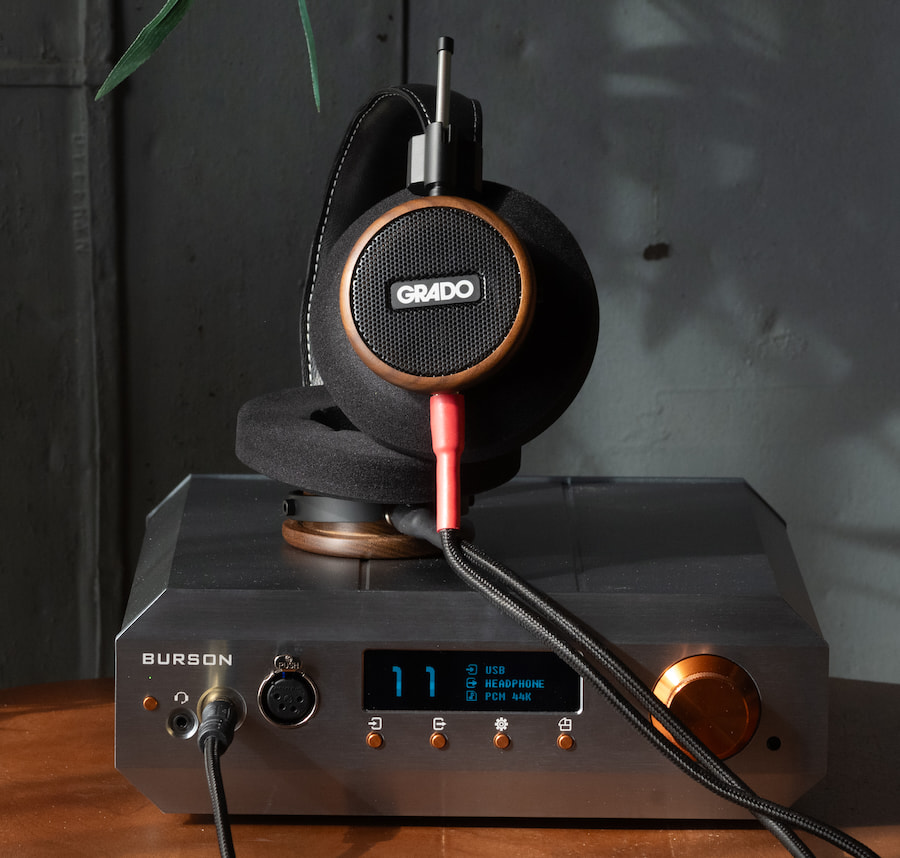 Grado Signature S550 with Burson Conductor Voyager DAC/AMP ($3,799 at Apos Audio)
The Bottom Line
The Signature S550 reflects a measured evolution from Grado Labs. Rather than introduce a radically new platform, Grado has refined its existing 50mm S2 dynamic driver, paired it with a Brazilian Walnut open-back housing, added detachable cables, and continued with the upgraded Signature headband system. The stated goal is straightforward: retain the speed, immediacy, and dynamic punch associated with the brand while shifting the tonal balance toward greater warmth and smoother treble for longer listening comfort.
At $995 USD, the S550 enters a competitive segment that includes strong offerings from beyerdynamic, Meze Audio, Sennheiser, Audeze, and Audio-Technica. Many of those brands emphasize planar magnetic designs or studio reference neutrality. The S550 appears aimed at listeners who prefer dynamic driver energy and open back spaciousness, but who want a more relaxed overall presentation than some earlier Grado models delivered.
If the tuning achieves what Grado describes, the S550 could serve both long time fans seeking refinement and newcomers curious about the brand’s sound without the sharper edge that once defined it. We will know more once we spend time with it.
Where to buy:
Related Reading: