
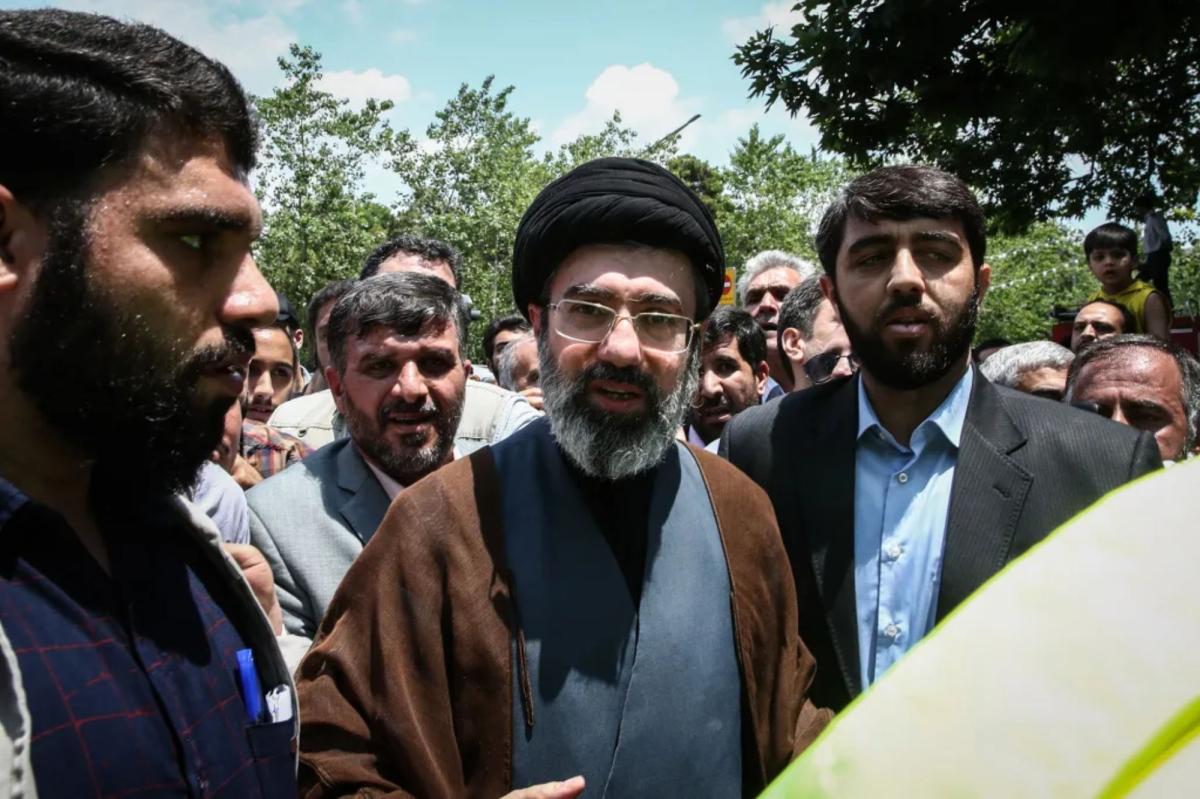
The son of Iranian Ayatollah Ali Khamenei was selected to replace him as supreme leader, according to a report in opposition media.
Mojtaba Khamenei, 56, was tapped to assume control of the country by Iran’s Assembly of Experts, a powerful body of clerics, Iranian International said Tuesday.
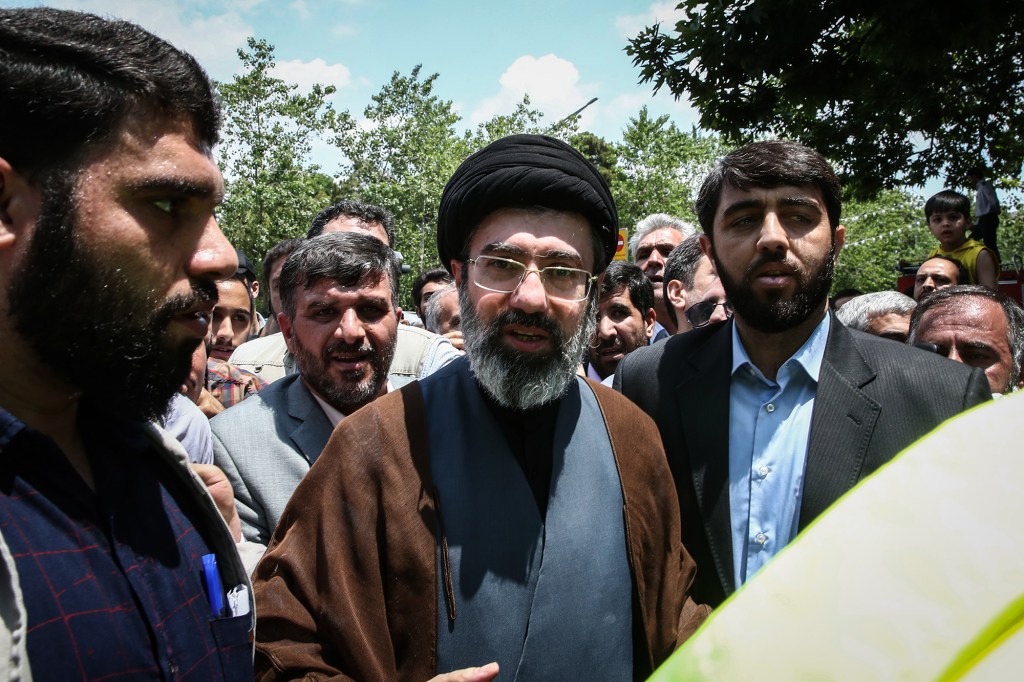 Mojtaba Khamenei (center), son of Iranian Ayatollah Ali Khamenei, was reportedly selected to replace him as supreme leader. picture alliance via Getty Images
The report was widely being picked up by Israeli media but had not been confirmed by Iranian state mouthpieces.
Mojtaba was at first believed to have been among the 40 top Iranian aides killed during the Saturday strike that took out Iran’s highest-ranking cleric.
His 86-year-old father was a despot who ruled over Iran with an iron grip and fiercely anti-Western agenda for decades.
Motjaba — the supreme leader’s second oldest son — has been known for his staunch adherence to his father’s hardline conservatism and has close ties to Iran’s notoriously brutal Islamic Revolutionary Guard Corps military body, according to CNN.
He had no official role in his father’s regime but was still sanctioned by the US in 2019.
If it’s true he is now leading Iran, his appointment was unexpected. The country’s officials have traditionally looked down on family succession in its leadership – especially since the current regime seized power by toppling a kinship-fueled monarchy in the 1979 revolution.
Follow The Post’s coverage of the United States’ airstrikes on Iran:
Iran has currently been in the hands of a three-man council run by two of Khamenei’s top henchmen who survived the strike, with speculation running wild about who would grab power in the vacuum left behind the elderly cleric’s death.
The Middle Eastern nation has been plunged into chaos since the strikes, with missiles continuing to fall across the country as it lashes back with rockets and drones at US interests across the region.
The chaos has been compounded by the lack of clarity about who is now in charge. Ali Khamenei had not named a clear successor should anything happen to him, leaving the 88-member Assembly of Experts to make the selection.
Whoever it picked also needed to be cleared by the nation’s Guardian council, which vets laws and leaders to make sure they are in good standing with strict Islamic codes.
Those expectations made Mojtaba an unlikely choice, as the supreme leader serves as Iran’s religious figurehead as well as the leader of the government.
Mojtaba has no serious religious credentials, which under normal circumstances put him in the crosshairs of a Guardian council veto, according to the Wall Street Journal,
His close association with his father – whose hardline policies brought about Iran’s current predicament – were also widely seen as a hindrance to his ascension to power.
How much real power Mojtaba would actually have either way remains unclear.
Ali Khamenei ruled Iran for 37 years, during which time he was able to consolidate a sprawling cult and cadre of cronies insulating him from dissent.
Experts have speculated that his successor is unlikely to be able to wield as much power himself and will instead serve as a figurehead.
“We can almost certainly say that leadership will not be concentrated in one person,” Ali Khamenei biographer Mehdi Khalaji told the Journal.
“The next supreme leader will be mostly ceremonial.”