
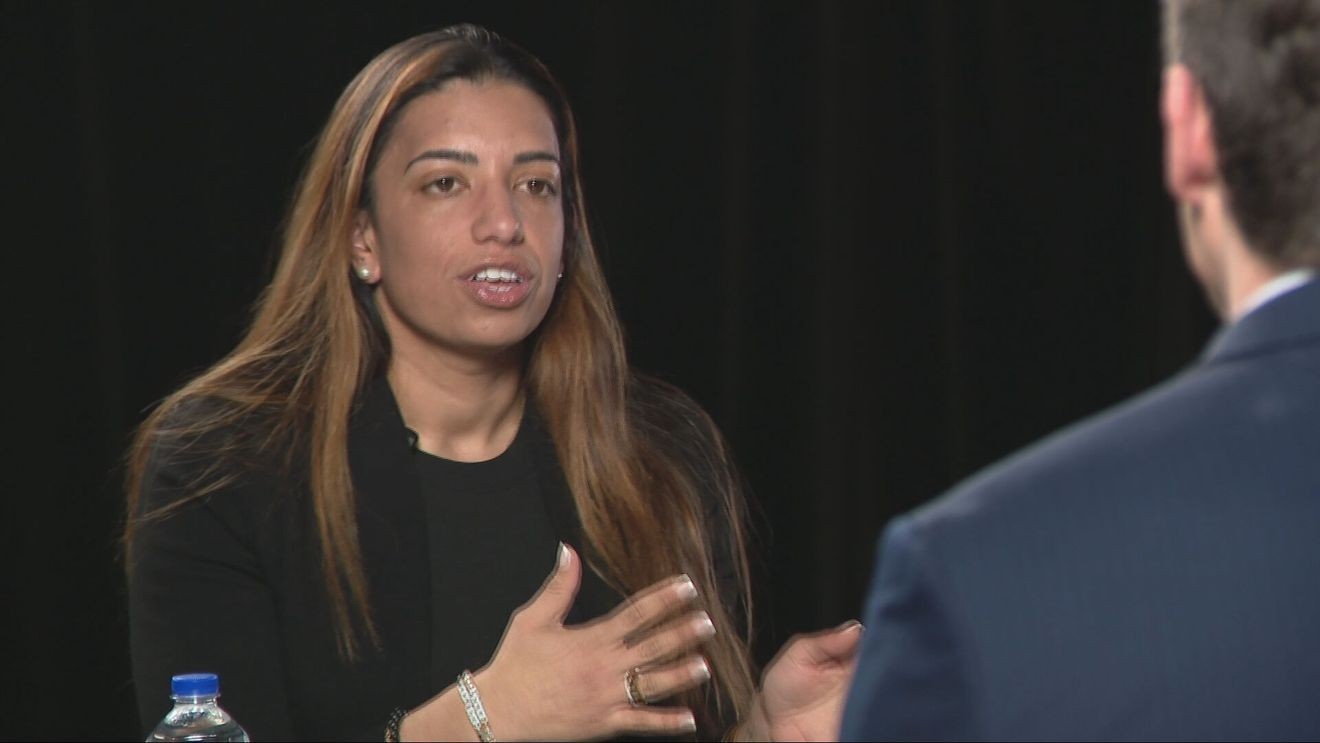
WRGB Studios-Schenectady, NY — Affordability has become one of the biggest issues in New York State, and beyond, in recent months and years, and with that, State resources, community organizations and municipal services have also become more important.
As New Yorkers looked for ways to make ends meet, the 24/7 211 New York helpline handled 2.1 million calls in 2025, addressing everything from food insecurity, housing support, utility bills and severe weather assistance.
“Food insecurity, housing and income support in that order, those are the most significant that we’re seeing statewide as the number one, two and three [reasons] that people are calling 211,” Therese Daly, President and CEO of 211 New York, Inc and the United Way of New York State, says.
Daly is now pushing for 211 New York to have a permanent place in the New York State budget. It routinely receives about $2.8 million, but it has come due to advocacy, not up front as a part of the Governor’s Executive Budget Proposal.
“We have asked Governor Hochul, who’s very supportive might I add, but we’ve asked her to keep putting us in the Executive Budget, and unfortunately, she always lets it be a legislative ask. So we’re funded in the amount of $2.8 million, and I like to say that we’re the best deal in town, because we do so much with so little money. When you think about all that we do and all of who we employ and the networks that we have across the state, $2.8 million is an amazing deal to also go on that. Though a lot of the networks have to outside fundraise, because $2.8 million does not cover it entirely, but it does cover our bases, covers our contracting, covers the majority of what we need to do, our database resources,” she says.
The operation expands across the State, with 350 community resource specialists matched to certain regions in order to connect to those local services.
“I would say we’re not in the Executive Budget, but we try not to let that worry the delivering of the services to New Yorkers. Because despite the fact that it would be really helpful, we are never going to not work for the New York people. And we’re going to make sure that we have anyone who calls this. You know, the stories we hear are single parents or older individuals or young individuals who have no resources. We want to be there for them. So no matter what, we’re going to make sure that we show up and we turn our lights on,” Daly said.
Watch the full conversation here, also covering working family tax credits and college student food insecurity: