
Last Updated:March 04, 2026, 07:00 IST
Holi’s journey from a regional harvest festival to a global carnival is a testament to the power of shared joy




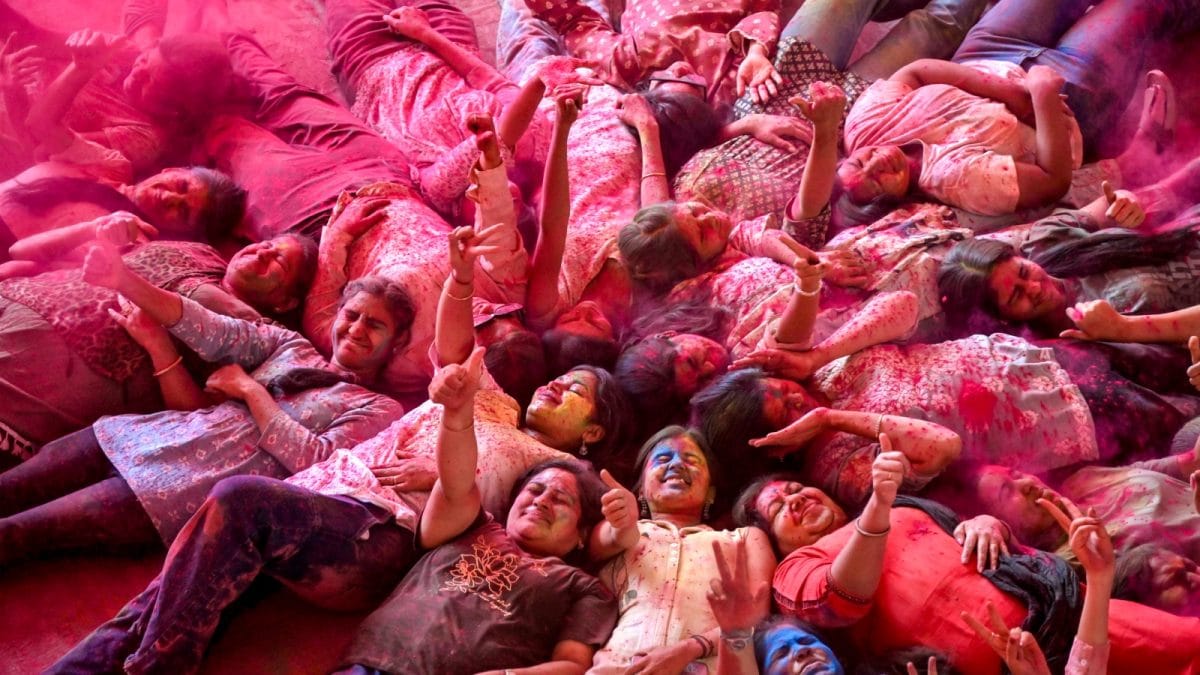
By 2026, the global Holi economy—encompassing organic gulal exports, event ticket sales, and specialised street food—has become a multi-billion dollar industry. (Representational image/PTI)
What apparently began as an ancient agrarian rite in the fertile plains of the Indian subcontinent has, in the 21st century, transformed into a global phenomenon. Holi, the Hindu “Festival of Colours”, has transcended its religious and geographical boundaries to become a symbol of multiculturalism, joy, and social equity. From the historic streets of Mathura to the rooftop bars of New York City, the evolution of Holi reflects a unique blend of diaspora influence and modern commercial adaptation.
The Diaspora Trail: Planting the Seeds
The initial “globalisation” of Holi was not driven by marketing but by the movement of people. In the 19th and early 20th centuries, indentured Indian labourers carried the traditions of Phagwah to the Caribbean—specifically Guyana, Suriname, and Trinidad and Tobago—and to the sugarcane fields of Mauritius and Fiji. In these nations, Holi became a resilient marker of cultural identity.
Today, in countries like Mauritius, Holi is a national holiday, celebrated with a fervour that rivals the festivities in Uttar Pradesh or Bihar. These early diaspora communities proved that the festival’s core message—the triumph of good over evil and the celebration of spring—possessed a universal resonance that could survive thousands of miles away from its source.
The Western Adoption: Music, Art, and Reimagination
In the last two decades, Holi has seen a second wave of expansion, this time into the urban centres of Europe and North America. In cities like London, Berlin, and Barcelona, the festival has been reimagined as a large-scale music and arts event. The “Holi Festival of Colours” in Germany, for instance, attracts thousands of participants who gather not necessarily for the religious lore of Prahlad and Holika, but for the visceral experience of the “colour throw” set to electronic dance music.
Similarly, in the United States, university campuses and public parks have become hubs for Holi revelry. While these events often strip away the traditional Holika Dahan bonfire, they retain the “liminal” quality of the festival—a rare moment where social status, age, and background are temporarily erased beneath a uniform layer of vibrant powder.
Commercialisation and the ‘Color Run’
The most visible sign of Holi’s global footprint is its influence on mainstream fitness and corporate branding. The Color Run, a five-kilometre race founded in 2011 that takes place in North America, South America, Europe, Asia, New Zealand, Australia, Africa, Qatar, and the United Arab Emirates, directly borrows the aesthetic of Holi, dousing runners in coloured starch at every kilometre mark. While critics often point to this as “cultural appropriation” or “commodification,” others argue that it has made the aesthetic of the festival one of the most recognisable cultural exports in the world.
By 2026, the global Holi economy—encompassing organic gulal exports, event ticket sales, and specialised street food—has become a multi-billion dollar industry. This commercial success has, in turn, fuelled a return to “green” celebrations, with international organisers increasingly prioritising plant-based, skin-safe colours derived from turmeric and beetroot.
A Digital and Virtual Festival
In the post-pandemic era, Holi has even entered the digital realm. Virtual reality celebrations and “Neon Holi” parties, featuring glow-in-the-dark paints and LED-lit venues, have become trending alternatives in metropolitan centres like Singapore and Dubai. This digital evolution ensures that the spirit of the festival remains accessible even in environments where traditional water-and-powder play might be restricted.
Ultimately, Holi’s journey from a regional harvest festival to a global carnival is a testament to the power of shared joy. Whether it is a traditional religious service in a London temple or a neon-soaked rooftop party in Manhattan, the essence remains the same: a vibrant celebration of new beginnings that refuses to be contained by borders.
First Published:
March 04, 2026, 07:00 IST
News explainers From Mathura To Manhattan: How Holi Conquered The World With Flying ColoursDisclaimer: Comments reflect users’ views, not News18’s. Please keep discussions respectful and constructive. Abusive, defamatory, or illegal comments will be removed. News18 may disable any comment at its discretion. By posting, you agree to our Terms of Use and Privacy Policy.
Read More