
It’s difficult to single out one event that marks the moment our country betrayed its principles, as described by the Constitution. January 6, 2021 was a leading candidate, yet it began to fade from view once Joe Biden was inaugurated, promising to restore the rule of law—to say nothing of sanity—for the nation. In the years since that dark day, the president has done his best to enshrine the sacking of the Capitol as some type of freedom festival, rather than the crime that even the casual observer could see was taking place. But the riot that shocked so many of us didn’t stop Trump from being elected four years later, and his followers seem comfortable minimizing it, treating it as something like “that time things got a little out of hand.”
Yet the recent events in Minneapolis have led many observers to conclude that we have reached some kind of tipping point. We are witnessing masked, armed federal forces—militias, really—invading cities that don’t want them, that have never requested them. And after all the outrages, finally there is sustained pushback, with ordinary citizens stepping into the vale of life and death to take on the forces of ICE. It’s a major step in the development of a true resistance movement, one that has been forced into being by the tragic overreach of this administration. Two protesters have been killed as of the time of this writing, and the President is said to be considering pulling back on these outrageous assaults. He may have to find another way to signal to his base that the anti-immigration fervor he rode to power is still thriving.
Minneapolis is just one of the six hundred or so designated Sanctuary Cities in the United States, defined as an urban area whose municipal laws seek to protect undocumented immigrants from deportation or prosecution, despite federal immigration law. New York is another, the largest in the country. This city has always had special significance for Trump. He was born here, and seems eager to leave his mark on the metropolis that never really embraced his form of slash-and-burn politics. Our new mayor has vowed to oppose ICE agents roaming the city, looking to lock up and deport “the worst of the worst,” in Trump’s words; presumably that includes the children and working people that have been part of the round-ups so far. Battle lines are being drawn.
Out in New York Harbor, inscribed at the base of the Statue of Liberty, is a poem by Emma Lazarus, “The New Colossus.” It’s a sonnet best known for its concluding lines welcoming immigrants: “Give me your tired, your poor, / Your huddled masses yearning to breathe free, / The wretched refuse of your teeming shore. / Send these, the homeless, tempest-tost to me, / I lift my lamp beside the golden door!” These are radical words, and it is astonishing to consider how completely this country has betrayed them. Racism toward immigrants has always existed, but now it is being enshrined at the highest levels. The hard-won battles for civil rights are being overturned, and the core belief that immigrants are essential to America is being trampled.
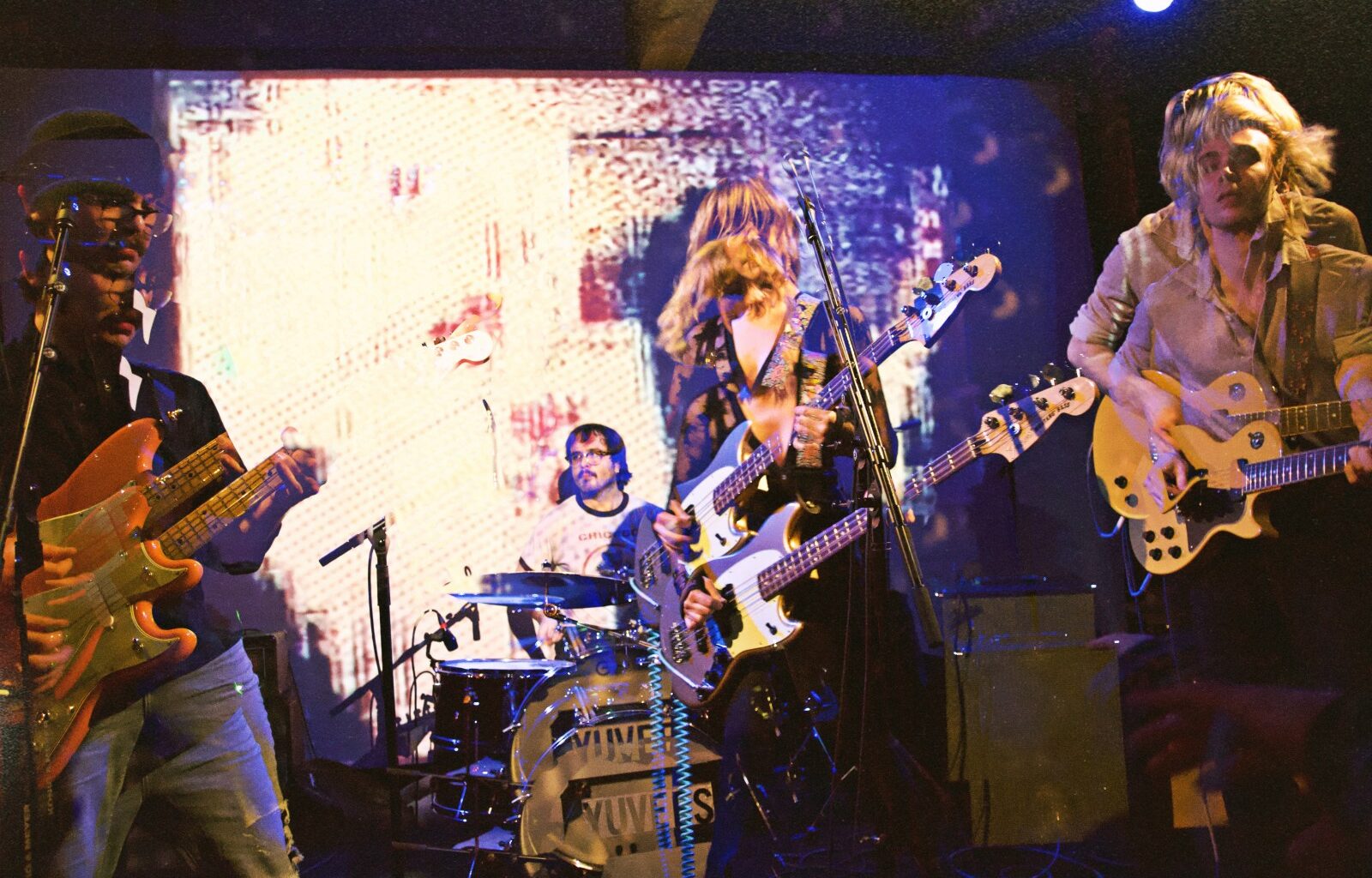
Yet still people flock to the United States, and to New York in particular. It remains a huge economy, a vast marketplace. Musicians from around the world know they need to be heard at this international crossroads. That’s why the New Colossus Festival, named for the Lazarus poem, came into being. Co-founders Mike Bell and Steven Matrick recognized that bands, mostly sharing an indie and punk vibe, had to roll through town, especially on their way to the South by Southwest showcase down in Austin. As the New Colossus festival—now in its seventh year—has grown, it has moved away from that particular adjacency to become a major event in its own right. Matrick, who used to run the venue Piano’s and lives on the Lower East Side, felt it should be rooted in that traditional home for this music, from its outgrowth at CBGB’s to the myriad other clubs downtown. A lot of that scene has moved out to Bed-Stuy, Ridgewood, and points beyond, but the Lower East Side has a major legacy worth celebrating. It’s also a more condensed physical space, which makes club-hopping an easier proposition.