
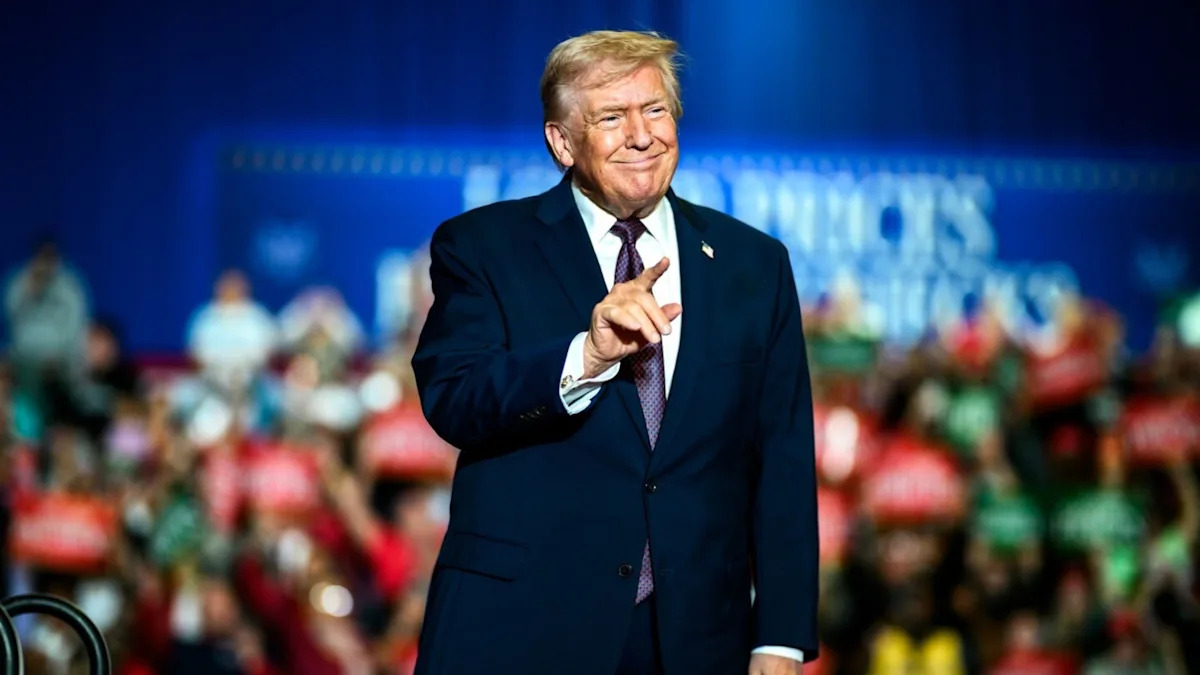
During a recent White House meeting with German Chancellor Friedrich Merz, Trump said he felt “warmly” toward Germany and added, “My father was born there.” The comment appeared to be an attempt to draw a personal connection to Germany while discussing international relations.
The problem is that the statement is not accurate.
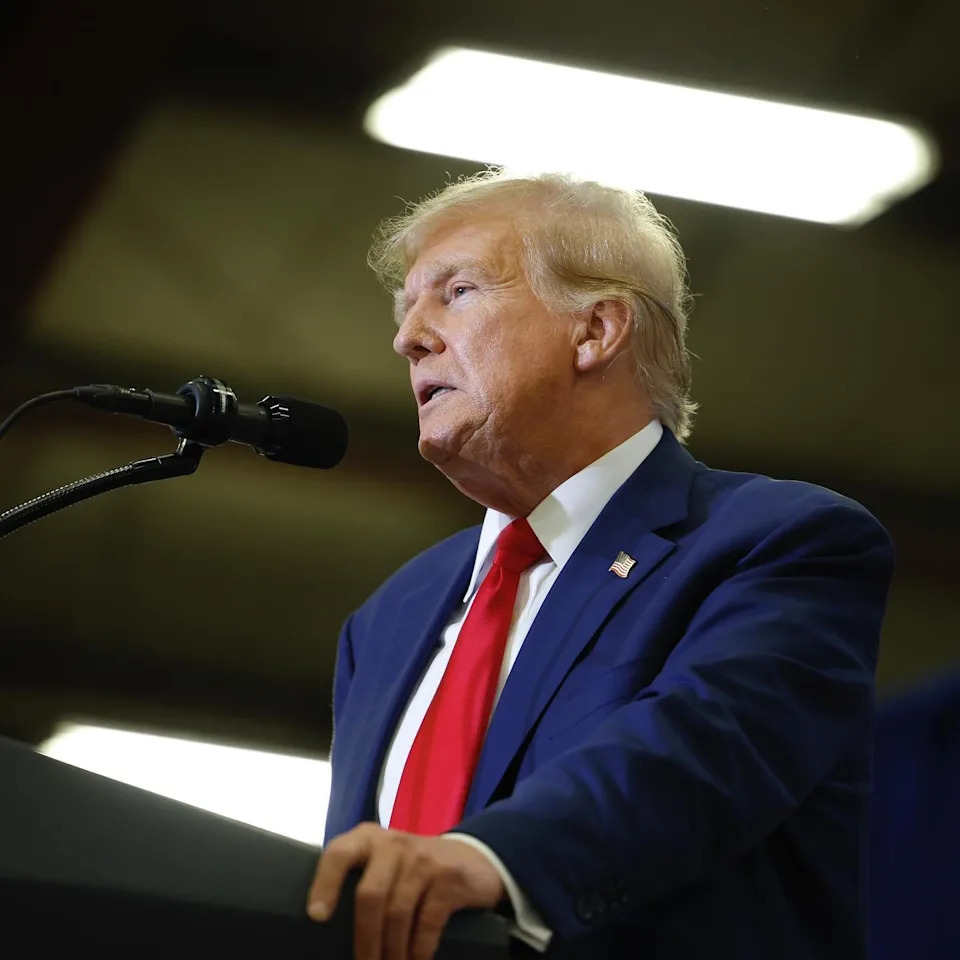
Donald Trump wears his signature navy suit and red tie combination while addressing a crowd.
(Anna Moneymaker/Instagram)
Trump’s father, Fred Trump, was born in the Bronx, New York, on October 11, 1905. Official records and biographical accounts consistently confirm this. It was Trump’s paternal grandparents — Friedrich Trump and Elizabeth Christ Trump — who emigrated from what is now Germany to the United States in the late 19th century.
A claim he has made before
This isn’t the first time Trump has said his father was born in Germany. He made similar remarks in 2018 and 2019 during interviews and press appearances. Each time, historical records contradicted the statement.
Fred Trump’s birthplace is well documented. He was born and raised in New York City and later became a real estate developer in the boroughs of New York. There is no evidence suggesting he was born in Germany.
Trump has accurately referenced his mother’s background in the past. Mary Anne MacLeod Trump was born in Scotland before immigrating to the United States. But when it comes to his father, the repeated reference to Germany does not align with the historical record.
Why the detail matters
On its face, this might seem like a minor factual error. But when the statement comes from a sitting president during a diplomatic meeting, it draws attention.
Presidential remarks — especially those made alongside foreign leaders — are closely watched both domestically and internationally. Even small inaccuracies tend to be amplified quickly, particularly when they involve easily verifiable facts like birthplace records.
Fact-checkers and news outlets were quick to point out the discrepancy after the meeting. The correction circulated widely across media platforms and social channels, sparking renewed discussion about Trump’s previous similar statements.
The moment also overshadowed other elements of the meeting, which focused on foreign policy and international cooperation. Instead of headlines centering on diplomatic substance, much of the coverage shifted to the accuracy of the president’s personal claim.
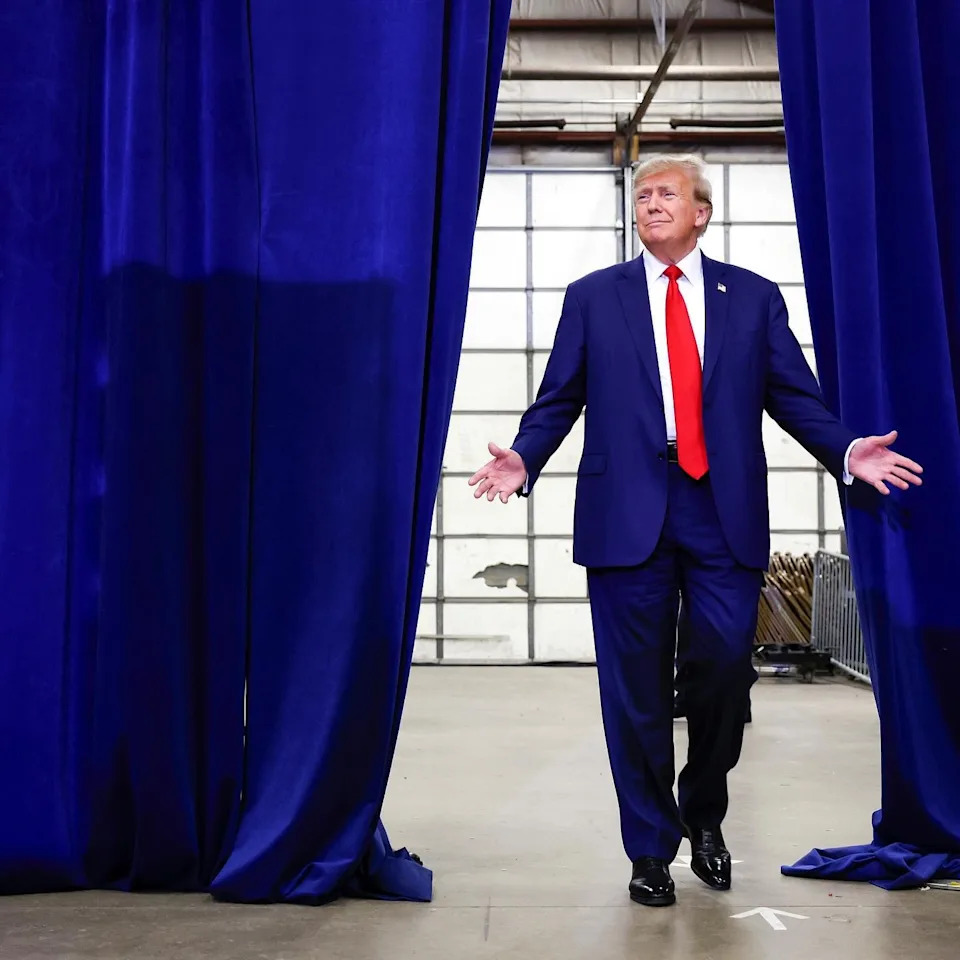
Making a bold entrance, Donald Trump arrives in his go-to high-low wardrobe staple: the tailored navy blazer and signature red silk tie.
(Anna Moneymaker/Instagram)
From my perspective, this is less about ancestry trivia and more about credibility. Family history is straightforward to verify. When a claim about something so basic doesn’t line up with documented facts, it naturally raises questions.
At the same time, it’s important to be precise: Trump’s grandparents were German immigrants. His father was not. That distinction matters.
Political supporters may dismiss the remark as a simple mix-up. Critics view it as part of a broader pattern of factual misstatements. Either way, the record itself is clear.
Fred Trump was born in the Bronx, New York.
Friedrich Trump was born in Germany.
In an era where every word spoken at a podium can travel worldwide in seconds, details carry weight. And in this case, the detail is not complicated — it’s documented history.
Whether this moment fades quickly or resurfaces again if the claim is repeated remains to be seen. But for now, the facts are straightforward, and they tell a different story than the one shared during that White House meeting.