
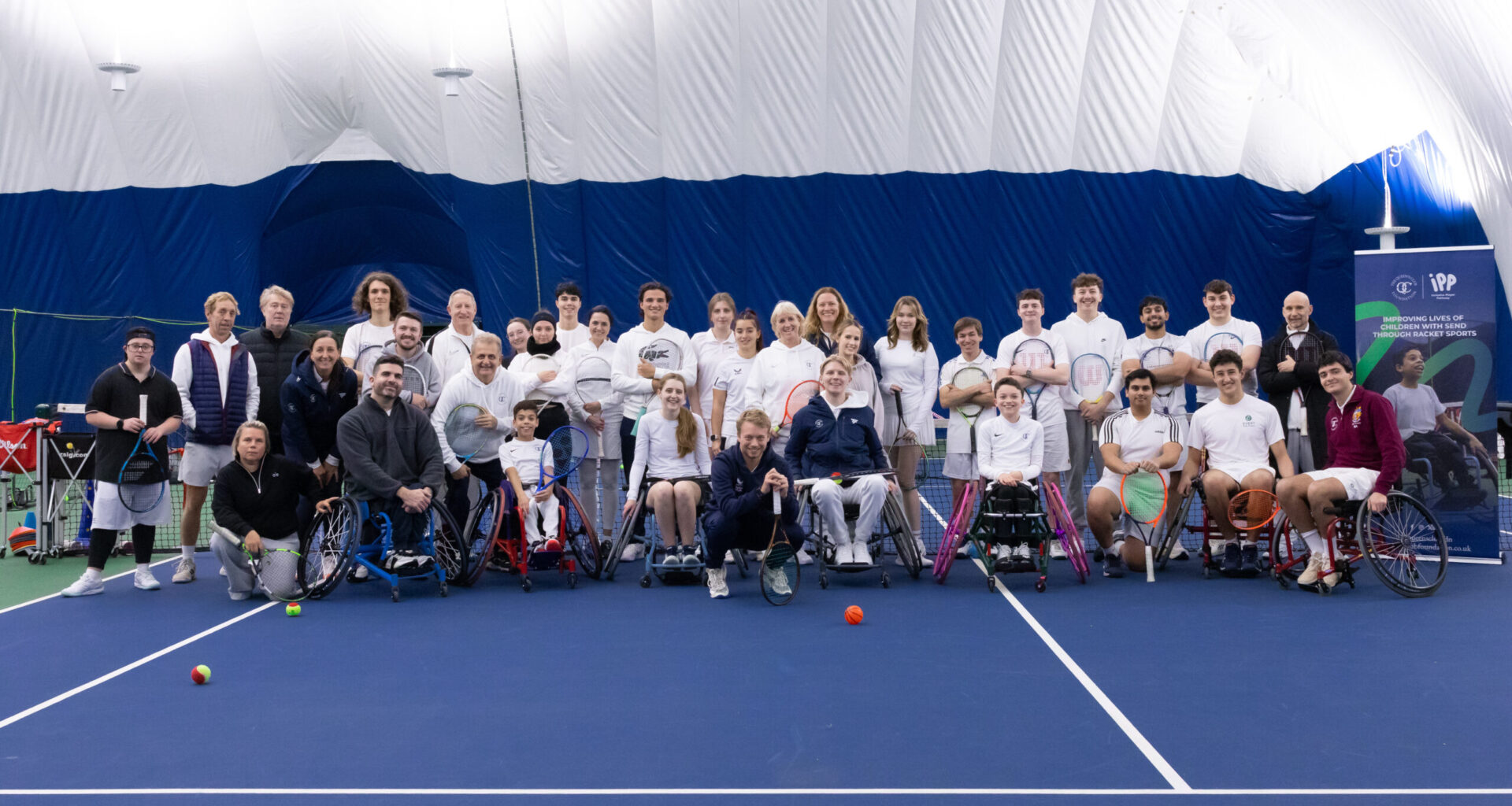
Sport Editor Joel Lim and Staff Writers Joseph De La Salle and Kamal Maru write on KCL Tennis and the Queen’s Club Foundation’s Inclusivity Forum event.
For the third year running, KCL Tennis partnered with its partner charity, The Queen’s Club Foundation, to organise a novel and landmark hands-on inclusivity forum as part of National Disability History Month. The QCF’s mission is to improve lives through racket sports, with one of its flagship initiatives being the Inclusive Player Pathway. A key element of this programme focuses on developing the local workforce to deliver high‑quality, accessible tennis opportunities for disabled players.
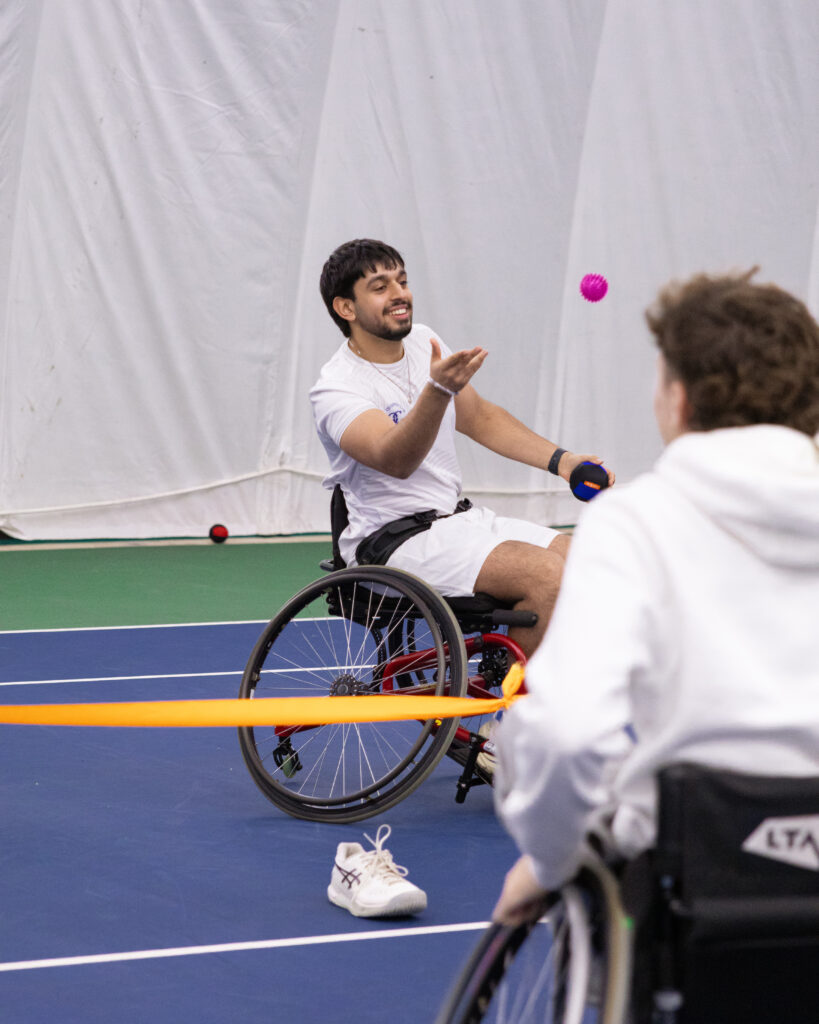
This event not only gave participants a chance to hear from current players with lived experiences of conditions like cerebral palsy, but also provided an opportunity to step into the world of disabled players through hands-on activities at The Queen’s Club. In recent times, huge strides have been taken in the sporting world to promote inclusivity. New activities such as Para Taekwondo and Para Badminton have been introduced in recent Paralympic Games, while disabled athletes like Kadeena Cox and Matt Stutzman have become celebrated in their own right. These milestones are inspiring to those young players in local communities that the QCF work with.
 Credit to: Stefi Komala, Instagram: @stefi.komala
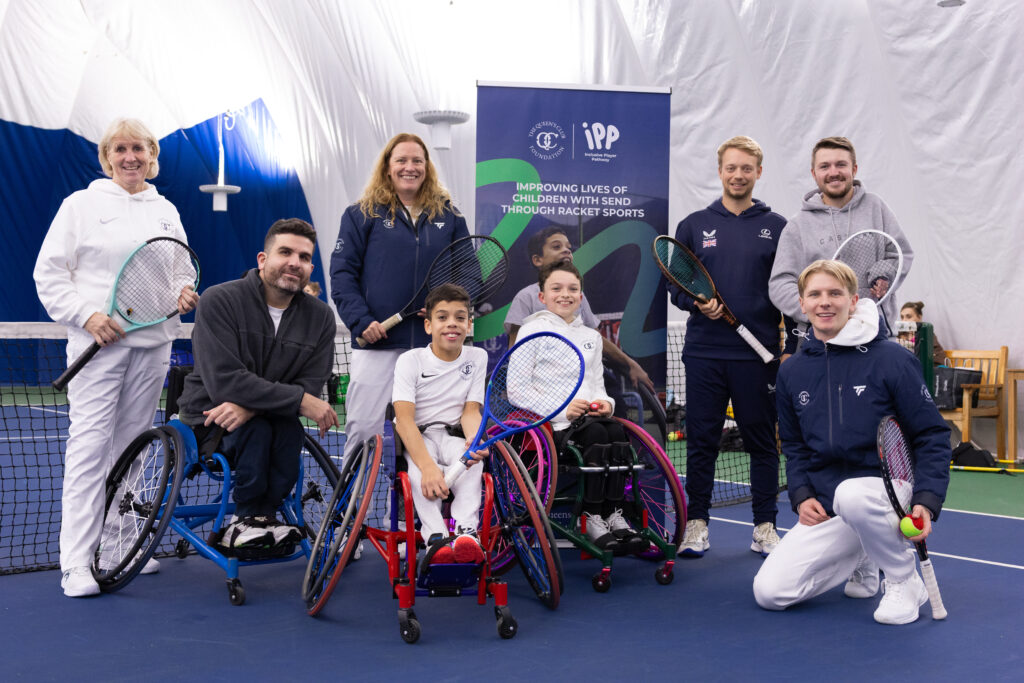
Contributing to these efforts, KCL Tennis’ disability training for Disability History Month was first organised in 2023, as part of the QCF’s IPP project, to raise awareness and to kickstart conversations around accessibility in both university tennis and the sporting world. Since then, the QCF’s IPP project has grown in both scale and ambition. This year’s KCL event was led by award-winning tennis coach, Sue Morrision and was graced by World Doubles Champions in para-standing tennis, Matthew Grover and Ross Cudmore. Scholars of the prestigious Queen’s Club Foundation Inclusive Player Pathway programme, Emerson Grant and Leo Charlesworth Mark, joined the session to share their journey as young wheelchair athletes. They spoke about how the programme and the dedicated support of QCF coaches have empowered them to develop their skills, push their limits and earn a place on the LTA U14 National Programme.
 Credit to: Stefi Komala, Instagram: @stefi.komala
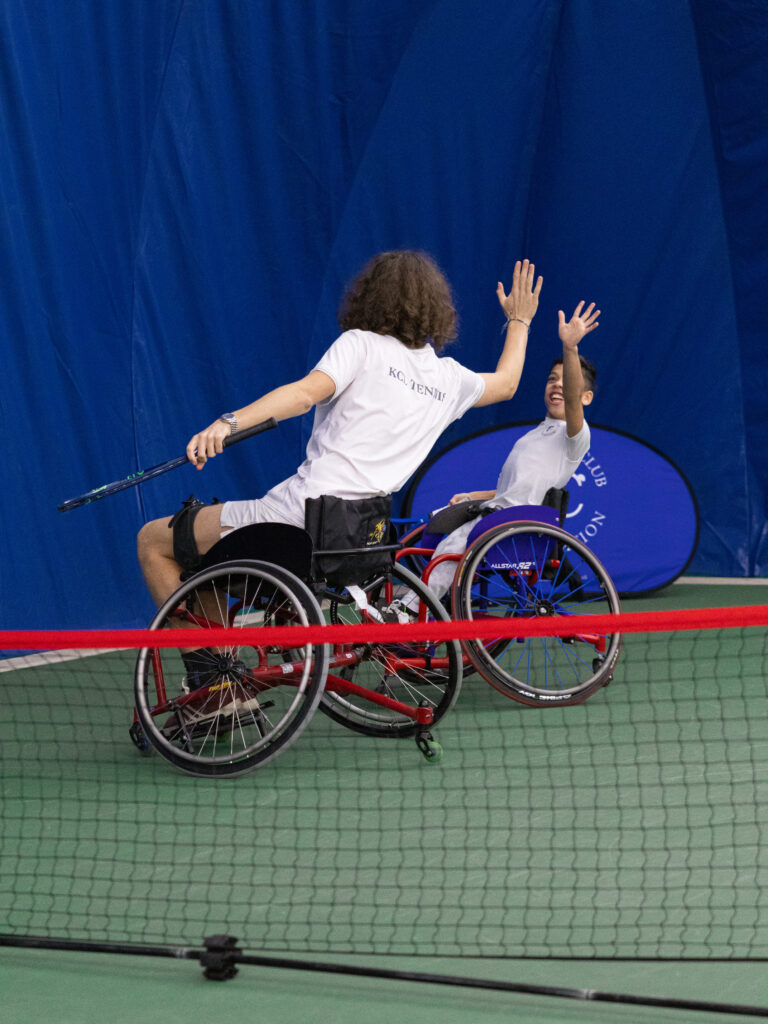
The QCF brought with them equipment that offered participants the chance to step into the world of players suffering from disabilities. They put on blindfolds, tried out their favourite serves while using a wheelchair and wore braces. This allowed them to experience how it feels to play with limitations in arm movements. For many of the young people involved in the Queen’s Club Foundation’s programmes, these challenges are part of their everyday sporting experience.
Participants Experience
Roar spoke to formidable tennis players within the KCL team, who shared important remarks on the day.
This was “a great event for awareness.” – Aaryan Sandhu, captain of GKT’s LUSL team, speaking to ROAR
He emphasised how “important it is to understand how others adapt” and that the QCF offers a chance to step into their shoes and glean new perspectives. For many participants, even basic adjustments, such as manoeuvring a wheelchair or timing a serve with limited arm movement, proved difficult. As Aaryan experienced limitations in arm movements, “it was much harder to get to the ball than I expected”.
“We need more involvement in schools so that awareness and empathy become second nature from a young age”
Meanwhile, para-standing tennis world champion and two-time world runner-up Matt Grover spoke about the need for greater visibility of para-tennis.
“Events like this raise awareness and show how accessible tennis can be through different formats”, Matt Grover speaking to ROAR
His doubles partner, Ross Cudmore, who began playing at eight years old, echoed this sentiment. “When I started, tennis felt very traditional”, he recalled.
“But the sport has opened up massively. There’s more awareness now, although we still need more understanding and patience.” – Ross Cudmore speaking to ROAR
Both players agreed that the QCF’s continued outreach and education are essential to ensuring inclusivity doesn’t just remain a goal, but becomes ingrained in tennis culture. They highlighted how collaboration between universities, governing bodies, and community coaches can bridge the visibility gap and create a more inclusive pathway for future generations.
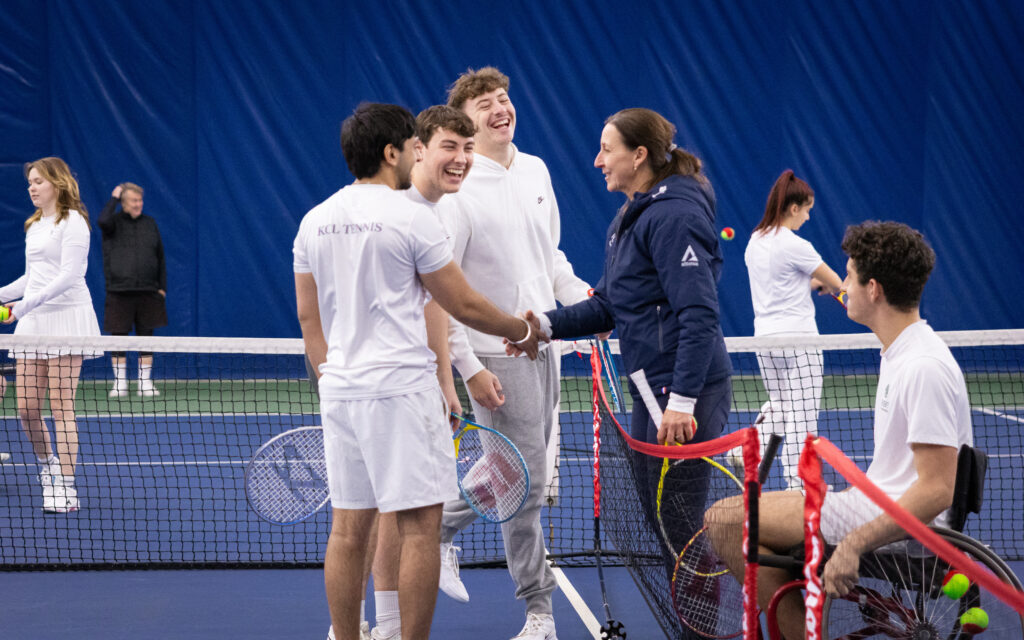
For the participants, the day served not only as a learning experience but as a display of the athleticism, resilience, and adaptability of disabled players. As events like KCL Tennis’ disability training run by The Queen’s Club Foundation to celebrate Disability History Month continue to grow, they reinforce that sport’s true values lie beyond competition. It lies in the connections and understanding it helps to build. Only through such shared experiences can the next generation truly play, coach and spectate inclusively.
 Credit to: Stefi Komala, Instagram: @stefi.komala
How to achieve inclusivity in sports
Furthermore, to get to the heart of why events like these matter, ROAR spoke with Mark Bullock, an inclusive Sports Development Advisor, who has been involved in the disability sports scene for a staggering thirty-five years. Our conversation with him highlighted three concerns: quantity and quality of coaching, equipment, and space. That is to say, it is vital that we increase the number of coaches equipped with the necessary skills and knowledge to work effectively with other-abled sports enthusiasts. This must also come with the greater provision of appropriate equipment and space through which they can thrive. This is precisely why the Queen’s Club Foundation invests heavily in strengthening the local tennis workforce, such as university students, equipping coaches through forums, workshops and mentoring to deliver high‑quality disability tennis across the community.
In Mark’s words, there must be “more coaches” with “more confidence” in tailoring their support to those who face a variety of challenges. Whether that be intellectual disorders, cerebral palsy, prosthetic or wheelchair users, or those with audio/visual impairments, each faces their own unique challenges. Yet, that does not mean that their talents and needs should be sidelined. Highlighting the need for the Queen’s Club Foundation’s Inclusive Player Pathway and workforce forums like these to focus on building coach confidence and competence, ensuring that no player’s potential is overlooked due to a lack of specialist knowledge.
It is also necessary that everyone be involved, which is made possible by providing the right equipment: adapted rackets, audible balls, and ball pick-up tools. After all, what use are the coaches if the necessary tools and gear are not available?
To address and fix these issues is great, but this is all in vain if we do not acknowledge the third factor—space. This not only means areas to meet, but areas that meet the needs of those who use them. For example, how are such spaces accessed? Wheelchair ramps may be required, among numerous other things.
When we speak of space, this does not merely include physical spaces for players and activities but also ones to facilitate discourse and understanding, such as this inclusivity forum organised by KCL Tennis and the Queen Club Foundation. Events such as those led by the Queen’s Club Foundation create safe, informed spaces where coaches, students and community leaders can share best practices and drive accessibility forward. We encourage you to get involved with events or movements like this, whether that be just reading this article, spreading awareness to your friends and family, or getting directly involved. Any step is a step towards a more inclusive society through sports. As Mark revealed, “sport is only a reflection of society.”
 Credit to: Stefi Komala, Instagram: @stefi.komala
Whilst work is being done to bolster inclusivity, Mark points out that “there could be a lot more” being done. It is clear from events like this that there is great momentum in activism for such causes. That being said, this does not mean that we should ease off the throttle because there can always be more done to make sports more inclusive.
How you can help
And that is where students like me and you, dear reader, come into play. We must help serve these opportunities so that we can be proud of the world we live in. You can volunteer or fundraise for partners such as the Queen’s Club Foundation, supporting outreach projects and making tennis accessible to local communities. The Foundation is continually growing its network of student volunteers, offering hands‑on opportunities to help run inclusive sessions, support players on court and ensure that disabled participants can engage fully and confidently in the sport. Additionally, you can support national charities such as the Dan Maskell Tennis Trust, which provides grants for specialist equipment and coaching for disabled players. Whether you show up, spread the word, or help to raise funds, each small action helps ensure that inclusive tennis is not a one-off event, but a permanent feature of life at King’s.
It is particularly heartening to see events like this organised by KCL clubs. With about 15% of KCL students and a nationwide 25% of the population living with disabilities, events like this are crucial in making our communities more accessible and friendly to all.