
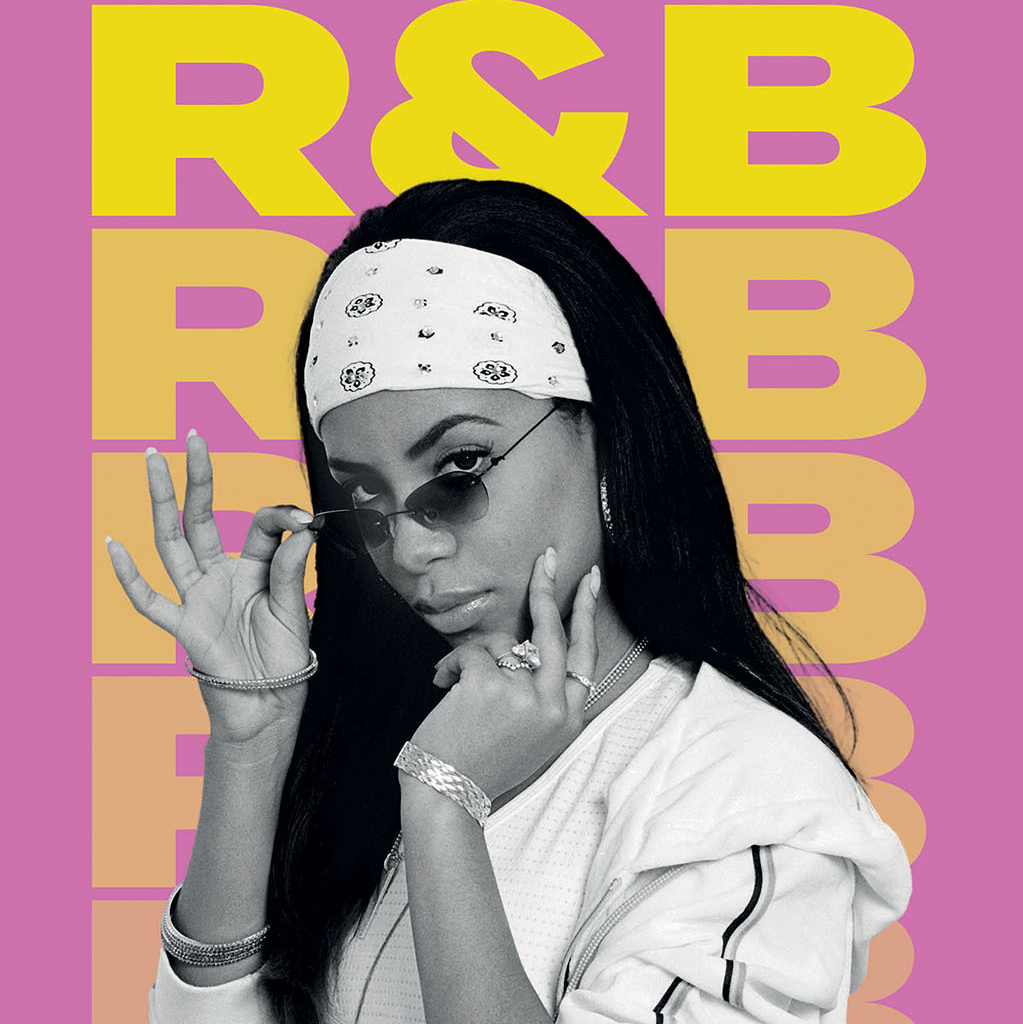
For the last six-plus years, 360°Sound has been providing our readers with exclusive interviews with authors of new music-related books. In this installment of our “Author Talk” series, we’re joined by Kiana Fitzgerald, author of the new book Queens of R&B (out now on Gemini). Fitzgerald is a Texas-based journalist, podcaster, essayist, and cultural critic. She has written stories for numerous publications, including Paper Magazine, Rolling Stone, and Texas Monthly. Her debut book, Ode to Hip-Hop: 50 Albums That Define 50 Years of Trailblazing Music, was published by Running Press.
Queens of R&B is part of the Queens of… series, which celebrates influential music genres and the female pioneers that defined them. The 173-page illustrated book looks at the evolution of R&B music over the last four decades as told through the stories of 10 female artists.
Editor’s Note: This Q&A has been edited for length and clarity. Scroll to the bottom to view the full video interview on our YouTube channel @360degreesound.
360°Sound: You’ve described Queens of R&B as a “labor of love.” Tell us about your interest in R&B and why you were excited to write this entry in the series.
Kiana Fitzgerald: R&B is the foundation of my life. I talk about hip-hop a lot because hip-hop is the first genre that I fell in love with. But R&B is a very, very close second. I remember being a young child and hearing a lot of ‘70s, ‘80s, and ‘90s R&B. I was born in 1989, so I remember hearing my mom singing the songs with my sister.
R&B is incredibly special to me, but it’s also a groundbreaking genre. It’s something that has paved the way for other genres to come forth. R&B is an incredibly important genre, and it’s important to me in my own life. So, when I got the opportunity to write about this book, I was like, “Absolutely!”
Janet Jackson is the first artist in the book. You write that without Jackson, “there would be no alternative R&B, and no contemporary Pop&B…there would be no Britney Spears, no Destiny’s Child or Beyonce, no J. Lo, no Christina Aguilera,” and the list goes on. Talk about the influence of Jackson and why you chose to start the book with her.
Janet was born into an incredibly talented musical family, and she kind of didn’t have a choice about being an artist. Her father was like. ‘You’re going to do this.’ Janet had been around music through osmosis, learning, absorbing, and being introduced to new ways of singing. She is someone who was built to be an influential artist.
When I think about Janet, I think about her standing up for herself and saying, “I’m going to take control. I’m going to dominate my own life. I’m going to say what I want to do, and I’m going to do what I want to do.” And that independence really set the tone for everybody who came after her. Working with producers Jimmy Jam and Terry Lewis, the innovations and music that she produced in her early to mid-career, and even after that, were phenomenal.
All the artists that you named have said there would be no me without her. That’s why I wrote that. I didn’t just pull that out of thin air. So, all these artists who were attributing their success and their achievements to Janet acknowledge that she is someone who took the time to figure out who she was, and I think that’s incredibly important as an artist. Many artists are just being flung to the wolves and not given an opportunity to really learn about themselves.
Many of the artists in the book had some of their biggest hits in the 1990s – Jackson, Whitney Houston, Mariah Carey, and Mary J. Blige. The ‘90s are seen as a golden era for R&B. What made that decade so special?
‘90s R&B specifically is looked at as the pinnacle of music for a lot of people. And I think what made that era so special is that there was a fluid relationship between hip-hop and R&B. There was just a thrilling crossover that was happening at that time. And today, hip-hop is one of the most popular genres, if not the most popular genre, so when I think of ‘90s R&B, I think of innovation and transformation.
The artists in the book, from Aaliyah to Mary J. Blige, these artists are people who leaned into the hip-hop and R&B connection. They embraced the sound and the direction. But even the people who were just solely relying on R&B, like Whitney Houston, I think we’re missing the vocals. Back in the ‘90s, there were power ballads left and right. People were belting to the rafters. It was just a different time when it came to vocal affect. Today, we don’t have that as much, which is why I think people want to look back to ‘90s R&B.
The book spans about 40 years of R&B history. When writing this book and seeing how R&B evolved over the years, what were some of your key takeaways?
The thing that immediately jumps out to me is the sound. I’m thinking about Janet in the ‘80s, and the industrial sound, the metallic, clamoring sound. I think the way R&B has moved and transformed has definitely been aligned with the sound itself. Let’s say from Janet to Aaliyah. Aaliyah was working with a futuristic sound. She was working with warbling and blips and all these different electronic sounds. And Destiny’s Child were experimenting with that kind of sound as well.
And with that sound transformation comes topical transformation. But sometimes we’re talking about the same thing. I think the themes of [Janet Jackson’s 1986 album] Control and the themes of [Destiny’s Child’s 1999 LP] The Writings on the Wall are very similar, but I do believe that there is a connectivity between the sound and the message.
The book is full of interesting anecdotes. One thing I learned is that Beyoncé was inspired to write “Survivor” after a DJ made a crack about Destiny’s Child being like the show Survivor, with all the members leaving or being fired – who will remain on the island? What’s a tidbit in the book that you found particularly interesting?
I did not know that Kevin Costner was the reason why the beginning of Whitney Houston’s “I Will Always Love You” starts a cappella.
I didn’t know that either. That was very interesting. Lastly, what do you hope readers take away from your book?
Please pick up this book if you so choose. I know it’s a rough time, so if you can’t, that’s OK. You can get it from the library. I’m very excited to have been tapped to write about a genre that I love so much. I poured a lot of my own personal feelings into it. It’s not a personal book, but it’s written very, very specifically because I do care a lot about this genre. I hope that you take away the love that I have for the genre. R&B is unmatched when it comes to evocativeness, effectiveness, and making you feel something. And I think this book will make you feel something.
Check out the entire interview with Kiana Fitzgerald on our YouTube channel, @360degreesound:
Look for Kiana Fitzgerald on Instagram @outfoxxed