
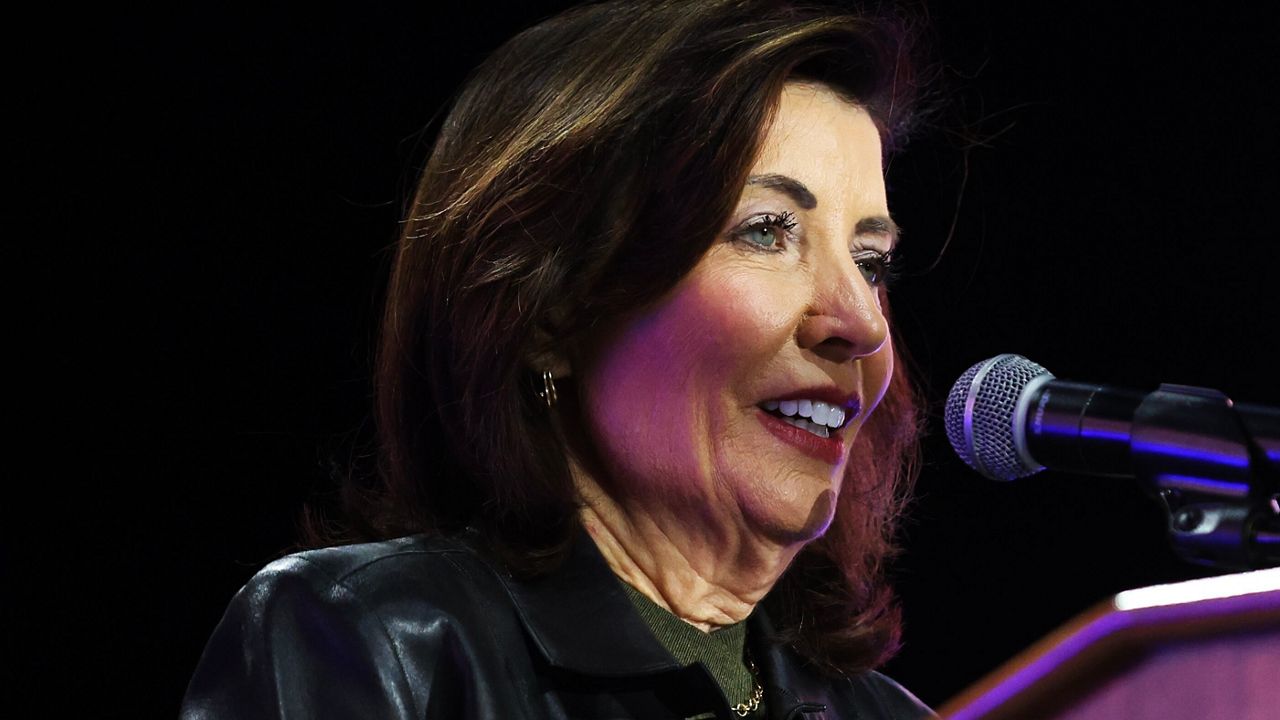
After years of defending the state’s landmark climate change law that was passed in 2019, Gov. Kathy Hochul is now making the case to roll it back — arguing the fast-approaching deadlines aimed at curbing emissions could be too costly for New Yorkers.
What You Need To Know
Gov. Kathy Hochul says the benefits of the state’s climate laws don’t outweigh the cost — at least not right now — citing new price estimates released by the state’s entity conducting energy research, NYSERDA, which found New Yorkers and businesses will face “high costs” if the current law isn’t changed
NYSERDA’s calculations show if the law stays as it is, the price of gas could spike and upstate homes using oil and natural gas could see their bills raise more than $4,000 annually — while those in New York City could expect to pay an average of $2,300 more per year
Also, up for reelection this year, affordability concerns are top of mind for Hochul. Utility bills were a major topic in the recent election of New Jersey’s new Democratic Gov. Mikie Sherril
“I want to make sure that we have money to electrify everything. Our buildings, our school buses, making sure that we wean ourselves from the fossil fuel industries,” Hochul said in May 2024 during a climate change summit at the Vatican in Rome, Italy.
Then, one of the biggest defenders of New York’s ambitious climate law. Now she says the benefits don’t outweigh the cost — at least not right now.
“What I’m trying to do is sound the alarm,” Hochul told reporters on Monday in Buffalo. “What I’m foreseeing then is for us to meet the goals by the timetable set by the legislature. There’s going to be enormous costs to families.”
Citing new price estimates released by the state’s entity conducting energy research, NYSERDA, which found New Yorkers and businesses will face “high costs” if the current law isn’t changed.
Also, up for reelection this year, affordability concerns are top of mind for Hochul. Utility bills were a major topic in the recent election of New Jersey’s new Democratic Gov. Mikie Sherril.
“There’s a requirement in the law that says we have to reduce emissions by 40% by 2030, and the DEC, our environment department, has to write a rule to achieve that,” Ken Pokalsky, the vice president of the New York State Business Council, said.
He argues that the state needs to act fast if it wants to change the law, thanks to a pending lawsuit.
“They have yet to issue that rule. They were sued by a group of environmental groups, and in the state supreme court, a judge said they’re right. You have to issue this rule. So what NYSERDA did in this memo, it’s only looking at that, the impact of that cap-and-trade rule,” he added.
Rachel Spector, a lawyer for the environmental group Earthjustice representing plaintiffs in the case, told NY1 her clients don’t support altering the law but are open to discussing other options with the state.
NYSERDA’s calculations show if the law stays as it is, the price of gas could spike and upstate homes using oil and natural gas could see their bills raise more than $4,000 annually — while those in New York City could expect to pay an average of $2,300 more per year.
Hochul also blamed the pandemic and changes in federal policy.
“A lot of these clean energy proposals that would make this plan be successful: offshore wind, shut down by the Trump administration, solar projects, the subsidies are gone,” she said Monday.
Supporters say the state shouldn’t use cost concerns to slow down progress already made.
“I do think there’s a bit of a scare tactic. I think again, this is the worst possible scenario,” Julie Tighe, president of the New York League of Conservation Voters, told NY1. “It’s something that we think that the administration has a lot of flexibility in how they choose to implement it.”
Tighe cited other renewable energy projects already underway and backed by Hochul, aimed at converting the state’s energy reliance to green energy.
“The Champlain Hudson Power Express is going to bring 1,250 megawatts of hydropower into New York City. And then we have the two offshore wind projects are going to bring about 1.7 gigawatts of energy to New York over the next two years. That’s going to start making a difference,” she said.
Although Hochul didn’t include how she wants to change the law in her January state budget proposal, sources say she’s angling to convince legislators behind closed doors, and so far, they’re not on board.
When asked what she thinks about Hochul’s attempts to amend the law, Democratic State Senate Majority Leader Andrea Stewart-Cousins was coy with reporters in Albany on Wednesday.
“I just want to know what the proposal is so at this point I don’t know what there is to discuss,” she said during an unrelated press conference at the State Capitol Building.The state budget deadline is April 1.