
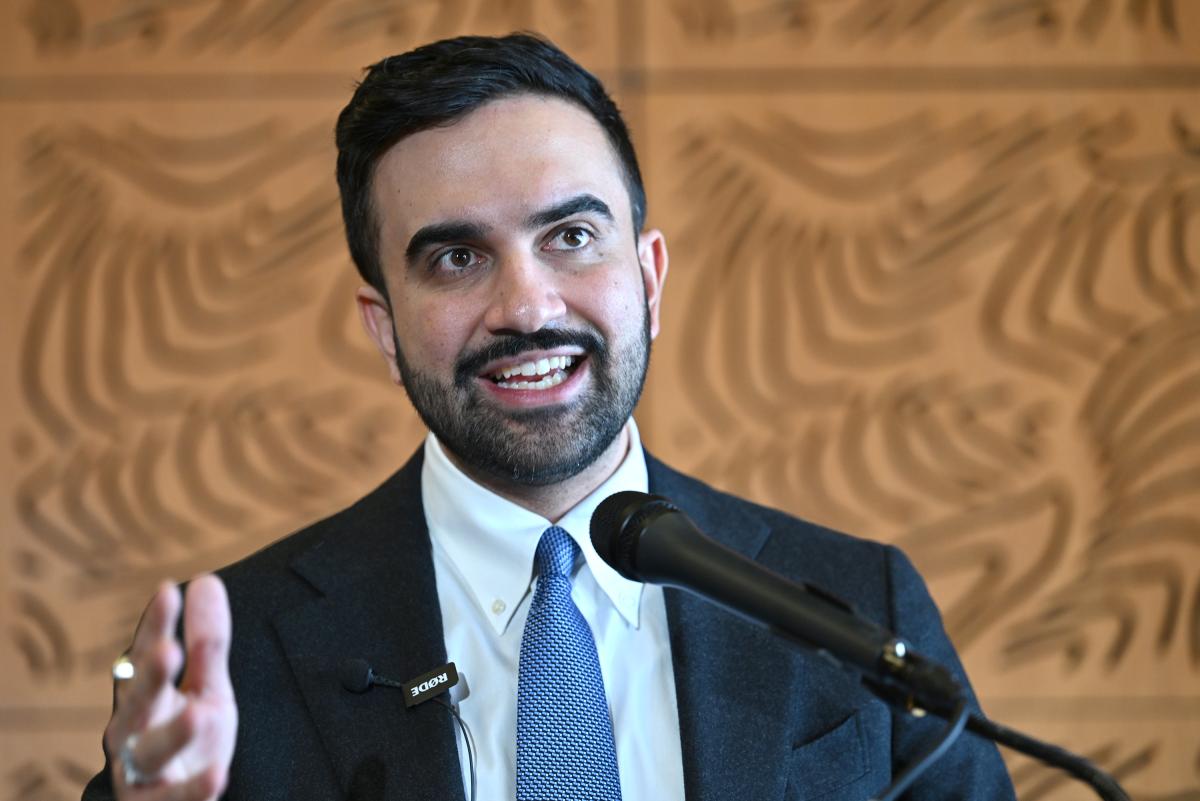
If there’s one political slogan that’s risen to the level of obsession with Mayor Zohran Mamdani, Democratic state lawmakers and other New York progressives, it’s “tax the rich.”
But unlike, say, “freeze the rent” — which at least describes a demand that hasn’t yet been achieved — “tax the rich” is also slyly deceptive.
It implies, falsely, that New York isn’t already squeezing top earners harder than everyone else.
In fact, raising taxes on income millionaires has been Albany’s primary revenue-raising strategy since the end of the 2007-’09 Great Recession.
As a result, New Yorkers with incomes over $1 million are now subject to the highest statutory tax rates since the early 1980s.
Driven by taxes on the earnings of such income millionaires — including profits from closely held “pass-through” businesses — personal-income-tax receipts will comprise a record 68% of total state taxes this year, up from 58% in 2006.
Net of federal deductions, New York’s marginal tax rates on multimillion-dollar incomes are at the highest level ever, and among the highest in the nation.
And in New York City, the political epicenter of the tax-the-rich movement, resident income millionaires are currently subject to the highest combined state and local tax rates in the country, 14.8%.
Combined with federal taxes, the top rates for city residents are among the highest in the world, reaching nearly 52% on wages and salaries and 38.6% on capital gains.
New York’s current tax-the-rich cycle dates to 2011, when Gov. Andrew Cuomo extended the “millionaire tax” his predecessor had approved as a supposedly temporary measure to cope with Great Recession budget deficits.
Over the next eight years, Cuomo extended the expiration date on that 8.82% top rate three more times.
In 2021, as part of what turned out to be his last budget, Cuomo signed off the state’s biggest single income-tax hike in 60 years.
It permanently elevated the 8.82% bracket to 9.65%, and imposed even higher rates of 10.3% on filers earning more than $5 million and 10.9% on taxpayers with incomes over $25 million.
“New York, Finally, Taxes the Rich,” cheered The New York Times’ headline on a column hailing the deal.
That big tax-increase package, too, was billed as temporary, due to expire at the end of 2027 — but in her budget last year, Gov. Kathy Hochul pre-emptively extended it through 2032.
Hochul is now under pressure from Mamdani to approve a 51% increase in the city income tax on income millionaires, to fill what he says is a $5.4 billion gap in the next city budget.
But since the state and city tax are essentially combined, collected off the same return on the same income, increasing the city tax has implications for the state as well.
And, as Hochul seems to realize, those implications are politically and economically worrisome.
New York’s share of all US taxpayers with incomes above $1 million dropped from 12.7% to 8.7% between 2010 and 2022, the latest year for which federal data are available.
Get opinions and commentary from our columnists
Subscribe to our daily Post Opinion newsletter!
Thanks for signing up!
During the same period, New York’s share of capital gains among all US income millionaires plunged by a full one-third — while Florida’s share doubled, providing further evidence of a net wealth shift from the Empire State to the Sunshine State.
But stepped-up outmigration isn’t the only risk inherent in heavily taxing the highest earners.
Millionaire earners derive a greater share of their income from capital gains, which rise and fall with asset values — and which can fall as sharply as they rise.
In the market crash of 2007–’09, for example, the taxable incomes of New York’s highest-earning 1% collapsed by 37% within two years.
For Mamdani and other progressives, the added volatility of a revenue base dependent on income millionaires doesn’t pose a problem.
After all, if revenues dip, just raise tax rates higher.
That’s the beauty of a simplistic tax-the-rich agenda — it’s like a fiscal perpetual motion machine.
But for those willing to face facts, New York’s relative loss of millionaires and capital wealth shows the process of decline already has gone too far.
To stabilize its tax base and to promote economic growth, New York state should commit to gradually reversing the rate hikes of 2021 — and, in the process, to reforming an increasingly cluttered and complicated income-tax code.
State policymakers should return to the principles that guided New York’s successful bipartisan income tax reforms in the 1980s: efficiency, equity, simplicity and transparency.
E.J. McMahon is an adjunct fellow at Manhattan Institute and author of its latest Issue Brief on tax policy in New York.