
 Photos by Yvonne Vávra
By Yvonne Vávra
Where I grew up, March 8th was one of the most celebrated days of the year. International Women’s Day in East Germany in the 1980s was a full-scale production devoted to spoiling women. At work, the men made coffee, poured champagne, and prepared lunch. The patriarchy put an apron on. By the afternoon, the celebration was in full swing with parties, cake, and speeches. Women were honored for their contributions to society, medals and gifts were handed out, and my mom would come home loaded with flowers.
In reunified Germany, the day gradually faded into just another date marked in bold on the calendar. Mothers, at least, still had their full-on day of celebration.
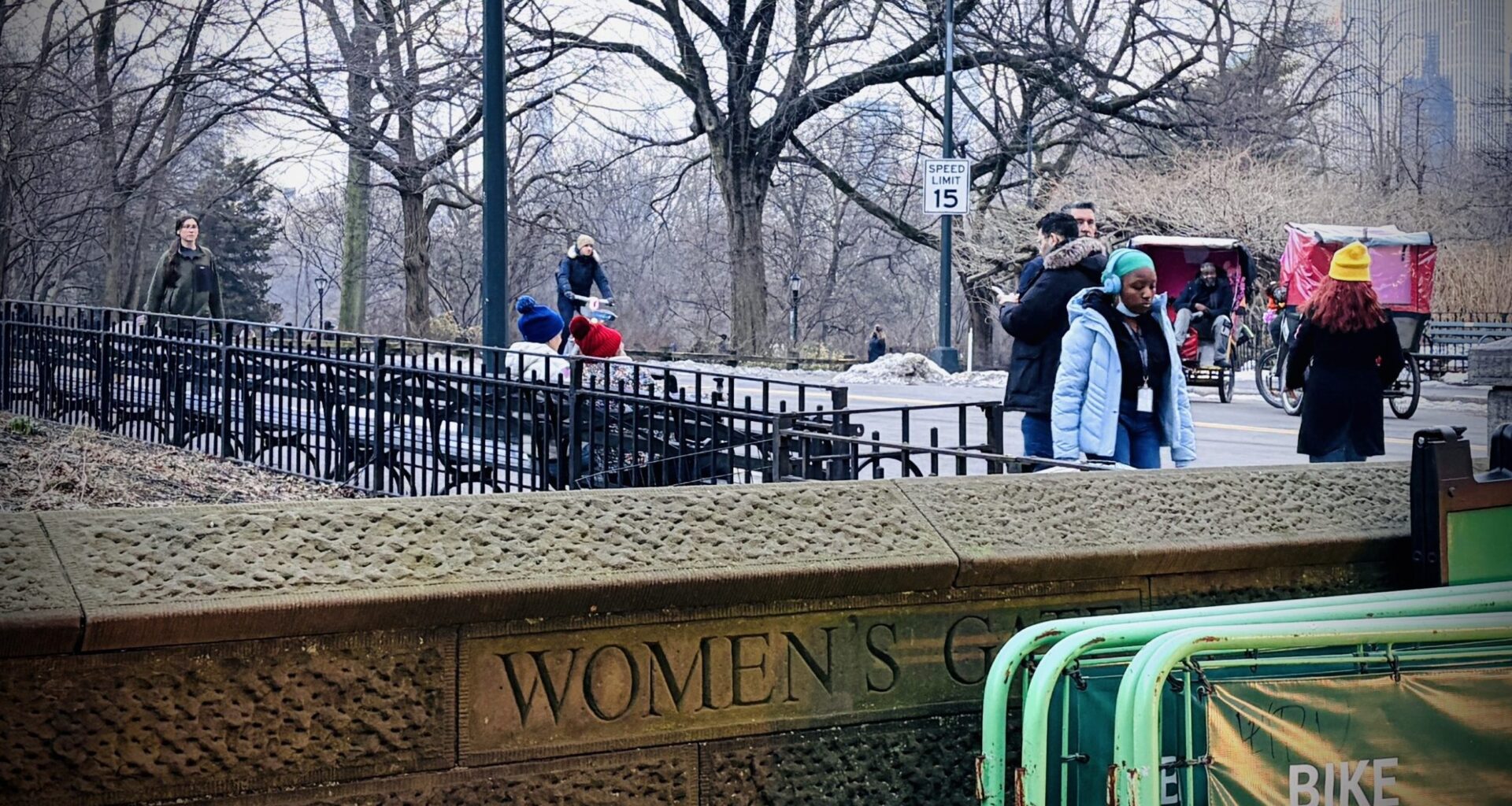
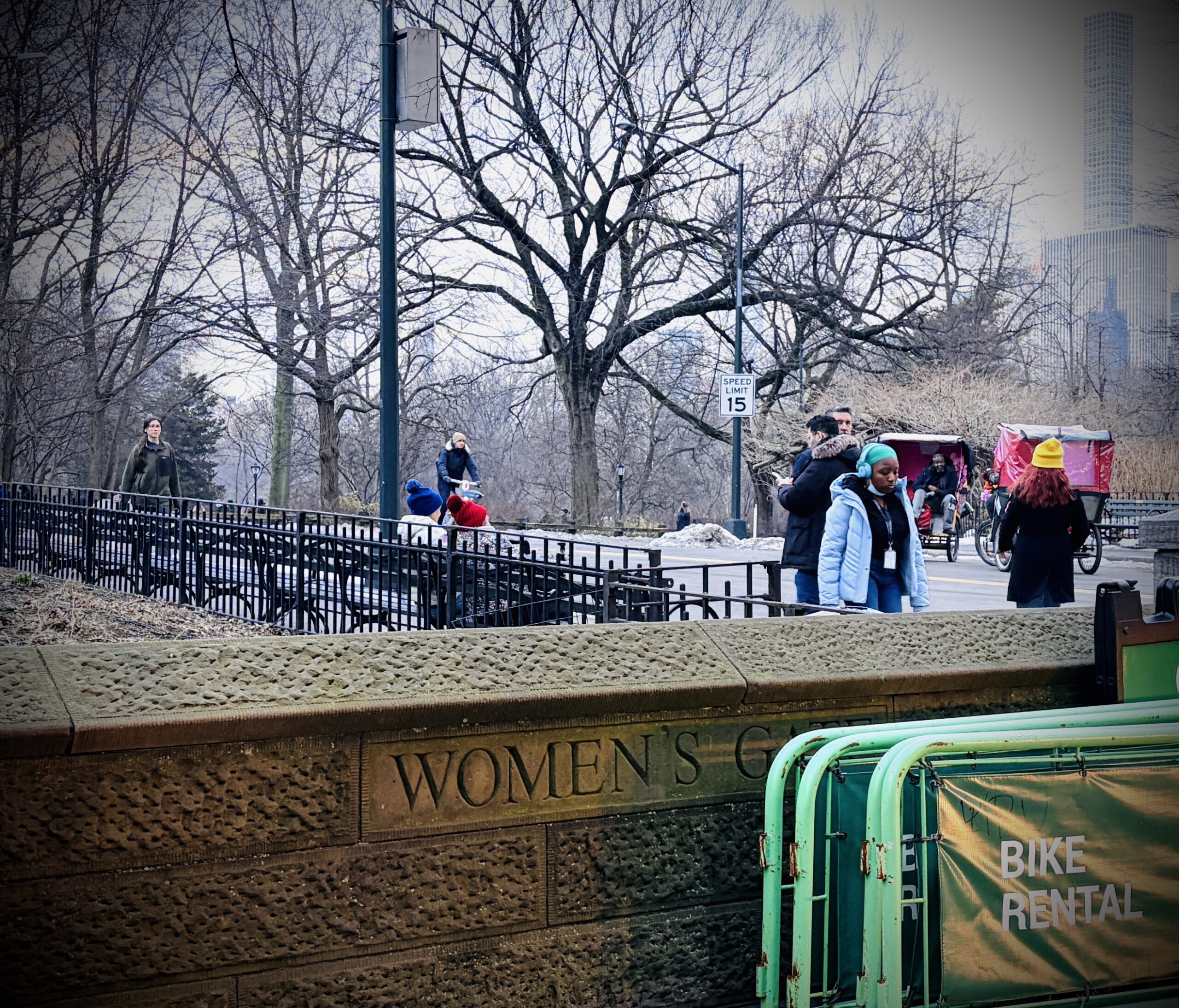
But as with all things lodged in your childhood brain, March 8th still makes my ears perk up. I find myself looking around for signs of something special. So maybe that’s why I felt a little thrill each time I walked through the Women’s Gate this week.
Did you know we have one?
Frederick Law Olmsted and Calvert Vaux named the entrances in the low stone wall that encircles Central Park, honoring the many different kinds of New Yorkers who might pass through. The idea was to recognize everyone’s importance to the city and establish the park as a place where all are welcome. On our west side, we have, among others, the Mariners’, Strangers’, and Hunters’ gates – and at 72nd Street, the Women’s Gate. In their report, the park’s commissioners explained that they wanted to specifically acknowledge women’s “all-important services… in their domestic capacity… as maids, wives, and mothers.”
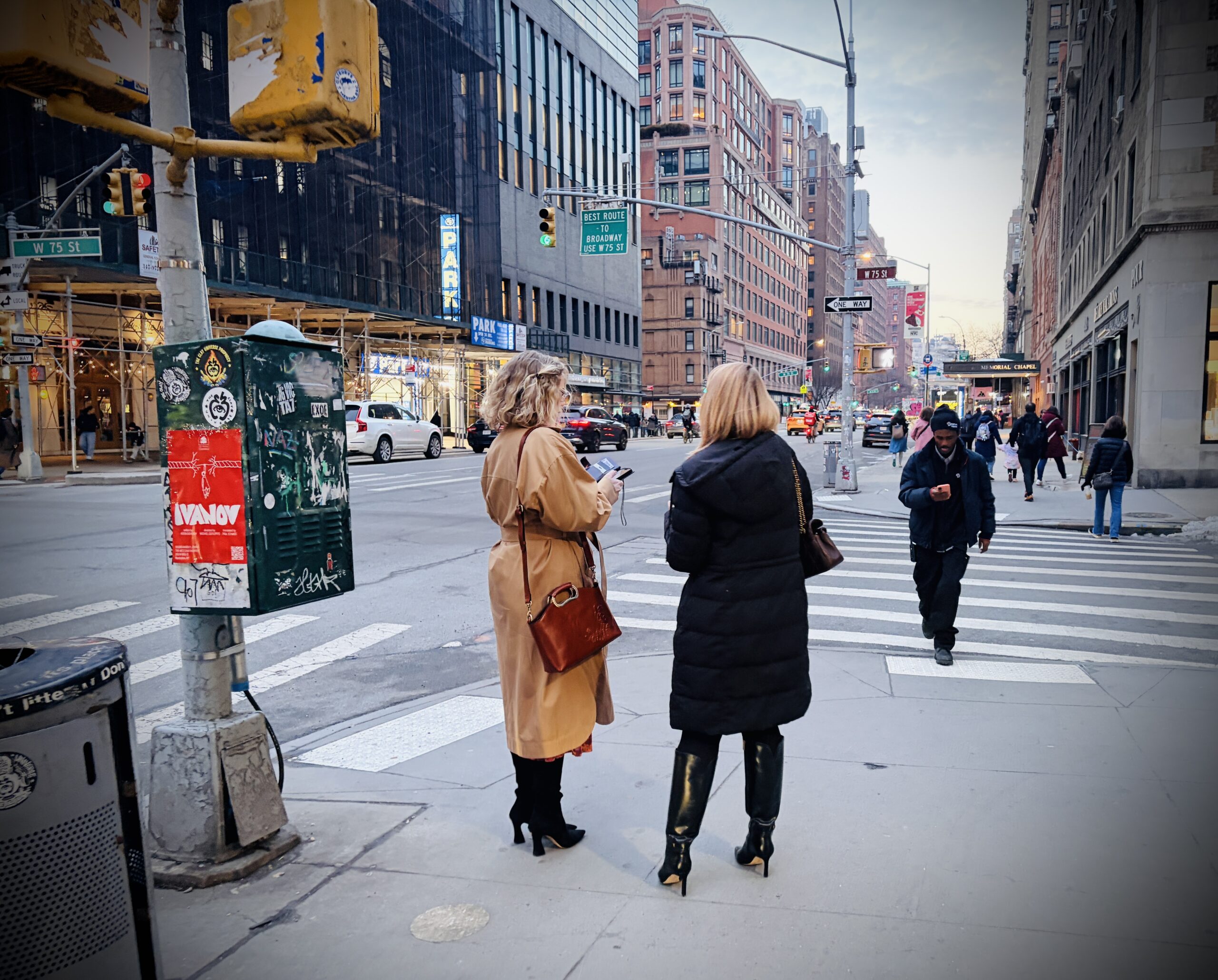 There are some women who must have used that entrance to the park often – women who were, and still are, celebrated for very different achievements. Lauren Bacall, Judy Garland, Judy Holliday, Gilda Radner, Roberta Flack, Yoko Ono, and trailblazing journalist Connie Chung are just some of the women who lived in The Dakota, right across the street from the gate. They may even have seen it from their windows.
But surely many Upper West Side women beyond that block must have passed through it while stepping far beyond the gender roles of their time. Dorothy Parker. Susan Sontag. The Upper West Side moms who, in the 1950s, took on the most powerful man in New York, Robert Moses – and won. Or Julia Barnett Rice in the early 1900s, who fought against the city’s noise, and Marcy Benstock, who crusaded against its polluted air in the 1970s. Elizabeth Cady Stanton, Harriot Stanton Blatch, Carrie Chapman Catt, Maud Malone, and Sophie Kremer were just some Upper West Siders who fought for women’s voting rights. Joan Nestle chronicled lesbian history, Wendy Carlos was among the first public figures to speak openly about her gender transition, and Gertrude Ederle swam faster than any man before her when she became the first woman to cross the English Channel — in a bathing suit very much ahead of its time.
I could go on and on.
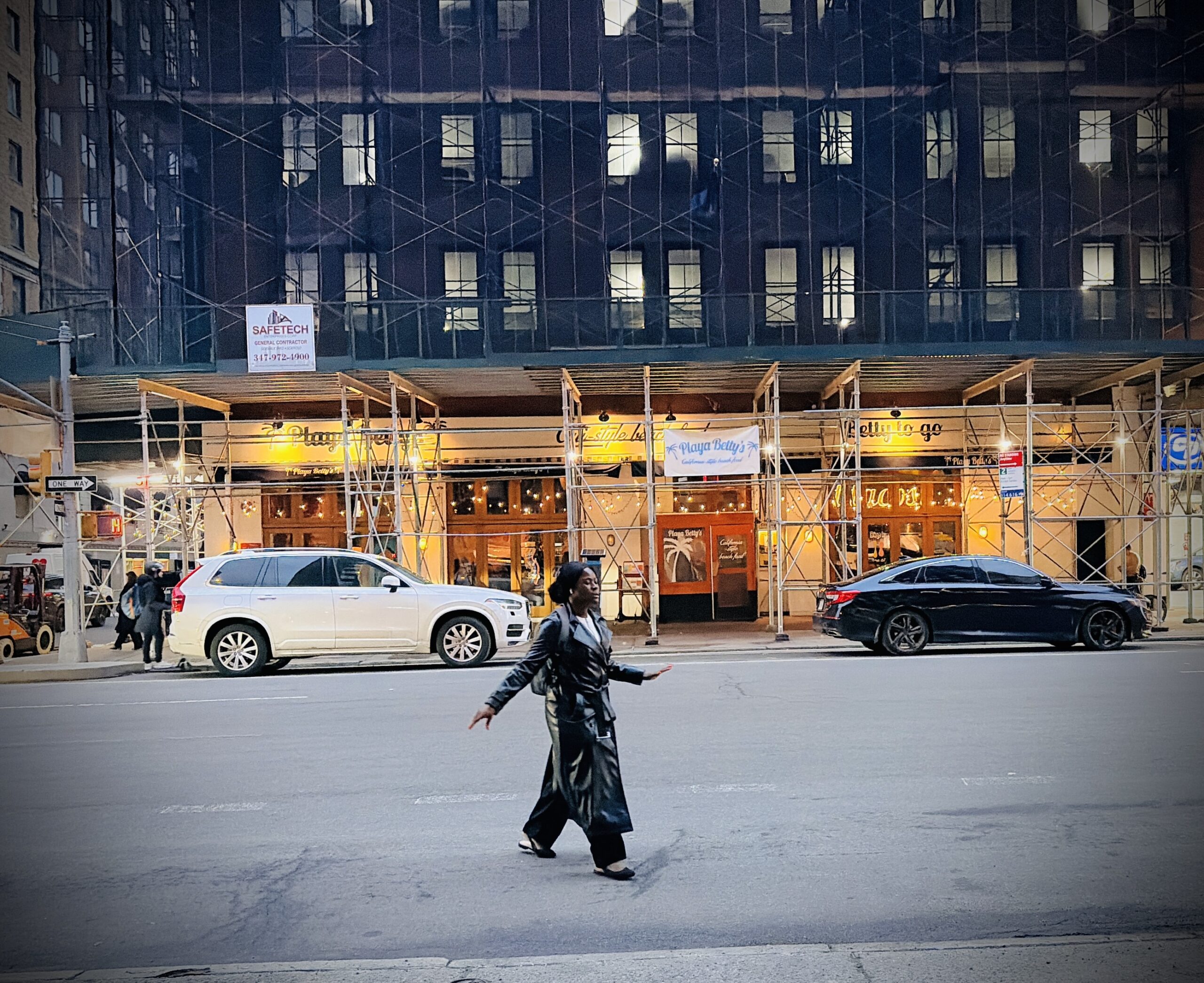 But legends are still among us. Every day, women walk through the Women’s Gate and the streets of the Upper West Side doing incredible things and making their mark in ways we might never notice.
But here’s a little of what we do know about the Upper West Side woman.
She likely earns less. Full-time working New York women make 87 cents on the dollar compared to men, according to the U.S. Census Bureau’s American Community Survey 2023 — the most recent data available. That means she would have to work an extra 53 days to make up the difference.
Zooming in on Upper West Side Census data, she outnumbers men by almost 14,000 and also holds a slight majority in the workforce. She most likely takes public transit to work, with an average commute of about half an hour. And if she’s older than 75, or between 25 and 34, she falls into one of the two age groups most likely to live in poverty.
 She also smiles a lot. Much more, in fact, than I would have thought. That’s something I know from my own very scientific research. I planted myself on a bench at the Women’s Gate to take a proper look at the Upper West Side woman. Admittedly, it’s not the easiest gate for the task because of all the tourists. But please trust my finely tuned radar.
As I sat and watched – and there wasn’t much to see because everyone was under drizzle protection – I thought I’d try a little game, if you’ll indulge me. I would have to wait for ten women to smile before I could get up and leave. I was sure it would take at least half an hour. But after no more than ten minutes, I was released from the drizzle and my presumptions.
Some were alone, some on their phones, some arm in arm, or arm next to arm, with someone else, looking happy. In the drizzle. Maybe it was all pre- or after-park happiness; we’ll never know. But that day, the Upper West Side woman showed up with a smile. Quite the powerful act in our challenging times: seeking out pockets of joy, knowing that strength can be found there as well.
Subscribe to West Side Rag’s FREE email newsletter here. And you can Support the Rag here.