
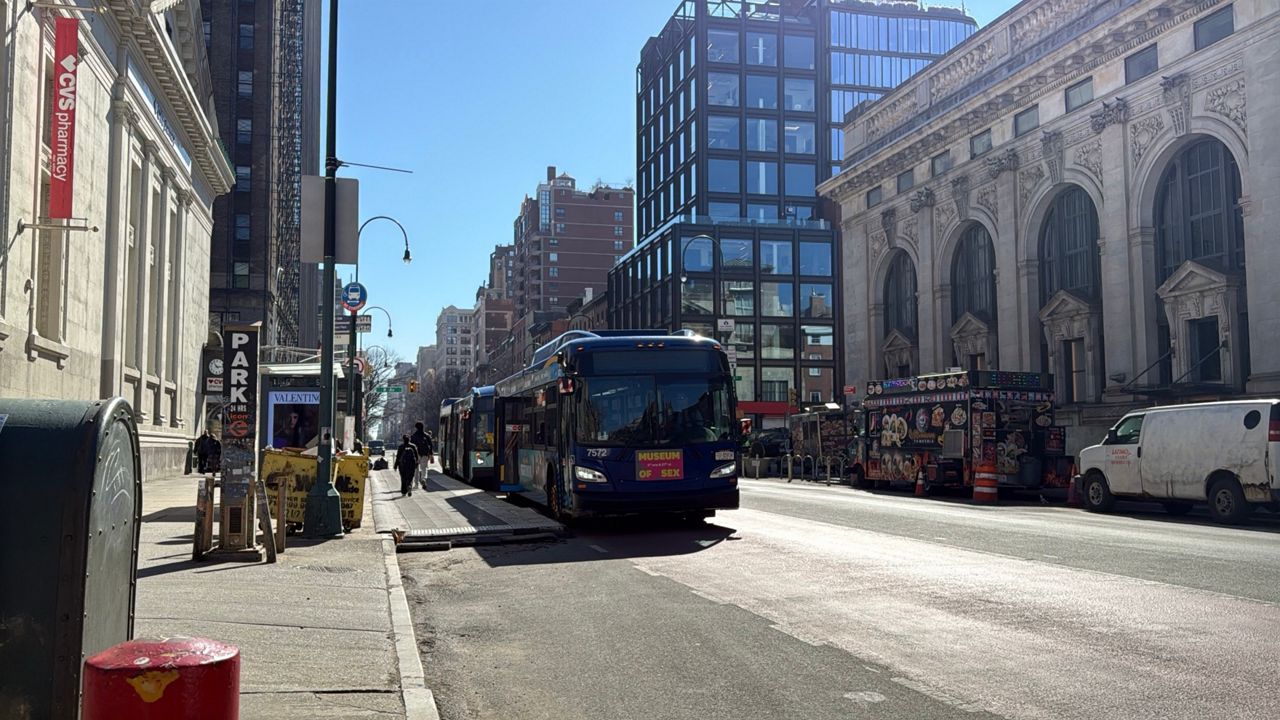
New York City is set to kick off the public planning process for a major transformation of Manhattan’s 14th Street, officials announced this week.
The redesign will seek to upgrade the corridor’s existing busway, which has increased bus speeds by as much as 24% and ridership by up to 30% since its installation in 2019, according to the city’s Department of Transportation.
The planning process will begin with a public meeting for the project at 4 p.m. on Wednesday, March 25, on the second floor of the Pratt Institute.
What You Need To Know
The planning process will begin with a public meeting for the project at 4 p.m. on Wednesday, March 25
The 14th Street busway has increased bus speeds by up to 24% and ridership by up to 30% since 2019
The project aims to improve pedestrian safety, public space and connectivity along the corridor
Mayor Zohran Mamdani has thrown his support behind the project
Officials said the meeting will give New Yorkers a chance to provide input on issues like pedestrian safety, public space and bus and bicycle improvements.
The DOT said the city is already conducting a 24-month study to help develop upgrades for the corridor. Proposed improvements include new landscaping and upgraded pedestrian, park and plaza spaces, as well as safety enhancements.
There would also be upgrades to neighboring streets and public spaces connected to the thoroughfare.
Mayor Zohran Mamdani has thrown his support behind the project.
“The 14th Street busway is already a success-faster buses, higher ridership, safer streets. But we’re not stopping at a coat of paint,” he said in a statement. “We’re taking it to the next level with greenery, pedestrian space, and stronger safety infrastructure. I invite New Yorkers to join DOT later this month and help shape the world-class future of 14th Street.”
The $3 million design project includes $2 million from the city and $1 million combined from the Meatpacking Business Improvement District and Union Square Partnership.
The actual construction has $9 million secured from the City Council and $500,000 from the Manhattan borough president’s office.