
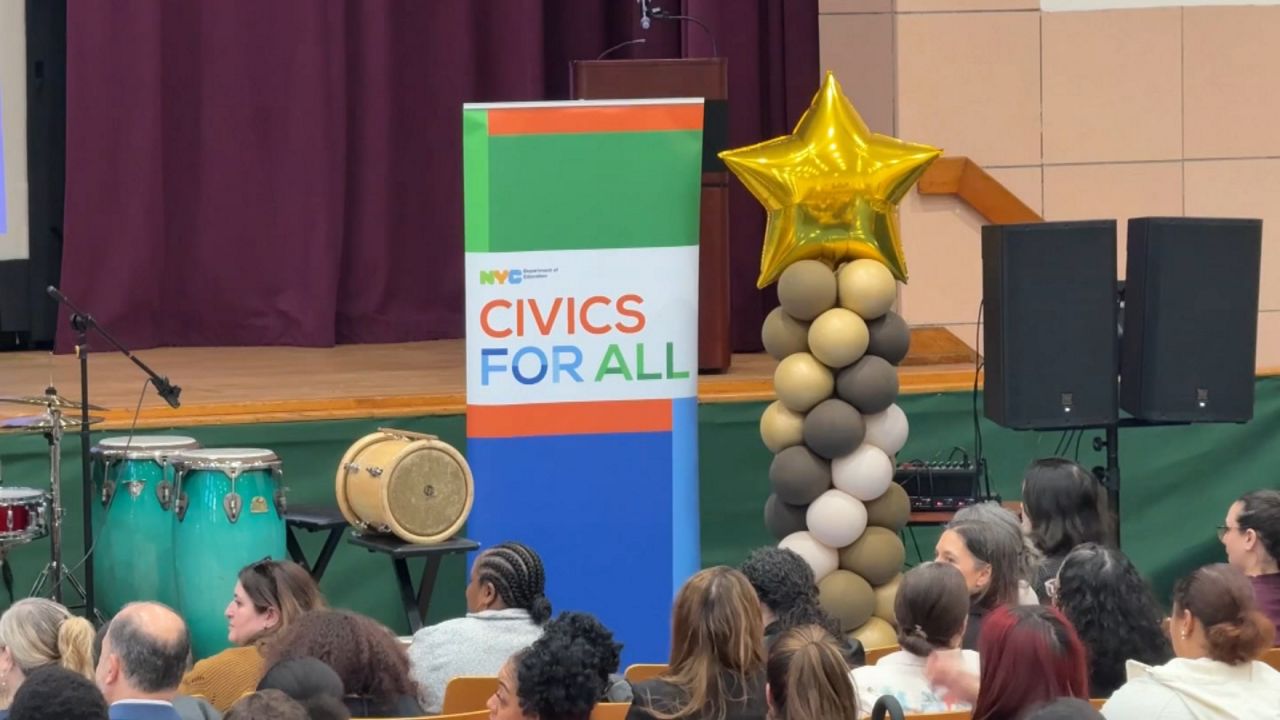
Since 2019, Civics Week at New York City Public Schools has aimed to celebrate youth voices, empower students and get those who are eligible registered to vote.
Schools Chancellor Kamar Samuels believes teaching civics is essential.
“When I think about us being a polarized society, there’s no better way for public schools to really get our young people really interested in civics early, so that they can understand how to discern, how to make a difference, how to really push an argument and really understand what it takes to be a meaningful member of society,” Samuels said.
What You Need To Know
Since 2019, Civics Week at New York City Public Schools has aimed to celebrate youth voices, empower students and get those who are eligible registered to vote
Administrators say the goal is to do more than just teach civics and actually put it into practice
Students got to decide how to allocate a portion of the school’s budget, mirroring the city council’s participatory budgeting process
NYC public schools says it expects to surpass registering, or pre-registering, 100,000 students to vote by the end of this week since the start of the Civics for All program
Jenna Ryall, director of Civics for New York City Public Schools, says there are a lot of ways students are practicing democracy.
“You wouldn’t put a student on stage to perform a ballet if they had never practiced it, and for too long we’ve expected students to graduate high school and participate in democracy without practicing it,” she said. “We have student voice committees with our partners, Mikva Challenge, who are thinking about how they can make their school communities more democratic, meeting with their school officials, meeting with their classmates to think about what are the things that they want to have voice and choice about in the school community.”
They say the goal is to do more than just teach civics and actually put it into practice.
Students decided how to allocate a portion of the school’s budget, mirroring the City Council’s participatory budgeting process.
Third grader Caleb Prieto worked on a participatory budget at the Jose Celso Barbosa building, ultimately having students vote on whether the education department should spend $2000 on new toys or a new couch for his school.
New toys won by a landslide.
“I think we can make a huge difference because the students — they deserve a voice,” Prieto said. “Even though they’re young, their voices still deserve to be heard.”
Prieto says learning how to vote is a crucial skill for kids to learn.
“When they get older and they need a vote, like for voting for the new mayor, voting for the president, they’re like, oh, I already learned this when I was younger. So now I know how to do it when I’m older,” he said.
NYC public schools says it expects to surpass registering, or pre-registering, 100,000 students to vote by the end of this week since the start of the Civics for All program back in 2019.
Lorianna Jimenez, a senior at Esperanza Preparatory Magnet School, is pre-registering to vote.
“The younger people are the future generations. They’re the ones that are leading us in the future, so if they don’t know their rights or how to advocate for certain things then we’re basically doomed,” she said.