
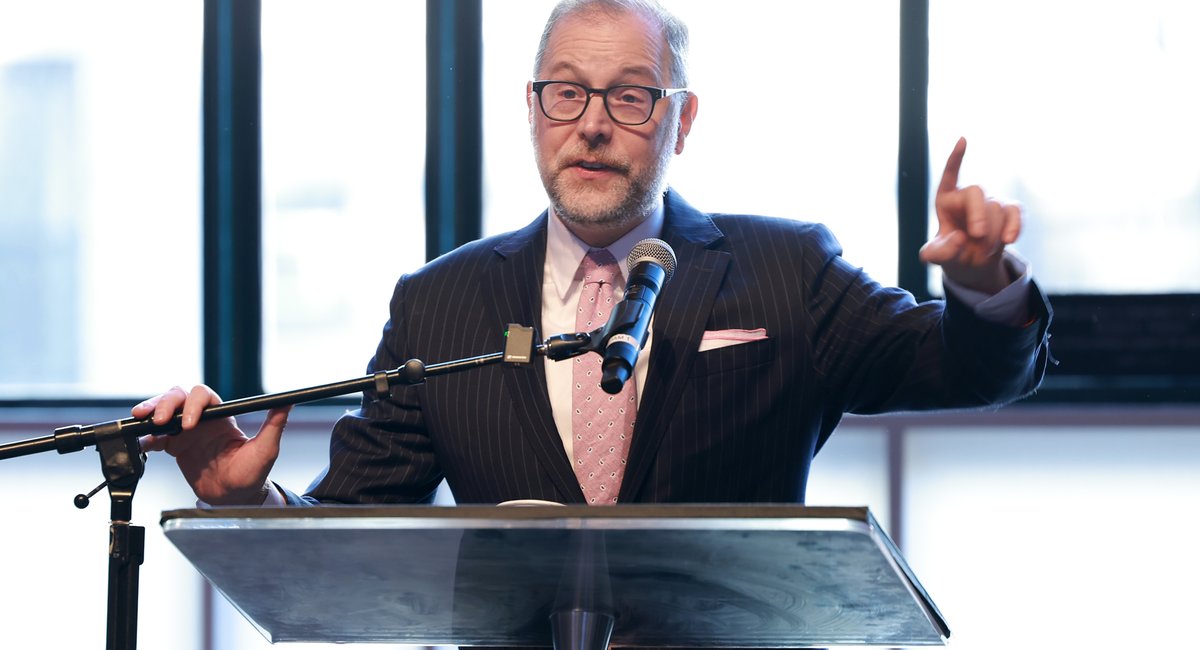
Comptroller Mark Levine will offer a sobering assessment of the New York City’s fiscal health on Wednesday, warning that the Mamdani administration’s preliminary budget takes an overly optimistic view of projected revenues and proposes risky paths for closing a looming budget gap.
“New York City is spending more money than it takes in,” Levine said, previewing his planned testimony at the City Council’s preliminary budget hearing.
Mayor Zohran Mamdani released his $127 billion preliminary budget proposal last month. Mamdani urged Albany lawmakers to increase income taxes on the wealthiest New Yorkers and corporations. Mamdani said if that effort fails, the city would have to increase property taxes by 9.5%.
But both options face tough odds. In Albany, Gov. Kathy Hochul has steadfastly opposed an income tax hike, arguing such a move would drive wealthy people out of the state.
In the City Council, Speaker Julie Menin has called the property tax proposal a “nonstarter.” Many other members have also criticized the measure.
Levine’s office said the city faces a $6.5 billion gap next year, assuming neither option is adopted. That gap is worse than the Mamdani administration’s projected gap, which it put at $5.4 billion.
“We have a structural imbalance that this reveals right in a year where the economy is growing, where revenue is growing, income tax, property tax, all growing,” Levine warned.
He also cautioned that Mamdani’s proposed property tax increase approaches the ceiling of what’s permissible under the state constitution. Levine cautioned that raising property taxes might be an option best saved for a graver economic moment.
“We’re once again leaving ourselves without a tool we might want to use if there’s a true crisis ahead,” Levine said.
As one example of how the city’s expenses were growing faster than its revenues, Levine cited the city’s rental assistance program, which he said was expected to cost nearly $2.6 billion next year. That’s more than the entire Department of Housing Preservation and Development’s expense budget, which is currently just over $2 billion.
Levine’s analysis also warned of looming fiscal threats, including geopolitical instability, as well as the possibility of an artificial intelligence bubble in the stock market bursting, causing major job losses.
The comptroller did praise the mayor for a budget that more accurately reflects the true cost of key programs.
He said Mayor Eric Adams administration had underestimated expenses and “papered over” structural problems. Mayors have long been criticized for playing games with preliminary budgets so they can later cast themselves as heroes saving the city from fiscal disaster.