
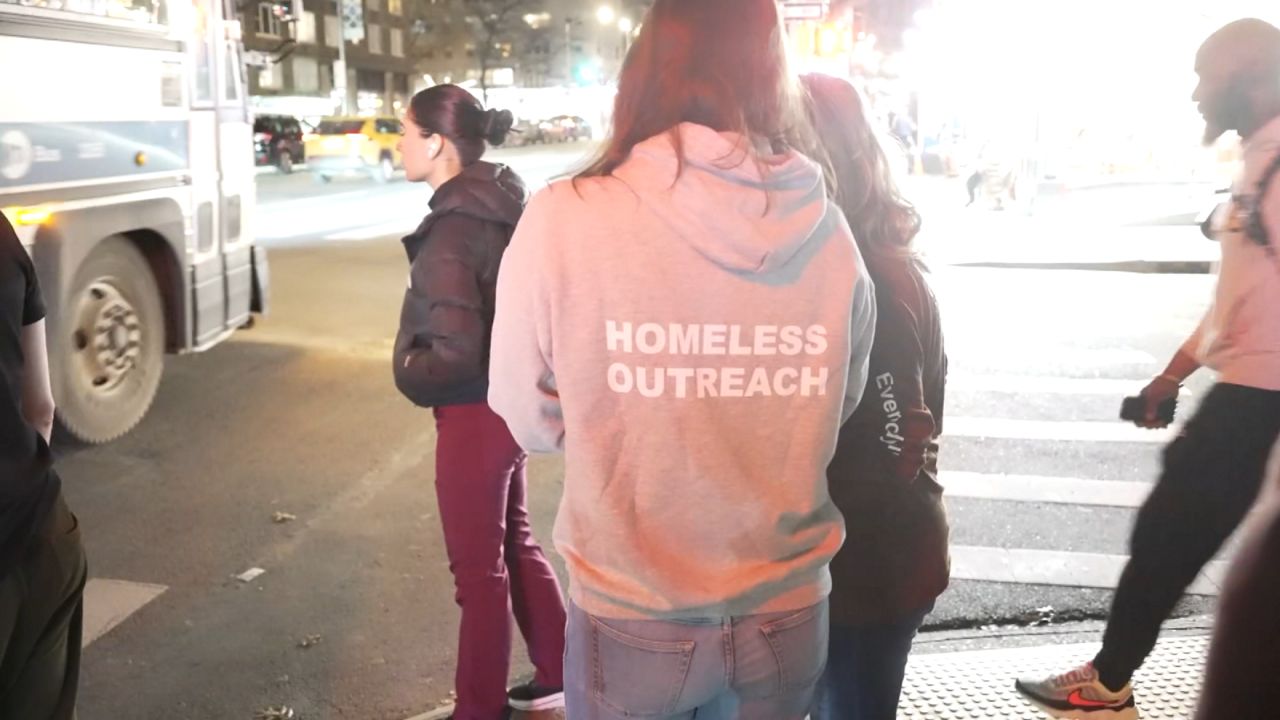
Volunteers spread out across New York City overnight Tuesday for the city’s annual Homeless Outreach Population Estimate, known as the HOPE count, surveying streets and public spaces to estimate the number of people living unsheltered.
The count had been postponed twice earlier this winter due to frigid temperatures.
What You Need To Know
Volunteers and outreach workers canvassed neighborhoods across the five boroughs overnight for the city’s annual HOPE count of unsheltered residents
The survey helps officials estimate the number of people living on the streets and connect them with services
The count was postponed twice earlier this winter because of extreme cold
Outreach teams often encounter people who decline shelter offers, sometimes due to personal preferences or past experiences with city services
At 10 p.m., as many residents were settling in for the night, volunteers checked in before heading out in small groups with outreach workers. Among them was Daniel Eber, participating in the count for the third year.
“There’s this like core group of seems like maybe tens of thousands of New Yorkers volunteering every day, and today I’m one of them,” Eber said.
The HOPE count helps the city estimate the number of people sleeping outdoors so officials can better connect them with services and support. Volunteers and outreach workers are assigned sections of the city and canvass those areas on foot overnight.
Lauren Taylor, an outreach worker with the Center for Urban Community Services, said teams encounter a range of people during the effort.
“Many individuals we encounter tonight will tell us they have a place to stay and they live nearby or have housing. Some people will be experiencing homelessness, and we’ll be talking to everybody in between,” Taylor said.
NY1 accompanied one outreach team that included newly appointed Department of Social Services Commissioner Erin Dalton, who is in her second week on the job.
Her start comes at a difficult time. The Mamdani administration recently faced sharp questioning from the City Council after nearly 20 New Yorkers died during a winter cold snap.
“If we can get people inside before the coldest day of the year that’s really what you wanna do. It’s really hard on the coldest day to be trying to make those kind of movements. It was amazing that the administration got 1,400 people in,” Dalton said.
This year’s count took place on a relatively warm night, which officials say can provide a clearer picture of who is living on the city’s streets.
During one encounter observed by NY1, outreach workers offered two men transportation to a shelter or drop-in center.
“Would you be interested in going to a shelter this evening if we can get you a ride?” an outreach worker asked.
The men declined, saying they would only accept shelter if they could stay together.
Taylor said outreach does not end with a single interaction and that teams often continue engaging people over time in hopes of eventually connecting them with services.
Throughout the night, workers encountered several other people who also declined shelter offers — a challenge outreach teams frequently face.
Dalton said rebuilding trust with unsheltered residents is essential, particularly regarding how city agencies handle encampments.
“I think we have to work on some nonnegotiables. We have to make sure that real offers of support were made, that we understand peoples preferences, nobody’s stuff gets thrown away — that’s not okay. And only after we’ve made those offers, secured people’s stuff, made sure that we’re able to met their needs do we do any kind of cleanup,” Dalton said.
Teams across all five boroughs canvassed the city until about 4 a.m., though outreach efforts continue year-round.
“At the end of the day, very few people really want to live on the street. I know that that can happen, but most people want to come inside. They want to be safe, be respected, and they want to have their needs met,” said Dalton.