
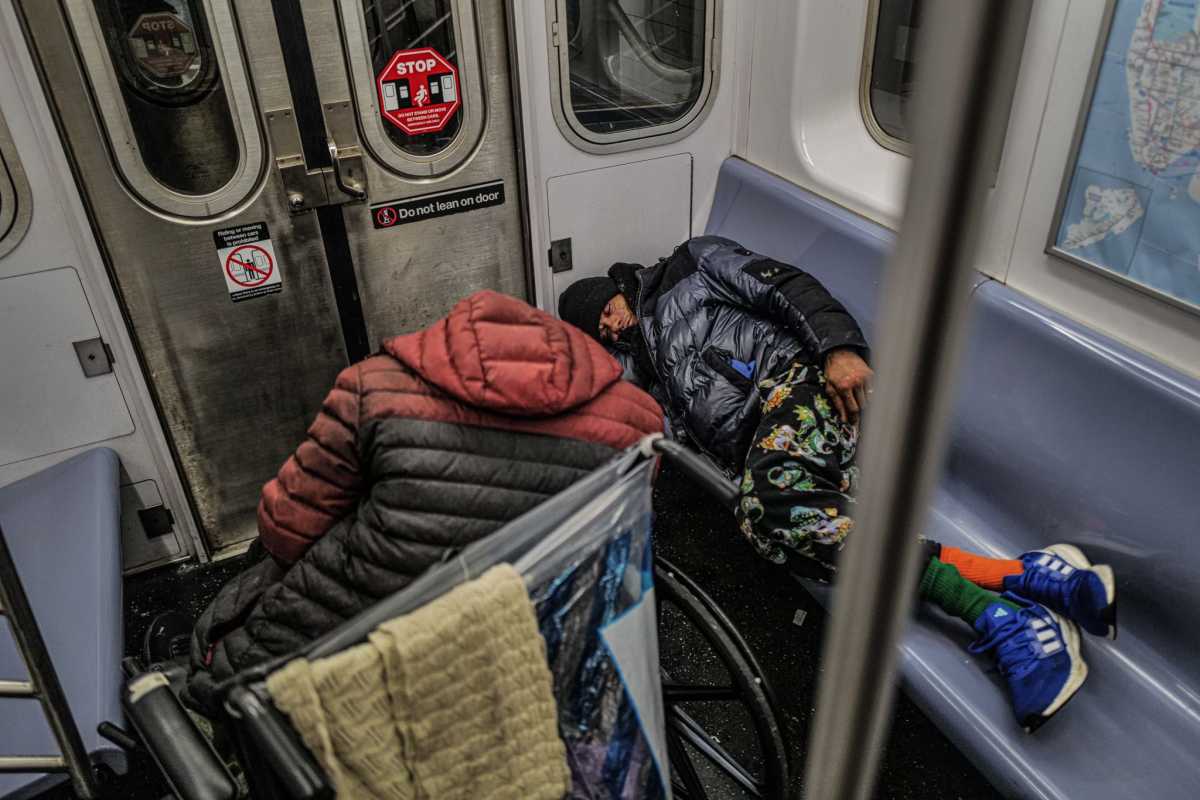
Homeless individuals sleeping on a subway train in New York on Jan. 13, 2025.
Photo by Dean Moses
NYC has to “better explain” how its funding is helping to combat homelessness, which is increasing this year even as outreach expanded, according to a NYS Comptroller’s Office report released on Wednesday.
The report analyzed increases in NYC’s homeless population and spending on outreach and related services to counter homelessness. State Comptroller Thomas DiNapoli said such spending has tripled from $102 million in 2019 to $368 million last year, yet the number of people living on the streets continues to grow.
Although the city has been successful in housing homeless New Yorkers, more and more people have been forced onto the streets. The report shows that the city needs to use its collected outreach and services data to detail where it has been most successful at moving people into permanent housing. Outreach begins by asking an unsheltered person a series of questions to determine an appropriate facility placement.
“The number of people living on the street in New York City has continued to grow, even as the city has been effective at providing shelter for the majority of the homeless population,” DiNapoli said. “The escalation in spending driven by the increase in the unsheltered population, however, merits greater focus on where resources are going and what services are working.”
Funding for homeless programs projected to remain relatively flat
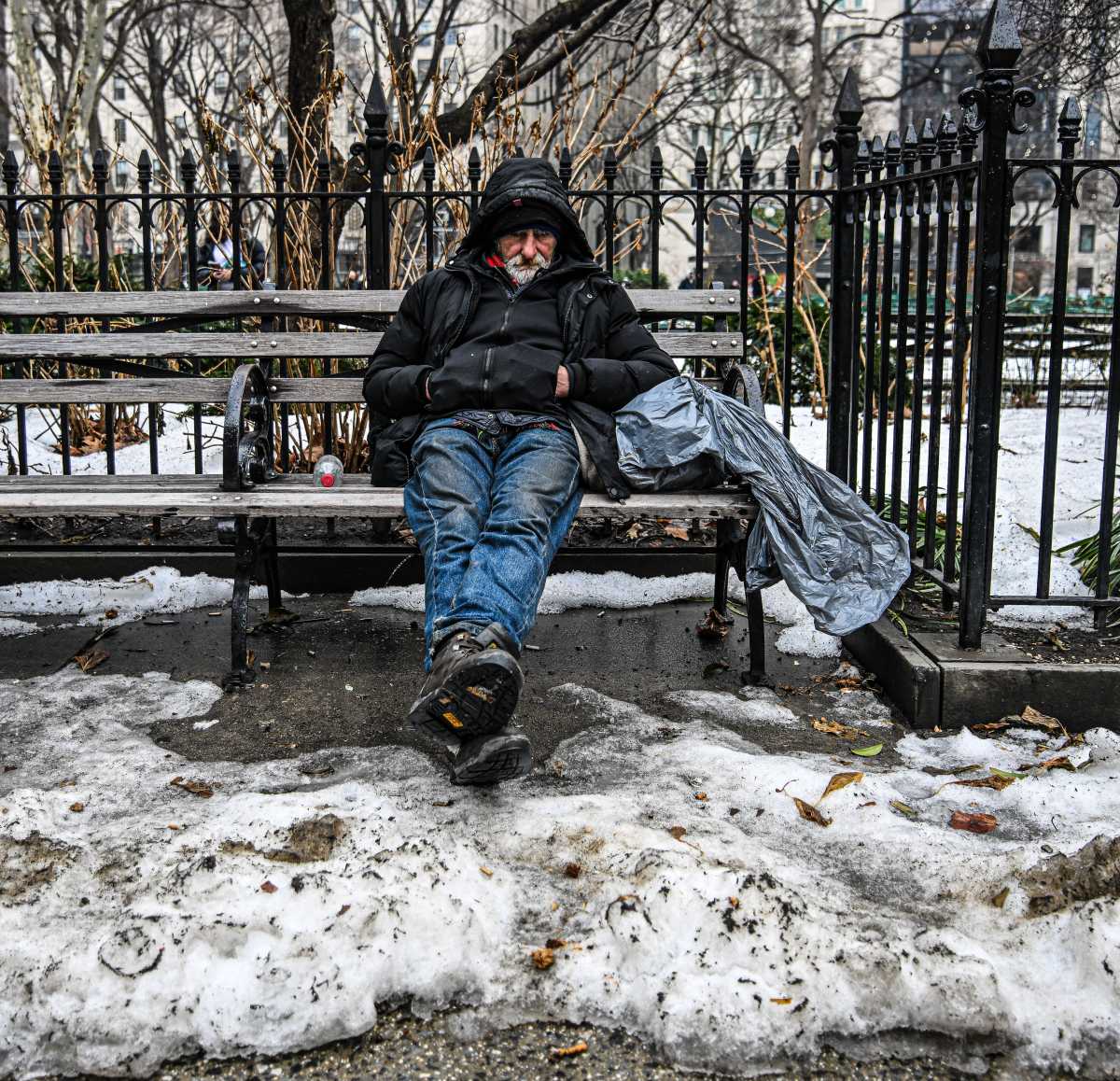 Throughout the cold snap, the Mamdani administration set up warming centers and vehicles, opened private hotel shelter units, and emphasized repeated outreach to get as many New Yorkers as possible inside.Photo by Dean Moses
The focus on efficiency comes as funding for homelessness help is likely to remain flat after 2026, the report noted. As NYC is legally required to provide emergency shelter to those in need, housing homeless New Yorkers presents unique challenges.
Even so, the Big Apple has already sheltered close to 97% of its total homeless population, which has grown 78% since 2019 to about 140,000 people, according to the city’s count.
However, even with this achievement, the number of unsheltered individuals increased, from 3,588 in 2019 to over 4,500 last year.
“Street homelessness is a chronic problem that requires collaborative efforts to help bring vulnerable New Yorkers into shelter and out of the cold,” DiNapoli said.
Tracking outcomes for homeless New Yorkers
The city introduced thousands of “low-barrier” safe haven beds, but the report highlights a critical deficiency in measuring long-term success. Although housing placements have increased since 2017, the data does not differentiate between permanent and transitional housing.
Meanwhile, the comptroller recommends the city’s Department of Homeless Services (DHS) track outcomes for people placed into housing, including the duration of their stay and their successful transition to permanent housing.
DiNapoli also advises the city to increase reporting on the share of individuals who are engaged by outreach but refuse service and to provide metrics on performance for outreach and service vendors.
Mayor Zohran Mamdani and other city officials faced scrutiny during this year’s extreme cold weather and snowstorms, in which at least 16 people died on the streets of New York in below-freezing temperatures.
On the campaign trail, the mayor said he would stop the city’s policy of sweeping homeless encampments; on Feb. 18, following backlash from New Yorkers and extreme weather, he reversed his position.
As of December 2025, the number of calls to 311 that reported sightings of homeless encampments averaged 4,000 over a 12-month period, compared to 3,576 through December 2024 — a 12% increase, state data notes.