

St. Patrick’s Day Parade Weather Climatology
Picture this: March 17, 2012, along the Chicago River. The thermometer has hit 82 degrees. The kind of warmth that belongs to June barbecues, not St. Patrick’s Day parades. A guy in a tank top stands there, sunglasses on, watching the water turn an impossible shade of emerald. Next to him, a woman in a down parka clutches her coffee like a life raft.
“I don’t trust March,” she says.
Smart woman.

Weather in your inbox
By signing up you agree to the Terms & Privacy Policy. Unsubscribe at any time.
Here’s the thing about St. Patrick’s Day in America: it’s one holiday, one date, but depending on where you celebrate, it might as well be four different seasons. In New York, you layer like you’re preparing for an expedition. In Boston, you pack an umbrella and pray the nor’easter holds off. In Savannah, you’re hunting for shade by noon.
And in Chicago? You spin the wheel and see what happens.
New York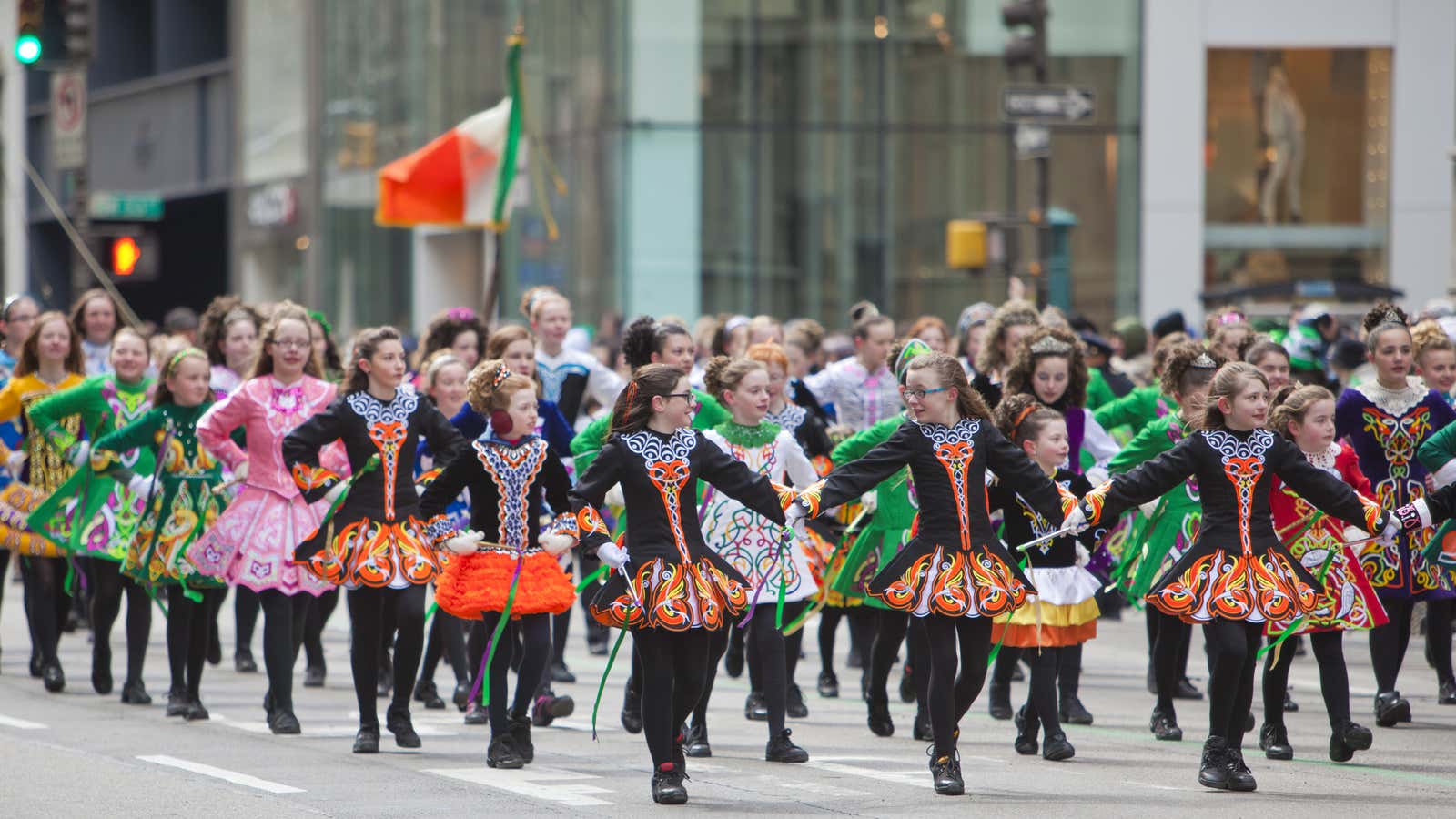
Participants at the annual St. Patrick’s Day Parade that takes place on 5th Avenue in New York City. The parade is a celebration of Irish heritage in America and is the largest in the world.
(stu99 via Getty Images)
New York’s St. Patrick’s Day parade is the largest in the world. Around 150,000 people march up Fifth Avenue. Roughly 2 million spectators line the route.
To put that in perspective: the Macy’s Thanksgiving Day Parade draws about 8,000 participants. St. Patrick’s Day has nearly 19 times as many marchers. It’s not just big. It’s massive.
The average March 17 in New York brings highs in the upper 40s to around 50 degrees, with morning temps in the mid-30s. Over the past century and a half, rain has fallen on roughly one-third of parades. Snow has shown up about 10 times.
Yet the parade has never been canceled. Not once.
The bagpipes play. The crowd shows up. The weather does whatever it wants, and everyone just deals with it.
Chicago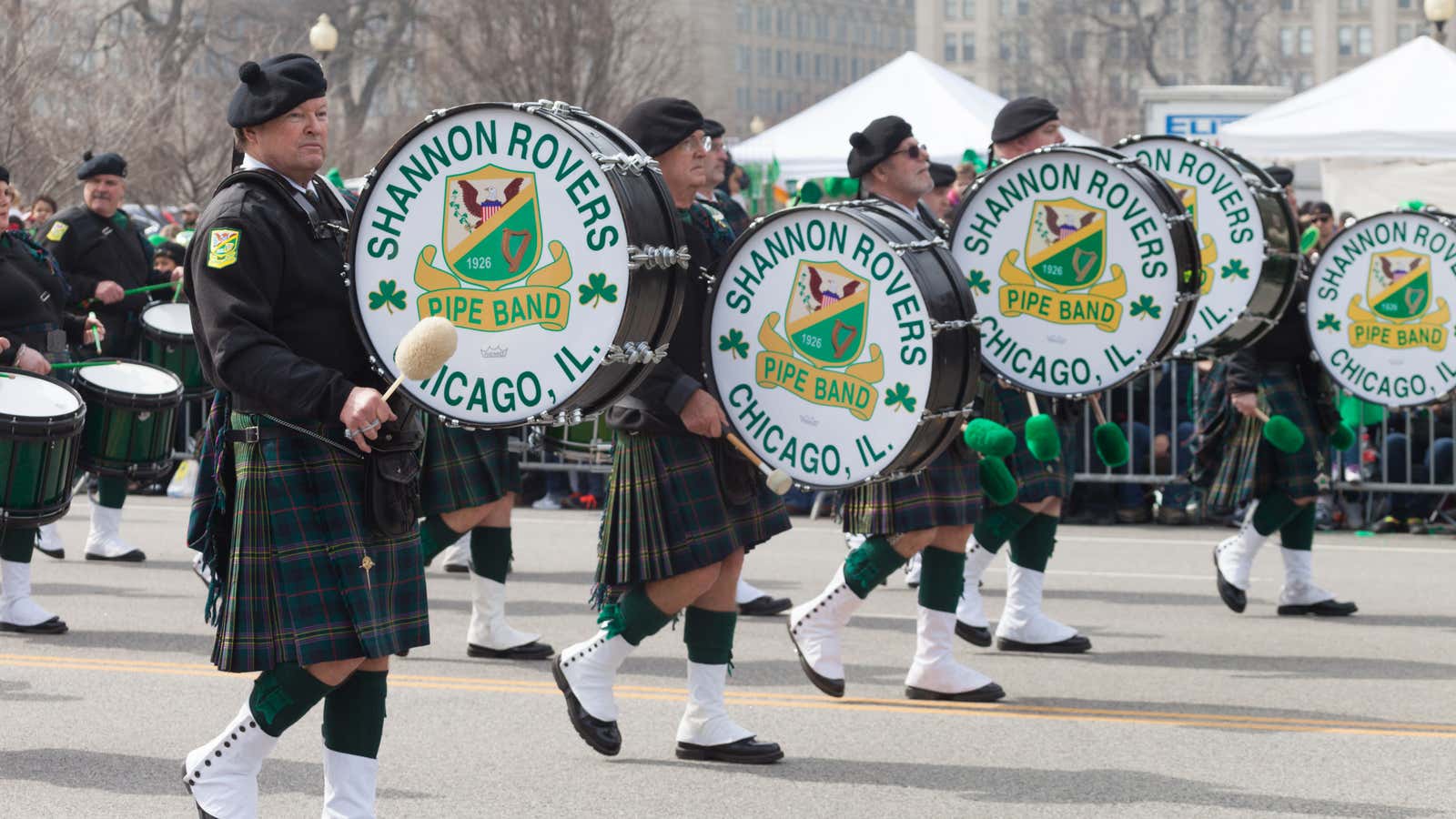
The St. Patrick’s Day Parade in Chicago, Illinois, is a cultural and religious celebration from Ireland in honor of Saint Patrick.
(Roberto Galan via Getty Images)
Chicago doesn’t do anything halfway, and that includes St. Patrick’s Day.
Every year, members of the Chicago Plumbers Union dump roughly 40 pounds of vegetable dye into the river early on parade morning. The powder starts bright orange, then transforms into that iconic emerald green within about 45 minutes. Multiple parades wind through downtown and the neighborhoods. It’s a whole thing.
Typical temps sit in the low to mid-40s, but the record range is wild: 82 degrees in 2012, and just 11 degrees in 1900. One year dropped more than 4 inches of snow.
This year? Chicago got a preview of March’s volatility this week when severe storms and hail rolled through parts of Chicagoland. And now, the pendulum is swinging the other way.
“What will be most impactful there will be the cold,” says weather.com senior meteorologist Jonathan Erdman. “We’re currently forecasting highs that won’t get out of the 20s Tuesday. And there could be lingering northwest winds that could send wind chills plummeting at least into the teens, maybe single digits.”
March in Chicago sits at the intersection of arctic cold plunging south and Gulf warmth surging north. Add Lake Michigan wind to the mix, and even a mild day can feel punishing.
But Chicagoans show up anyway. Parkas or T-shirts, depending on the year, watching the water turn green like it’s the most normal thing in the world.
Boston
Parade viewers wave flags and cheer on marchers during the annual St. Patrick’s Day and Evacuation Day Parade in Boston, Massachusetts. Evacuation Day commemorates the evacuation of British forces from the city of Boston, early in the American Revolutionary War.
(Photo by JOSEPH PREZIOSO/AFP via Getty Images)
Boston’s St. Patrick’s Day parade happens in South Boston, a neighborhood with deep Irish roots. March is the city’s rainiest month. Average highs hover around 45 degrees. Some years bring sunshine and 60s. Other years bring nor’easters.
The 1993 “Storm of the Century” slammed New England just days before St. Patrick’s Day, burying parts of the region. Other storms have hit close enough to force rare reschedules.
March in New England is a battle between seasons. The jet stream swings wildly. Arctic air clashes with spring sunshine. Cold ocean water keeps temperatures suppressed.
So if you’re heading to Boston’s parade, you pack an umbrella, a scarf, a backup plan and the quiet acceptance that nature might have other ideas.
Savannah
The Forsyth Fountain was installed in July 1858, its design selected from Janes, Beebe & Co.’s 1855 “Illustrated Catalogue of Ornamental Iron Work.” Since 1985, greening the fountain has become an established tradition in Savannah’s St. Patrick’s Day celebrations. Green dye is added to the water to give the spray its Irish holiday hue.
(Credit: Joe Daniel Price via Getty Images)
Travel south, and the script flips entirely.
Savannah’s parade is one of the largest in the country, winding through the Historic District past Spanish moss and blooming azaleas.
Average highs sit in the upper 60s to around 70 degrees. But some years push close to 90 degrees. Morning jackets come off by mid-morning. By noon, you’re hunting for shade.
It’s the only major St. Patrick’s Day parade in America where you might legitimately get a sunburn.
And The Rest Of America Shows Up, Too
Philadelphia, San Francisco, Pittsburgh, Kansas City, Denver, Detroit and New Orleans all throw major celebrations. Each comes with its own weather quirks, but the theme is the same: People show up, no matter what.
And in Dublin? Average temps sit in the upper 40s, with drizzle and breezy skies. While Americans debate gloves versus sunscreen, Dubliners pull on a raincoat and carry on.
The Party Happens Anyway
Back in Chicago, that woman in the parka probably felt vindicated the next year, when March 17 arrived cold and blustery.
Or maybe the guy in the tank top showed up anyway, stubborn and freezing, because that’s what you do on St. Patrick’s Day.
You check the forecast. You make your best guess. And then you go anyway, because the river’s going to turn green whether it’s 20 degrees or 80 degrees, and the parade’s going to march no matter what the sky is doing.
Four cities. One holiday. Four completely different forecasts. And every single one of them, guaranteed to be packed.
weather.com Content Development Manager Joy Kigin digs creating weather content that bridges the gap between data and your daily life. She’s focused on helping you understand not just what’s happening in the sky, but why it matters to you in ways that inform your decisions, impact your plans, and maybe even make you smile.